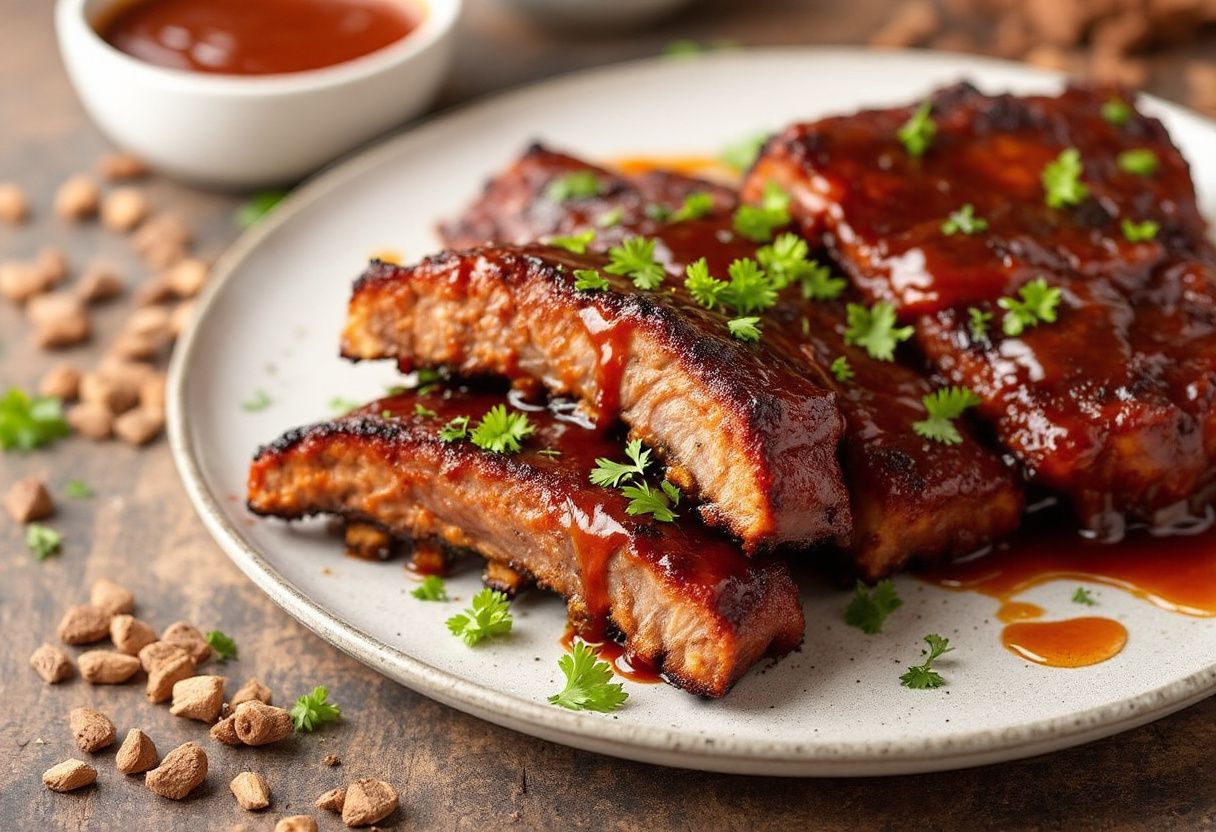
Lone Star Mesquite Ribs
Introduction to Lone Star Mesquite Ribs
The Lone Star Mesquite Ribs are a culinary homage to the state of Texas, where barbecue is not just a meal but a tradition and a way of life. Texas is renowned for its diverse barbecue styles, with each region offering its unique take on this beloved cooking method. The mesquite wood, native to the southwestern United States, particularly Texas, imparts a distinctive smoky flavor that is synonymous with Lone Star cuisine.
Historically, Texas barbecue has its roots steeped in various cultural influences. The traditional methods of smoking meat were adopted and evolved by settlers in the region, with each adding their own twist to the process. Over time, mesquite wood became a preferred choice for many due to its availability and the rich, bold flavor it imbues into the meat.
Mesquite-smoked ribs are celebrated for their robust taste, with the mesquite wood adding a smoky, sweet aroma that complements the richness of the ribs. This dish holds a special place in backyard cookouts, family gatherings, and even competitive barbecue events across the state, and it's a must-try for lovers of authentic Texas-style barbecue.
Ingredients for Lone Star Mesquite Ribs
- Pork Ribs - 2 racks
- Mesquite Wood Chips - 2 cups, soaked in water
- Brown Sugar - 1/4 cup
- Paprika - 2 tablespoons
- Salt - 1 tablespoon
- Black Pepper - 1 tablespoon
- Garlic Powder - 1 teaspoon
- Onion Powder - 1 teaspoon
- Chili Powder - 1 tablespoon
- Honey - 1/4 cup
- Apple Cider Vinegar - 1/4 cup
- Mustard - 2 tablespoons
- Barbecue Sauce - 1/2 cup
Preparation of Lone Star Mesquite Ribs
Step 1: Preparing the Pork Ribs
To begin, you need to prepare the pork ribs by removing the silver skin or membrane. This is a thin layer that can hinder the absorption of the flavors. Use a knife to gently lift it from the end of the ribs and pull it off with a paper towel for grip.
Step 2: Preparing the Spice Rub
Combine brown sugar, paprika, salt, black pepper, garlic powder, onion powder, and chili powder in a bowl. Mix these ingredients thoroughly to create a flavorful spice rub.
Step 3: Seasoning the Ribs
Generously apply the spice rub to both sides of the pork ribs, ensuring they are coated completely. For best results, let the seasoned ribs sit in the refrigerator for at least 2 hours or overnight. This allows the flavors to penetrate the meat, resulting in a more delicious rib after cooking.
Cooking Process
Step 4: Preparing the Grill
For authentic Lone Star Mesquite Ribs, set up a smoker or grill for indirect heat. If using a charcoal grill, arrange the hot coals on one side and place a drip pan with water on the other. For gas grills, only light one side. You want a grill temp of about 225°F. Begin soaking the mesquite wood chips in water for at least 30 minutes before adding them to the grill.
Step 5: Smoking the Ribs
Place the seasoned pork ribs on the grill rack, rib side down, over the drip pan. Add the soaked mesquite wood chips to the coals or a smoker box. Close the lid and allow the ribs to smoke for 3 to 4 hours, or until the ribs are tender and the meat pulls away from the bone. It's crucial to maintain a consistent grill temperature during this period, so adjust the vents or burners as needed. Check every hour for the smokiness and replenish the wood chips as necessary.
Step 6: Basting the Ribs
In a bowl, mix honey, apple cider vinegar, and mustard. During the last hour, baste the ribs with this mixture using a brush, every 15 minutes. This will form a delightful glaze on the ribs, adding depth of flavor.
Step 7: Adding the Barbecue Sauce
The final touch is to brush the barbecue sauce onto the ribs during the last 15 minutes of smoking. This will caramelize the sauce slightly, giving the ribs a nice glossy finish.
Step 8: Resting the Ribs
Once the Lone Star Mesquite Ribs are cooked to perfection, remove them from the grill and let them rest for about 10 minutes. This allows the juices to redistribute evenly throughout the meat, ensuring a juicy bite every time.
How to Enjoy Lone Star Mesquite Ribs
The best way to enjoy these ribs is to pair them with classic Southern sides such as coleslaw, baked beans, or a fresh corn salad. Ice-cold drinks such as beer or lemonade also complement the smoky flavor beautifully.
These ribs make a perfect centerpiece for any barbecue gathering. Enjoy the meal with family and friends in the great outdoors, just as it is done in Texas.