
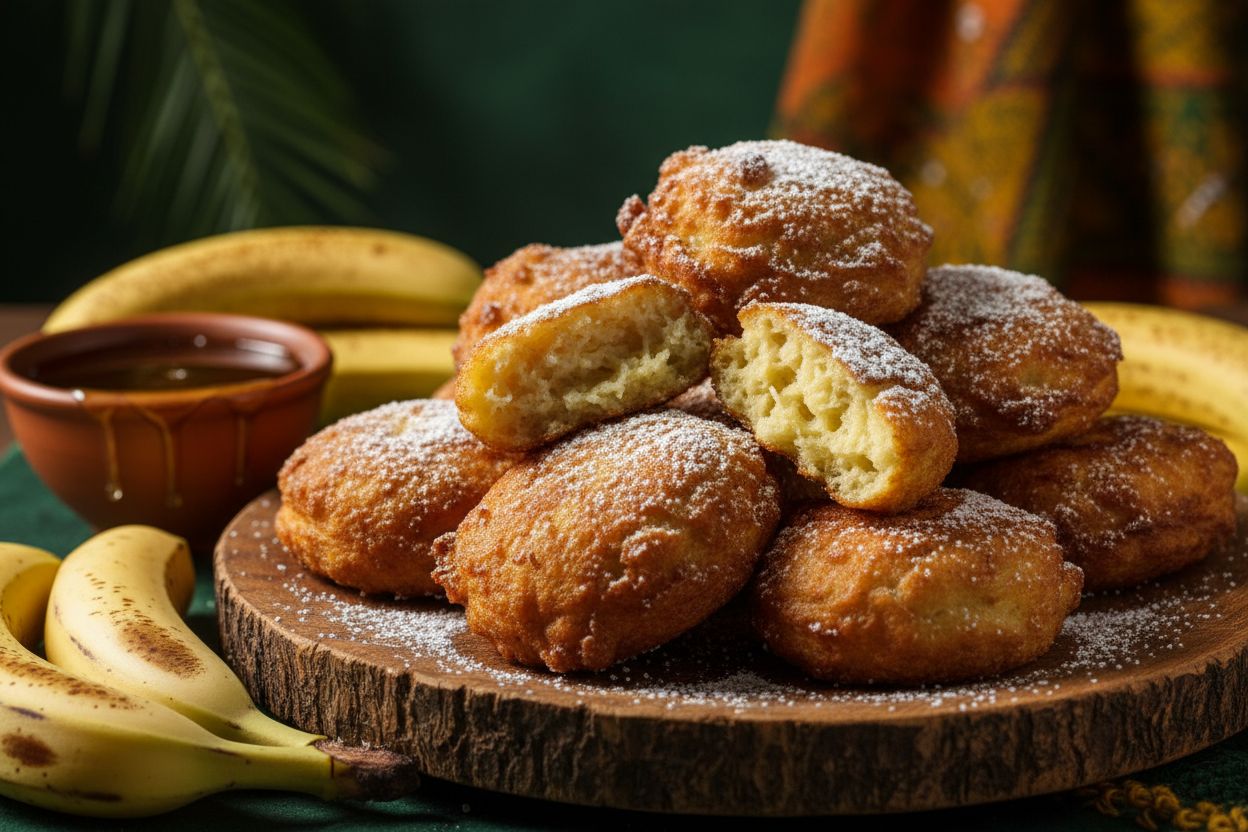



Mikate ya Kivu
What is Mikate ya Kivu?
Mikate ya Kivu are airy, golden fritters from the Kivu region of the Democratic Republic of the Congo. Sold from bustling roadside braziers and shared at family gatherings, these bite-size puffs carry a gentle sweetness and a tender, stretchy crumb. A touch of mashed banana is common in many households, lending subtle fruitiness and extra softness to the dough. Whether enjoyed plain or dusted, they embody the welcoming spirit and lively markets of Kivu.
Ingredients
- All-purpose flour
- sugar
- Active dry yeast
- Ripe banana (mashed; optional but traditional)
- Warm water
- salt
- Neutral oil for frying
Equipment
- Mixing bowl and sturdy spoon or whisk
- Deep, heavy pot or high-sided pan
- Slotted spoon or spider
- Clean kitchen towel or plastic wrap
- Wire rack or paper towels for draining
Preparation
- Wake the leavening: In a small bowl, stir the yeast into warm water with a pinch of sugar until dissolved. Let it stand while you prepare the dry mixture; it should begin to foam and smell bready.
- Combine the dry base: In a large bowl, whisk together flour, a modest amount of sugar, and a small pinch of salt so the seasonings are evenly dispersed.
- Add moisture and fruit: Mash the banana until smooth, then add it to the bowl. Pour in the lively yeast mixture along with more warm water, stirring to form a thick, glossy batter that slowly falls off the spoon. The batter should be too loose to knead but thick enough to hold soft mounds.
- Develop structure: Beat the batter vigorously with a spoon or whisk to build strength and elasticity. As you stir, the mixture will look smoother and slightly stretchy.
- Let it rise: Cover the bowl and set it somewhere warm. The batter is ready for frying when it is puffed, aerated, and speckled with bubbles that slowly burst on the surface.
Frying
- Heat the fat: Pour several inches of oil into a deep pot. Warm it over medium heat until a small dribble of batter dropped in sizzles actively and rises to the surface without scorching. Stable, lively bubbles are the cue that the oil is ready.
- Shape in the pot: Using two spoons or lightly oiled fingers, scoop small portions of batter and gently slide them into the hot oil. Do not crowd; space helps each piece puff and brown evenly.
- Cook to color: Allow the fritters to float and expand, nudging and turning them so all sides take on a deep golden color. Adjust the heat to keep the oil lively but not smoking.
- Drain: Use a slotted spoon to transfer the fritters to a rack or paper towels so excess oil can drip away. Continue with remaining batter, giving the oil a moment between batches to recover its heat if needed.
Serving and Enjoying
Serve mikate warm, when the crust is crisp and the interior fluffy. A dusting of sugar is classic, and the subtle perfume from the banana shines through. Pair with spiced tea, coffee, or fresh fruit. For a savory twist, enjoy them plain alongside grilled meats and bright relishes.
Tips and Variations
- Consistency control: If the batter is too stiff, mix in a splash of warm water. If it feels loose and spreads too quickly, sprinkle in a bit more flour and beat briefly.
- Sweetness: For a more dessert-leaning batch, add a little extra sugar to the batter, then finish with another light dusting of sugar after frying.
- Fruit-forward: The gentle fruit note comes from the mashed banana. Leave it out for a plainer, doughnut-like profile, or keep it for a softer crumb and fragrant finish.
- Frying finesse: Maintain steady heat so the oil is active but not harsh. If the fritters brown too fast, lower the heat; if they turn pale and greasy, increase it slightly so the oil stays lively.
- Texture tuning: A brief extra beating can tighten a batter that’s overly loose, while a splash of warm water loosens a batter that resists scooping.
Background and Culture
Across the shores of Lake Kivu and in vibrant inland towns, these fritters go by names that reflect local languages and trade routes. They’re a beloved street bite at sunrise and a celebration snack later in the day. The method—making a simple risen batter and frying small scoops—creates a universal pleasure: crisp crust, tender crumb, and an aroma that fills the air. In many homes, the recipe is passed down by feel, with elders teaching the exact look of a properly risen batter and the sound of the perfect sizzle.
Make-Ahead and Storage
- Advance prep: You can mix the batter earlier and let it rise until airy. If it rises too much, stir it down briefly to re-inflate the bubbles before frying.
- Keeping: Mikate are best soon after frying. If you have leftovers, rewarm gently in a low oven or air fryer until the surface is crisp again, then dust with a little sugar if you like.
Troubleshooting
- Dense centers: The batter likely didn’t rise enough, or the heat was too high, causing the outside to brown before the interior finished puffing. Give the batter more time to aerate and keep the oil at a steady, moderate level.
- Greasy results: This often means the oil wasn’t hot enough. Let it recover briefly between batches so the fritters sizzle on contact and lift to the surface quickly.
- Irregular shapes: Embrace the rustic look. To nudge toward rounder pieces, use two spoons to form neat quenelles or lightly oil your fingers for smoother scoops into the hot oil.
Summary
Mikate ya Kivu come together with pantry staples—flour, sugar, yeast, warm water, a touch of salt, a ripe banana, and bubbling oil. With a well-risen batter and steady heat, you’ll get crisp, tender puffs that carry the spirit of Kivu straight to your table.