
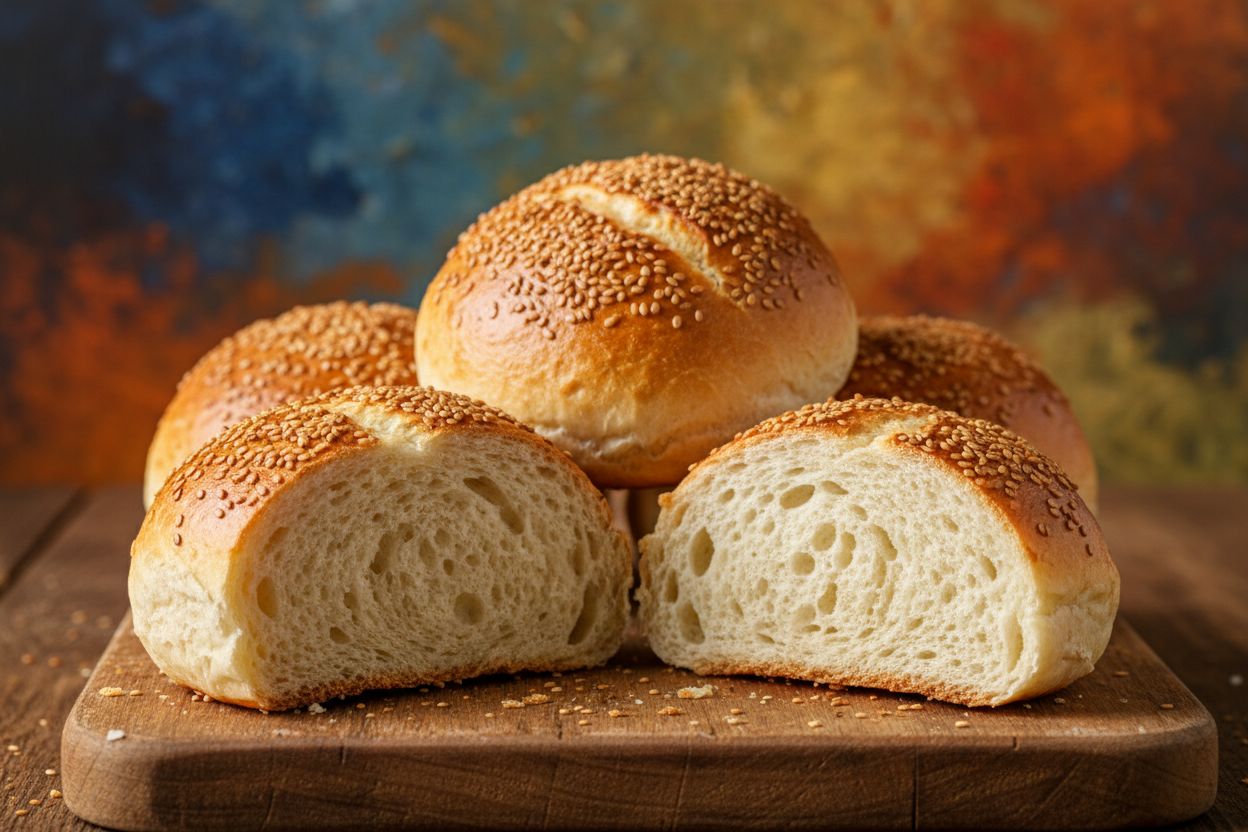



Navettes de Nouméa
Background
Navettes de Nouméa are small, boat-shaped rolls cherished in New Caledonia’s capital, where local café culture meets island markets. The name “navette” evokes the silhouette of a little shuttle or skiff, and that shape has long made them ideal for splitting and stuffing on the go. Bakers popularized this specialty as a soft, slightly rich roll with a tender crumb and a glossy finish, well-suited to both savory and sweet fillings. While the style echoes French techniques, the look and everyday use are distinctly tied to Nouméa’s coastal rhythm: compact, portable, and perfect for picnic baskets headed toward bright lagoons. What follows is a home-friendly method that captures the characteristic softness, the signature score down the center, and the neat, elongated profile associated with this baked favorite.
Ingredients
- 500 g bread flour
- 7 g instant yeast
- 240 ml lukewarm milk
- 80–120 ml water, as needed
- 40 g sugar
- 10 g salt
- 40 g softened butter
- 1 beaten egg (for wash)
- 1 tbsp sesame seeds (optional)
Before You Start
Measure accurately and bring items to moderate room temperature. A kitchen scale helps produce reliable results and consistent shaping. Line two baking sheets with parchment, and set out a sharp lame or knife for scoring.
Preparation
- Combine dry ingredients: In a large mixing bowl, whisk together the bread flour, instant yeast, sugar, and salt until evenly distributed.
- Add liquids: Pour in the milk and about two-thirds of the water. Stir with a sturdy spoon or dough whisk until a shaggy mass forms. If the mixture seems dry, add more water a little at a time; if it seems slack, you will correct the feel during kneading.
- Knead and enrich: Turn the dough onto a work surface and knead until smoother. Work in the softened butter, a bit at a time, until fully absorbed and the dough is supple. If needed, adjust with tiny splashes of water to achieve a soft, slightly tacky feel.
- First rise: Place the dough in a lightly greased bowl, cover, and let it rise in a warm, draft-free spot until noticeably puffy and expanded.
- Divide and pre-shape: Turn the dough out and gently pat into a rectangle. Divide into 10–12 equal pieces. Roll each piece into a short, tight cylinder to build surface tension, then rest briefly so shaping is easier.
- Shape navettes: For each piece, roll into a slender, even log. Point the ends slightly to suggest a boat silhouette. Set on the prepared sheets with space between pieces. With a sharp blade, make a clean lengthwise score along the center of each roll to encourage the traditional look.
- Second rise: Cover the rolls lightly and let them puff until they feel airy and spring back slowly to a gentle touch.
- Glaze and garnish: Brush the tops with the beaten egg for shine. If using, sprinkle a light veil of sesame seeds over some or all of the rolls.
- Bake: Preheat the oven to a moderately hot setting. Bake the rolls on the center rack until the slashed seam opens attractively and the crust turns deep golden, with a hollow sound when tapped on the underside.
- Cool: Transfer to a rack and let the rolls cool to set the crumb before slicing.
How to Enjoy
Split along the score and fill for quick sandwiches, or enjoy plain to appreciate the delicate aroma and soft interior. They complement beach picnics, market snacks, and café spreads. The compact shape makes them convenient for lunch boxes and appetizers, and the smooth top holds garnishes well if you plan to assemble canapés.
Make-Ahead, Storage, and Reheating
- Room temperature: Once fully cool, keep in a breathable bag for a short window to preserve a tender crust.
- Freezing: Wrap individually, then freeze. Thaw at room temperature and refresh briefly in a warm oven to revive the texture.
- Next-day use: Lightly warm before serving to restore suppleness, or toast for a contrasting crisp exterior and soft interior.
Tips for Success
- Texture cue: Aim for a dough that feels soft and slightly tacky rather than dry; adjust with tiny additions of water if needed during mixing.
- Shaping cue: Keep the logs uniform in length and thickness so they bake evenly and present neatly.
- Score with confidence: A swift, centered cut promotes the classic seam and helps guide expansion.
- Finish: The egg glaze creates a glossy sheen; a lighter pass yields a satin finish, while a second gentle pass intensifies shine. A scatter of sesame seeds adds a pleasant nutty note and visual contrast.
- Flavor balance: For a slightly richer character, ensure the softened butter is fully incorporated; it contributes to a tender crumb and a delicate crust.
Variation Ideas
- Seeded top: Mix white and black sesame seeds for a speckled appearance, or leave some rolls unadorned for contrast on a platter.
- Glaze options: Swap the full glaze for a light dab of beaten egg down the center if you prefer a matte edge and a shiny seam.
- Softest crumb: A slightly higher proportion of milk can encourage an extra-soft interior; balance by kneading thoroughly and watching the dough’s feel.
Serving Pairings
These rolls pair well with salads, grilled items, and picnic spreads. Their gentle crust and compact form hold up to saucy fillings without overwhelming delicate flavors. Present them warm in a basket, or split and assemble bite-size sliders for gatherings.
Troubleshooting
- Rolls baked too dense: Ensure proper fermentation and a thorough knead after adding the butter so the dough becomes smooth and elastic.
- Pale crust: Apply an even coat of beaten egg and confirm sufficient oven heat before baking.
- Crust too firm: Lightly tent with parchment during the final moments of baking, and avoid overbaking. For extra tenderness, confirm the dough hydration with adequate water.
- Uneven shape: Keep each piece the same weight, roll with consistent pressure, and make the central score in a single confident motion.
Wrap-Up
Navettes de Nouméa embody a charming coastal tradition: compact, elegant, and versatile. With a straightforward method, a touch of shaping care, and a glossy finish from the beaten egg, you can bring this bakery favorite to your table—ready for everyday snacks or festive platters.