
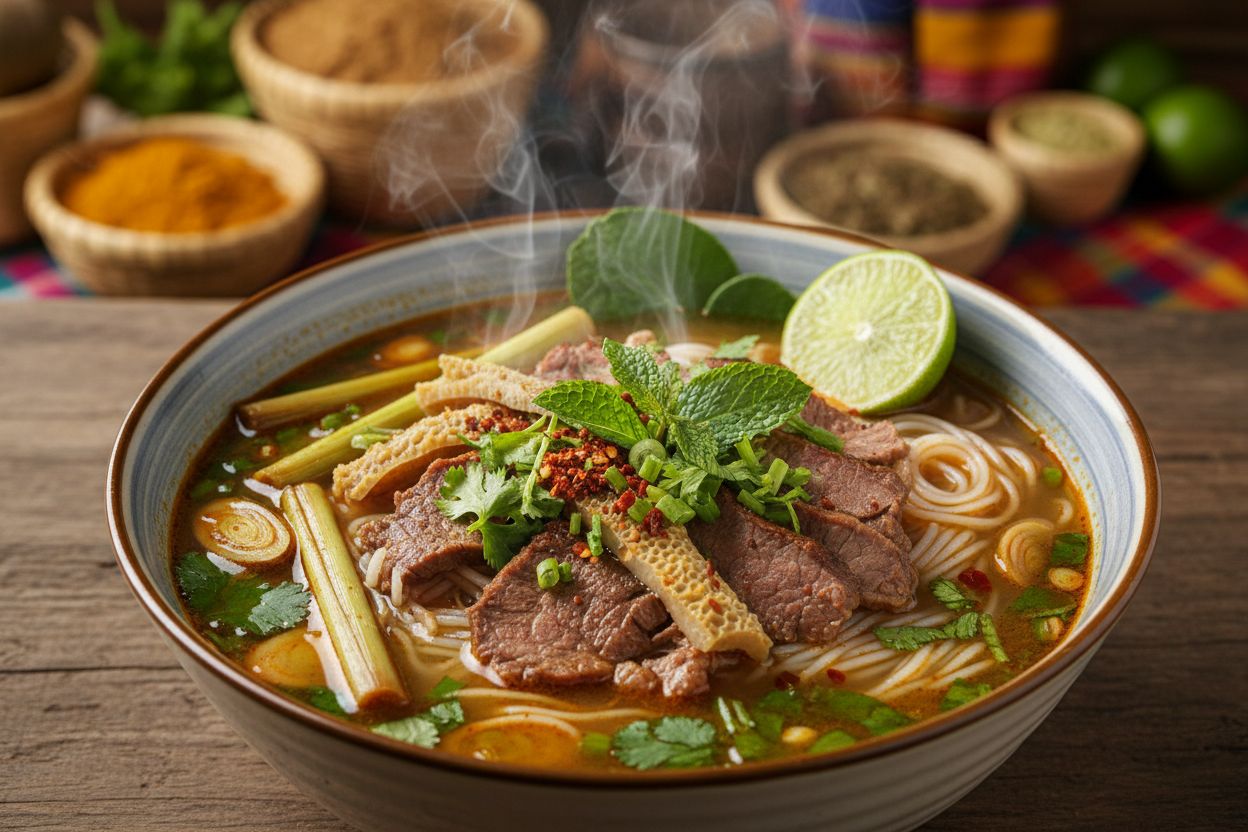



Num Pia
Background
Num Pia, also known in some regions as Nam Pia, is a bold and deeply savory soup from mainland Southeast Asia with deep roots in rustic cooking and communal gatherings. It is celebrated for a layered broth, a touch of pleasant bitterness, and a gently thickened body that clings to noodles. Families have long relied on slow simmering and patient skimming to coax depth from meat and connective tissue, while herbs and heat provide balance. Modern home kitchens often adapt time honored techniques by building a clean, strong stock, seasoning to taste, then finishing with a traditional thickener and fresh herbs. The result is a bowl that is hearty yet bright, soothing yet exciting, and perfectly suited to cool evenings or festive weekends.
Ingredients
- beef brisket, 680 g, cut into large chunks
- beef bones, 900 g, well rinsed
- beef tripe, 225 g, cleaned well, optional
- lemongrass, 2 stalks, trimmed and bruised
- galangal, 5 thin slices
- kaffir lime leaves, 4 leaves, torn
- garlic, 6 cloves, lightly crushed
- shallots, 2, halved
- cooking oil, 1 tablespoon
- water, about 2.5 liters
- fish sauce, 3 to 4 tablespoons, to taste
- palm sugar, 1 to 2 teaspoons, to taste
- tamarind paste, 1 to 2 tablespoons, to taste
- roasted rice powder, 2 to 3 tablespoons
- bile, 1 to 2 teaspoons, optional and to taste
- chili flakes, to taste
- rice noodles, 400 g, medium width
- lime, 1 to 2, cut into wedges
- cilantro, a small handful, chopped
- scallions, 2, thinly sliced
- mint, a small handful
- salt, as needed
- black pepper, freshly ground, as needed
Preparation
- Rinse the chunks of meat and the bones well under cool running tap, then pat dry. If using the optional offal, give it an extra rinse and set aside in a separate bowl.
- Lightly char the halved shallots and the crushed garlic in a dry skillet for a few minutes to bring out sweetness, then set aside. Alternatively, you may sear them in a teaspoon of cooking oil until golden edges appear.
- Bruise the bases of the lemongrass stalks with the back of a knife and tie into loose knots for easy removal. Tear the kaffir lime leaves. Slice the galangal thinly.
- If you do not already have roasted rice powder, toast raw sticky rice in a dry pan until deep golden and fragrant, then grind to a fine powder. Set aside the finished powder for thickening later.
- Soak the rice noodles in cool tap as needed according to package guidance to soften before final cooking, often about 10 minutes. Drain and set aside.
Cooking Process
- In a large stockpot over medium heat, add a thin film of cooking oil. Add the charred shallots and garlic and cook briefly until aromatic. Add the bones and the chunks of meat, turning for a minute or two to coat and warm.
- Pour in the measured water, then add the prepared lemongrass, sliced galangal, and torn kaffir lime leaves. Bring to a gentle boil, skim and discard foam as it rises, then reduce to a bare simmer. Maintain a gentle simmer for about 90 minutes, skimming as needed to keep the liquid clear and glossy.
- If using the optional offal, poach it separately in lightly salted hot liquid until tender, then slice and reserve for service. This keeps the main pot balanced while allowing those who enjoy the extra richness to add it to their bowls.
- When the meat is tender, lift it out and slice across the grain into bite size pieces. Strain the broth if you prefer a very clean finish, or simply remove the herb solids and keep the stock rustic.
- Season the pot with fish sauce, a touch of palm sugar, and a measured spoon of tamarind paste for gentle sourness. Taste and adjust with more of any of those three if desired. Add a pinch of salt and a few grinds of black pepper to balance.
- Whisk a ladle of hot broth with the roasted rice powder in a small bowl until smooth, then stir this slurry back into the pot. Simmer a few minutes to thicken and to remove any raw edge from the powder. If using the optional bitters, finish with a cautious spoon of bile, tasting as you go so the note remains gentle rather than overwhelming.
- Return the sliced meat to the pot to warm through. If you cooked the optional offal, keep it on the side so each person can add to taste. Fold in a pinch of chili flakes if you enjoy a little heat, or pass it at the table for guests to season their own bowls.
- Cook the softened rice noodles in boiling hot liquid until just tender, then divide among warm bowls. Ladle the finished soup over the noodles so the strands drink in the broth and the surface gleams.
Serving and Enjoyment
Top each bowl with chopped cilantro, sliced scallions, and whole or torn mint. Offer wedges of lime so eaters can brighten the broth with a squeeze. At the table, pass extra fish sauce, more chili flakes, and an extra pinch of roasted rice powder for those who like a thicker, heartier sip near the end of the bowl. The ideal bite brings together a tangle of rice noodles, supple slices of meat, and a broth that is at once savory, lightly sour, and round with gentle bitterness.
Notes for Balance
- Sourness: build gradually with tamarind paste so the acidity lifts without overpowering.
- Salt and savoriness: adjust with small dashes of fish sauce and a light sprinkle of salt.
- Bitterness: add the optional bile in drops, tasting after each addition.
- Body and texture: thicken in small increments with roasted rice powder until the broth lightly coats a spoon.
Make Ahead and Storage
The broth base can be prepared a day in advance. Chill, then rewarm gently and adjust with fish sauce, a pinch of palm sugar, and a squeeze from a piece of lime right before serving. Cook the rice noodles just before assembling so they remain bouncy and separate.
Simple Variations
- More heat: bloom extra chili flakes in a teaspoon of hot cooking oil and swirl into individual bowls.
- Herbal finish: add a larger handful of cilantro and mint just before ladling for a greener profile.
- Noodle swap: if you prefer a thinner strand, select fine rice noodles and shorten the final cooking window by a minute or two.