
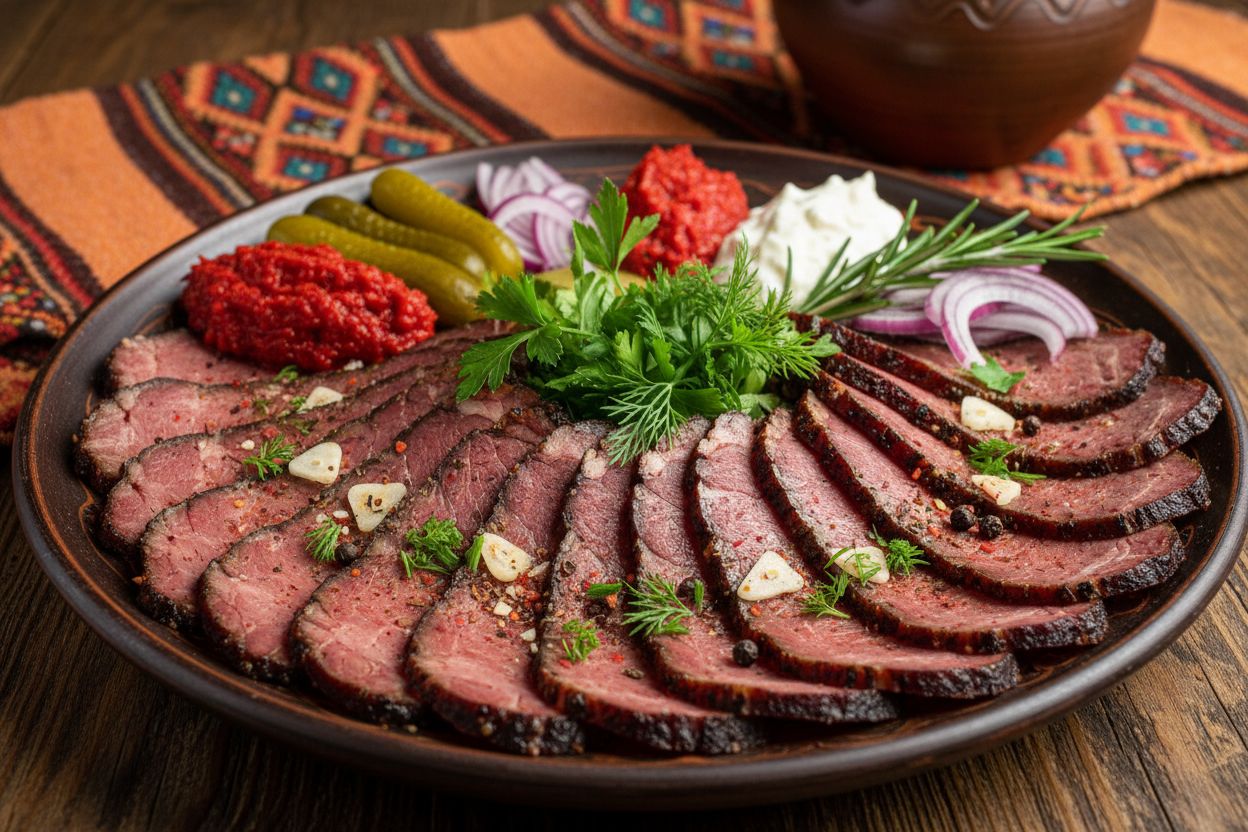



Pastramă de oaie afumată cu turbă
Pastramă de oaie afumată cu turbă is a pastoral classic reborn: a robust, savory preparation of cured mutton slowly kissed by the earthy smoke of smoldering peat. Rooted in the shepherding traditions of the Carpathians, pastramă began as a practical way to preserve meat for long journeys over mountain pastures. Smoking with peat adds an old-world twist reminiscent of windswept boglands where fuel was precious and flavor came from the land itself. The result is deeply aromatic, gently spiced, and sliceable—perfect for a rustic platter, a sandwich on the go, or a celebratory meal at home.
Ingredients
- 1 whole boneless mutton leg or shoulder (about 1.5–2 kg), trimmed
- 80 g coarse salt
- 8 cloves garlic, crushed
- 2 tsp freshly ground black pepper
- 2 tsp sweet paprika
- 1 tsp smoked paprika (optional, boosts smokiness)
- 2 tsp lightly crushed coriander seeds
- 1 tsp lightly crushed juniper berries
- 3 bay leaves, broken
- 1 tsp dried thyme
- 200 ml dry red wine
- 50 ml red wine vinegar
- 30 g brown sugar
- 1 tsp mustard seeds (optional)
- 1 tsp chili flakes (optional, for heat)
- 1 medium onion, sliced
- 500 ml cold water (plus more as needed)
- 2 generous handfuls of dried peat (loose or pellets) for smoke
- 2 generous handfuls hardwood chips (oak, beech, or apple), soaked and drained
- 2 tbsp olive oil (optional, for finishing)
Background and flavor map
The hallmark of this preparation is balance. The gentle sweetness from brown sugar and fruitiness from red wine mingle with resinous notes of crushed juniper berries and citrusy warmth of coriander seeds. A backbone of salt cures the mutton while subtle heat from black pepper and optional chili flakes wakes up the palate. The smoke itself comes from a duet: the steady burn of hardwood chips and the unmistakable, earthy perfume of peat, layered in short bursts for aroma rather than heavy tar notes.
Preparation overview
- Mix a curing base with salt, aromatics, and a splash of red wine and red wine vinegar.
- Coat the mutton and rest it for at least 12–24 hours in the fridge to cure.
- Rinse lightly, dry thoroughly, then air-dry to form a tacky pellicle for 1–2 hours.
- Smoke low and slow with hardwood chips and measured puffs of peat until tender and bronzed, typically 3–4 hours depending on thickness.
- Rest, optionally brush with olive oil, then chill to set before slicing.
Step-by-step instructions
1) Make the cure
- In a bowl, combine salt, mashed garlic, ground black pepper, paprika, optional smoked paprika, crushed coriander seeds, crushed juniper berries, torn bay leaves, and thyme. Sprinkle in brown sugar, optional mustard seeds, and optional chili flakes.
- Add red wine, red wine vinegar, and enough cold water to create a spreadable paste. Stir in sliced onion.
2) Cure the meat
- Pat the mutton dry. Rub the paste all over, pressing aromatics into crevices. Transfer to a non-reactive container, cover, and refrigerate for 12–24 hours, turning once halfway so the mutton cures evenly.
- After curing, scrape off most of the paste. Briefly rinse under cold water only if heavily coated; otherwise wipe clean. Pat the mutton very dry with towels.
3) Dry and form the pellicle
- Place the cured mutton on a rack in the fridge or a cool draft for 1–2 hours to form a slightly tacky surface. This helps smoke adhere.
4) Prepare the smoker
- Preheat your smoker to 90–105°C (195–220°F). Add a starter bed of soaked-and-drained hardwood chips. Reserve the peat to add in short, aromatic bursts.
- When thin, clean smoke appears, you’re ready to cook.
5) Smoke with peat
- Set the mutton on the smoker grate. Add a small handful of peat atop the coals or in a smoke box. Maintain gentle, wispy smoke; avoid thick white plumes.
- Smoke until the exterior is lacquered and the center is supple. Depending on size and your pit, plan for about 3–4 hours, adding modest pinches of peat every 40–60 minutes and refreshing hardwood chips as needed. If the surface dries too fast, spritz lightly with water.
6) Rest and optional finish
- Remove the mutton and rest loosely tented for 20–30 minutes. For a glossy finish, brush with a thin veil of olive oil.
- Chill for 2–4 hours to firm for clean slicing, or slice warm for a more rustic presentation.
Chef’s notes and substitutions
- Meat choice: Traditional pastramă uses mature sheep; choose well-marbled mutton for tenderness and flavor.
- Salt balance: The listed salt suits a 1.5–2 kg piece; scale proportionally for larger cuts.
- Aromatics: If you love piney tones, increase juniper berries; for citrus spice, lean into coriander seeds.
- Smoke character: Layer with hardwood chips for body and restrained additions of peat for signature aroma.
- Tang and balance: The duo of red wine and red wine vinegar gives gentle acidity; adjust brown sugar to fine-tune sweetness.
Serving and storage
- Slice thin across the grain. Serve warm with polenta, roasted roots, or crusty bread. A drizzle of olive oil over hot slices blooms the aromas.
- For sandwiches, layer chilled slices with greens; optional heat from a pinch of chili flakes is lovely.
- Refrigerate well-wrapped for 4–5 days. Freeze tightly wrapped portions for up to 2 months.
Troubleshooting
- Too salty: After curing, give the mutton a quick rinse under cold water and a longer pellicle dry; smoke will re-concentrate flavor.
- Smoke too strong: Use smaller charges of peat and rely more on hardwood chips. Keep the smoke thin and blue.
- Bland interior: Don’t skip the full 12–24 hours cure; aromatics like garlic, black pepper, and paprika need time to penetrate.
Why it works
Layered curing with salt, garlic, and spices seasons the mutton deeply, while modest sugar from brown sugar aids browning. The pellicle encourages even smoke adhesion, and combining hardwood chips with judicious peat yields a nuanced, terroir-forward profile that stays elegant rather than overpowering.