
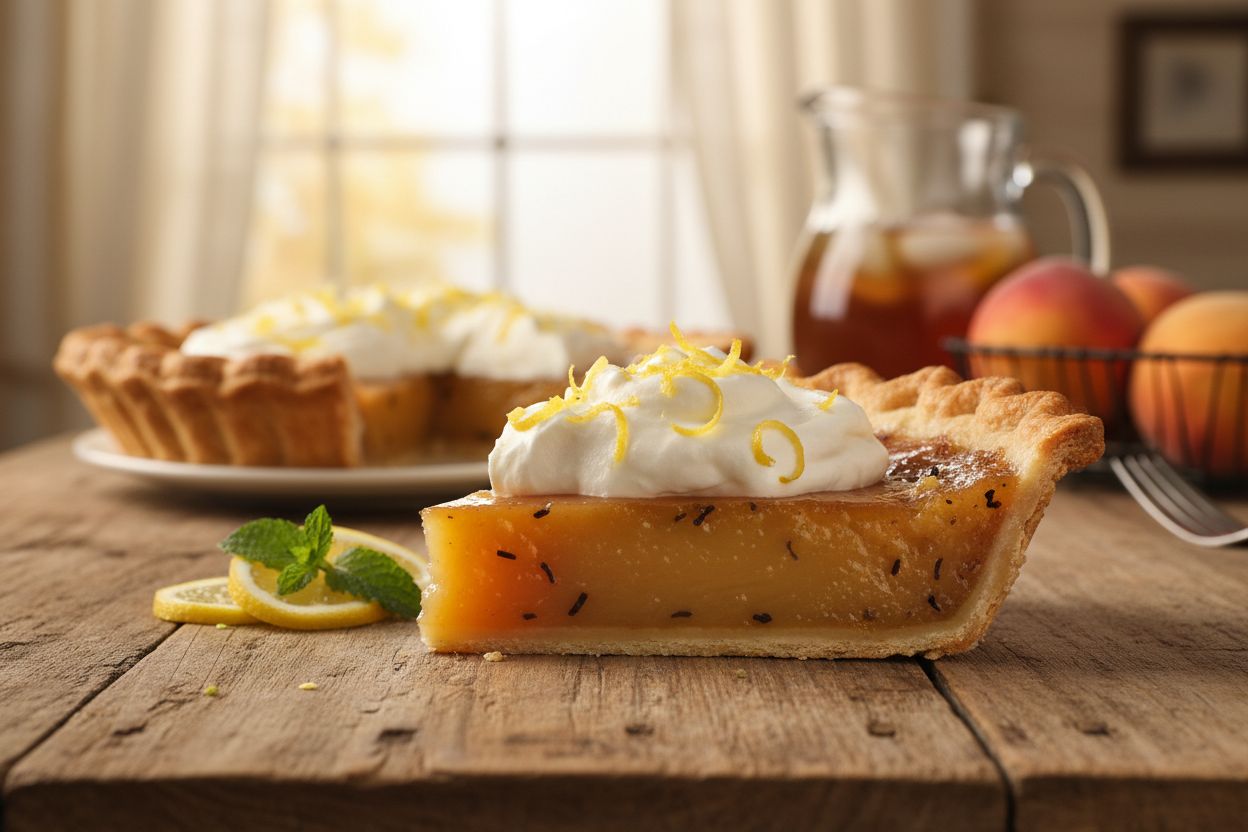



Sweet Tea Pie
Background
Sweet Tea Pie is a classic Southern custard pie that captures the porch-sipping charm of a glass of sweet tea and tucks it into a flaky shell. The hallmark is a deeply brewed concentrate that lends tannic structure and caramel-honey notes to a silky custard. Historically, thrifty Southern bakers took the region’s favorite beverage and, with pantry staples already on hand, transformed it into a tender pie that sets softly and slices cleanly. The result is a dessert that tastes both nostalgic and novel: familiar like a custard pie, yet lifted by tea’s perfumed backbone and citrusy brightness.
In many communities, church suppers and family reunions helped spread the fame of this pie. Home cooks refined their techniques, from steeping methods to how much citrus to stir in, all with the goal of balancing the tea’s tannins, the round sweetness of sugar, the gentle richness of butter and eggs, and the comfort of a sturdy crust. The version below stays true to that spirit while keeping the steps straightforward and the flavors clear.
Ingredients
- black tea: 2 tablespoons loose leaves or 6 bags
- water: 2 cups, divided
- granulated sugar: 1 cup (adjust to taste)
- unsalted butter: 6 tablespoons, melted and cooled
- large eggs: 4
- all-purpose flour: 3 tablespoons
- lemon juice: 2 tablespoons
- vanilla extract: 1 teaspoon
- kosher salt: 1/4 teaspoon
- pie crust: 1 (9-inch), parbaked and cooled
- whipped cream (optional): for serving
- lemon zest (optional): 1 teaspoon, finely grated
- heavy cream (optional): 1/4 cup for extra richness
Equipment
- 9-inch pie dish
- Medium saucepan
- Heatproof bowl and fine-mesh sieve
- Whisk and rubber spatula
- Measuring cups and spoons
- Pie weights or dried beans, parchment
Preparation Overview
You will brew a strong concentrate from black tea and hot water, whisk a quick custard with granulated sugar, all-purpose flour, and large eggs, enrich it with unsalted butter, perfume it with vanilla extract and brighten with lemon juice, then bake the mixture in a prepped pie crust until the center has a soft wobble. After cooling, you’ll slice and crown each piece with whipped cream, plus a flutter of lemon zest if you like.
Step-by-Step Instructions
Prepare the crust
Fit the pie crust into a 9-inch dish. Line with parchment and fill with pie weights. Bake until the edges are lightly golden and the bottom looks dry. Remove the weights and cool the pie crust completely so the custard can set without sogginess.
Brew a strong tea concentrate
Bring half of the water to a gentle simmer. Add the black tea, cover, and steep until the liquid turns a deep amber and tastes robust. Strain into a heatproof bowl, then stir in the remaining cool water to moderate the strength. Let the concentrate cool until just warm to the touch.
Make the custard base
In a mixing bowl, whisk the granulated sugar, all-purpose flour, and kosher salt until evenly combined. Add the large eggs and whisk until glossy and smooth with no streaks. Stream in the cooled melted unsalted butter while whisking. Gradually whisk in the cooled black tea concentrate. Stir in the vanilla extract and lemon juice. If using, fold in the lemon zest and the heavy cream for added richness.
Fill and bake
Place the cooled pie crust on a baking sheet for easy handling. Pour in the custard. Bake at 350°F until the edges are puffed and the center exhibits a gentle jiggle when the pan is nudged. The surface should look glossy and just set without cracking.
Cool and set
Transfer the pie to a rack and let it cool until the dish is room temperature. For the cleanest slices, continue chilling until the custard is thoroughly set and the flavor has bloomed.
Serve
Slice with a warm knife, wiping between cuts. Add soft swirls of whipped cream and a sprinkle of lemon zest. The pie pairs beautifully with berries, stone fruit, or a simple cup of coffee.
Tips and Variations
- Tea strength: Choose a sturdy blend of black tea for bold flavor. If your brew tastes faint, gently reduce the liquid on the stove to concentrate before cooling.
- Sweetness: For a sweeter finish, add a spoon or two more of granulated sugar. For a drier, more tannic profile, reduce the granulated sugar slightly and lean on bright citrus from the lemon juice.
- Richness: Stir in the optional heavy cream if you prefer a silkier, more indulgent custard.
- Citrus notes: A little lemon zest lifts aroma without tipping the pie into tart territory; add it only after the tea concentrate cools so the oils stay vibrant.
- Structure: The small amount of all-purpose flour helps the custard set tenderly. If you prefer a looser texture, reduce the all-purpose flour by a teaspoon; for a firmer slice, add an extra teaspoon.
- Butter temperature: Ensure the melted unsalted butter is cooled before whisking it into the large eggs to avoid scrambling.
- Crust choices: A traditional pastry pie crust showcases the custard. For a crumb alternative, prebake a graham-style base; if it seems crumbly, a touch more melted unsalted butter binds it.
Troubleshooting
- Filling cracked: This happens when the custard overbakes. Next time, pull the pie as soon as the center shows a delicate wobble and the edges are set; residual heat will finish the job.
- Filling too loose: Whisk an extra teaspoon of all-purpose flour into a small portion of the custard, then whisk that back in before baking. Ensure the pie crust is fully parbaked so steam can escape.
- Muted flavor: Strengthen the brew with more black tea or a slightly longer steep, and balance with a touch more lemon juice and vanilla extract.
Serving and Enjoyment
Sweet Tea Pie shines when the custard is cool, the texture is silky, and the top gleams. Serve neat or with soft clouds of whipped cream. A whisper of lemon zest brightens the aromatics from the black tea, while a scattering of berries adds color and acidity. Pair slices with a cup of freshly brewed black tea for a charming echo, or with iced coffee if you prefer contrast.
Storage and Make-Ahead
- Make-ahead: The baked pie can be prepared the day before; chilling intensifies the notes from the black tea and smooths the sweetness from the granulated sugar.
- Storage: Keep the pie covered and refrigerated. Add the whipped cream just before serving so the topping stays billowy.
- Leftover revival: For a just-baked feel, let a refrigerated slice sit at room temperature briefly so the custard relaxes and the perfume of vanilla extract and the citrus from the lemon juice lift back up.
Notes on Sourcing
- Tea: Choose quality loose-leaf or robust bags of black tea with clean, fresh aroma.
- Dairy and eggs: Fresh, high-quality unsalted butter, rich heavy cream if using, and vibrant-yolked large eggs all contribute to a custard with excellent structure and sheen.
- Pantry: Fine-grain granulated sugar dissolves easily; a reliable bag of all-purpose flour provides consistent setting; a pinch of kosher salt rounds the sweetness; pure vanilla extract adds warmth; fresh lemon juice and fragrant lemon zest lend sparkle.