
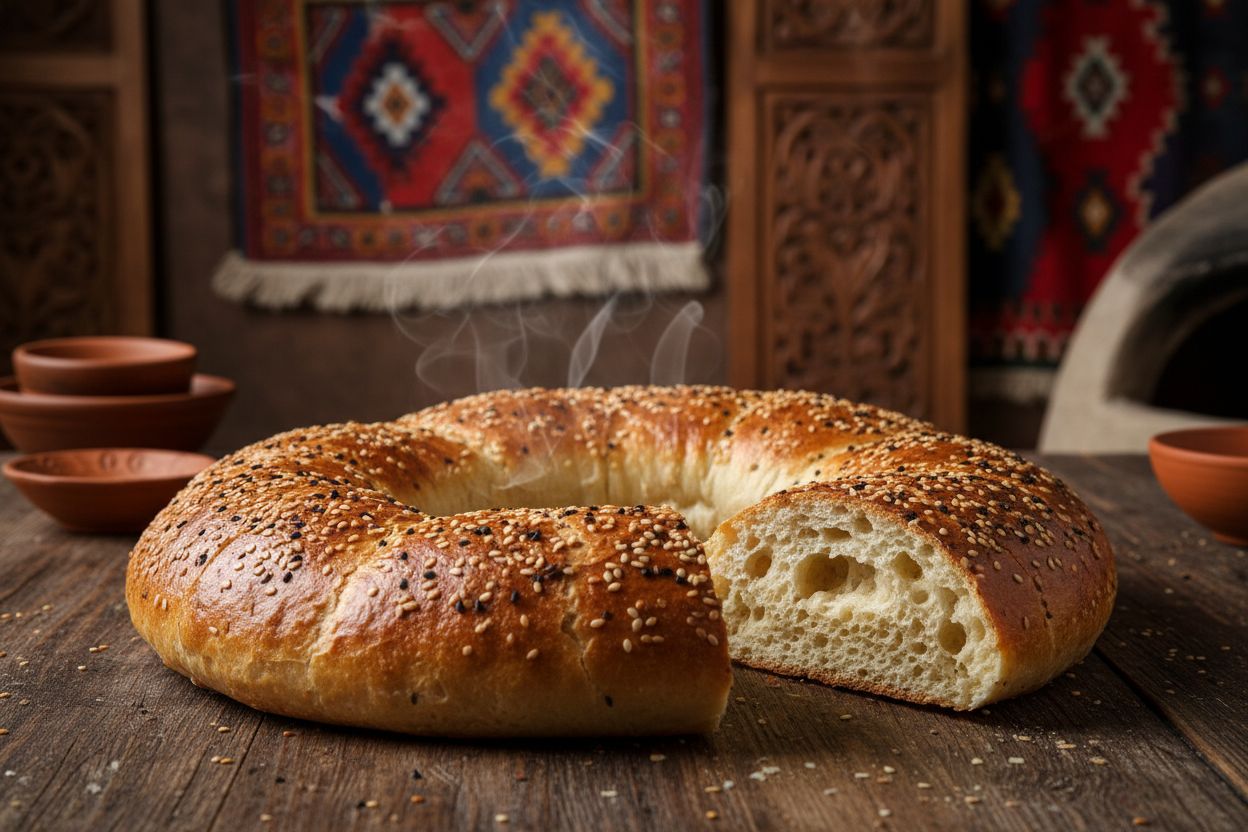



Tandir Non
Background
Tandir Non is a beloved Central Asian flatbread traditionally baked on the inner walls of a blazing-hot clay oven. Its hallmark is a boldly blistered crust with a tender, chewy crumb and a decorated, dimpled center that stays thinner than the rim. The bread’s round shape and stamped pattern symbolize hospitality across markets and family tables, and it pairs with everything from hearty stews to skewered meats and tea. While a true tandoor yields the most authentic aroma, this recipe adapts beautifully to a home oven with a stone or steel.
Ingredients
- 500 g flour
- 300–320 ml warm water
- 7 g instant or active dry yeast
- 10 g salt
- 10–15 g sugar
- 2 tbsp plain yogurt (optional, for tenderness)
- 50 ml milk (optional, for softness)
- 1 tbsp neutral oil (plus more for the bowl)
- 1 tbsp melted ghee or extra oil (for finishing)
- 1 egg (optional, for a glossy wash)
- 1 tbsp sesame seeds
- 1 tsp nigella seeds
Equipment
- Large mixing bowl and a sturdy spoon or dough whisk
- Stand mixer with dough hook (optional)
- Bench scraper and kitchen scale
- Chekich (bread stamp) or a fork for docking
- Pizza stone or baking steel, or a very heavy sheet pan turned upside down
- Clean towel or plastic wrap
Preparation
- Bloom the leaven: In a bowl, combine warm water, the sugar, and the yeast; whisk to dissolve and let it stand until foamy, about 5–10 minutes.
- Make the dough: In a large bowl, whisk the flour and salt. Pour in the foamy mixture along with the yogurt and milk; stir until a shaggy dough forms. Cover and rest for an autolyse of about 10 minutes to help hydrate the dough.
- Knead: Knead by hand on a lightly dusted surface or in a mixer until smooth and elastic. If the dough feels sticky, dust with a touch of flour; if it feels stiff, splash in a teaspoon of water. Aim for a soft, supple dough after roughly 8–10 minutes of kneading.
- First rise: Lightly oil a bowl with a thin film of oil, place in the dough, cover, and let rise until doubled, about 60–90 minutes in a warm spot.
- Divide and pre-shape: Turn the dough out, gently deflate, and divide into 2 equal pieces for two round loaves. Pre-shape each into a tight ball and rest, covered, for 10–15 minutes.
Shaping and Topping
- Final shaping: Working with one piece at a time, place the dough on a lightly dusted surface and flatten into a round, about 22–25 cm diameter. Keep the rim slightly thicker than the center.
- Stamp or dock: Firmly press a chekich into the center several times to create a decorative, well-dimpled area, or dock thoroughly with a fork so the center stays flat during baking.
- Glaze: For a glossy finish, whisk 1 egg with a splash of milk and a spoon of yogurt, or use a simple mix of water and yogurt if you prefer an egg-free wash. Brush the surface lightly, avoiding puddles.
- Seeds: Sprinkle generously with sesame and a pinch of nigella, then press the seeds so they adhere.
Baking
Traditional method: Heat a tandoor until roaring hot; this can take about 45–60 minutes. Home-oven method: Place a stone or steel on the center rack and preheat the oven to its maximum setting (250–300°C/480–570°F) for at least 45 minutes to saturate the baking surface with heat.
- Load and bake: If using a tandoor, moisten the back of the shaped loaf slightly and slap it onto the hot wall until it adheres; bake until blistered and well colored, typically 10–15 minutes. In a home oven, slide the loaf onto the stone or steel and bake until deep golden at the edges and well set in the center, about 10–15 minutes.
- Finish: Right out of the oven, brush the rim lightly with melted ghee or a little oil for aroma and shine. Repeat shaping and baking with the second piece.
Serving and Enjoying
Let Tandir Non cool for a few minutes, then tear and serve warm. It’s perfect with soups, kebabs, plov, and tea, or simply with fresh herbs and cheese. To rewarm later, place on a hot stone or sheet for about 3–5 minutes until supple again.
Tips and Variations
- Preferment option: For extra flavor, mix 100 g flour, 100 ml water, a pinch of yeast, and a pinch of sugar and let it ferment until bubbly before adding to the main dough.
- Crumb and crust: A touch more water yields a more open crumb; slightly less gives a tighter, easier-to-shape dough. Brushing with melted ghee or oil softens the crust; skipping it keeps more crackle.
- Richer loaf: Add an extra spoon of yogurt or a splash of milk for tenderness, or a teaspoon of oil in the dough for a softer bite.
- Dietary tweaks: For an egg-free top, use water with yogurt or just milk as the wash instead of an egg glaze. For a dairy-free finish, brush with oil instead of ghee or milk.
- Seasoning: Adjust salt to taste; a pinch more sugar deepens browning if your oven runs cool. Try more sesame or skip the nigella to vary the aroma.
Storage
Store cooled loaves in a paper bag at room temperature for a day or two. For longer storage, freeze well-wrapped, then reheat on a hot stone or sheet for 5 minutes. If the crust feels dry after thawing, lightly mist or brush the rim with water before warming, then finish with a whisper of ghee for aroma.