



Attaya Kanyah
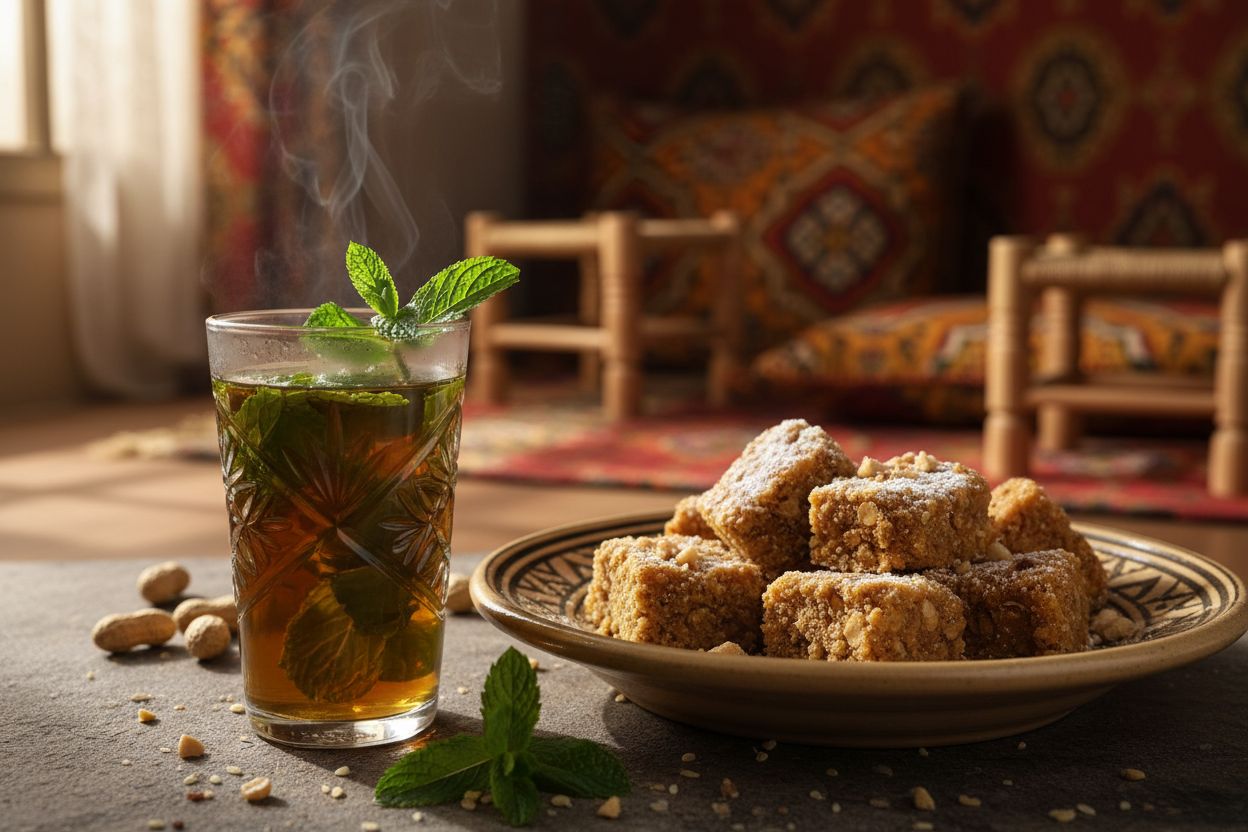
Attaya Kanyah pairs a beloved West African tea ritual with a classic nutty sweet. Attaya, shared from small glasses with a signature foam, brings people together for conversation and hospitality, while kanyah offers a crumbly, melt-in-the-mouth treat. This version brews a concentrated pot using green tea, balances it with sugar and fresh mint leaves, and sets a small slab of kanyah built on finely ground roasted peanuts enriched by toasted rice flour or gari. Prepare both components side by side and serve them together for a satisfying, story-rich experience.
Ingredients
For Attaya
- 500 ml water
- 2 tablespoons green tea (preferably gunpowder style)
- 6–8 tablespoons sugar, to taste
- 1 generous handful mint leaves (optional but traditional)
For Kanyah
- 2 cups roasted peanuts (skinless), finely ground
- 1 cup rice flour or 1 cup gari
- 1 cup sugar
- 1/4 teaspoon salt
- 1/2 teaspoon ground ginger (optional)
Preparation
Mise en place for Attaya
- Measure the water, the green tea, and the sugar. Rinse a small teapot and two or three glasses with hot water to warm them.
- Rinse the mint leaves, pat them dry, and keep them ready for the final pour.
Mise en place for Kanyah
- Pulse or pound the roasted peanuts until very fine and slightly pasty. Set aside in a bowl.
- If using rice flour, sift it to remove any lumps; if using gari, rub it lightly between your fingers to ensure an even texture.
- Line a small tray or loaf tin with parchment so the finished slab releases cleanly.
Cooking Process
Attaya (Tea) Steps
- Warm the teapot with hot water, swish, and discard. Add the green tea to the warm pot. Pour in just enough hot water to cover the leaves, swirl gently to rinse, and discard that rinse.
- Fill the pot with the remaining hot water. Bring to a lively simmer for about 3 minutes, then stir in the sugar until fully dissolved.
- Drop in the mint leaves and let the aroma build for about 1 minute, then start the signature aeration: pour the tea from pot to glass and back again repeatedly to create a fine foam. Taste and add a little more sugar if desired, aerating again to blend.
- Serve the first round immediately. If you like, top up the pot with a splash of hot water and repeat for a second, sweeter round with a few fresh mint leaves.
Kanyah (Peanut Sweet) Steps
- Place the rice flour or the gari in a dry skillet over low heat. Stir constantly until the grains smell nutty and turn the faintest shade of gold, about 5–7 minutes. Transfer to a bowl to stop the toasting.
- In a small, heavy saucepan set over low heat, melt the sugar into a thin syrup (let it liquefy but do not brown), about 2–3 minutes. Stir in the salt.
- Remove the pan from heat and quickly mix in the ground roasted peanuts and the ground ginger (if using) until evenly combined.
- Sprinkle in the warm toasted rice flour or the gari a little at a time, stirring and pressing until a soft, crumbly dough forms that holds together when squeezed.
- Pack the mixture firmly into the prepared tray, pressing the surface flat. Let it cool and set for at least 30 minutes, then cut into small squares.
How to Enjoy
Pour the tea in a high arc so a tight foam crowns each glass, then pass the first round while the kanyah finishes setting. Share the kanyah in small, bite-size pieces alongside the warm, foamy glasses. The contrast of the hot, aromatic sip with the cool, nutty crumb is the heart of the experience. Offer additional rounds of tea if you like, and keep the portions modest so everyone can linger and talk.
Tips and Notes
- Attaya is often served in multiple rounds; you can brew a second or even a third by refreshing with hot water, adding a touch more sugar and a few fresh mint leaves, and aerating again.
- For kanyah, the balance depends on how finely the roasted peanuts are ground and whether you use rice flour or gari. Add just enough toasted grain to bind; the goal is a tender, cohesive crumb.
- Keep the syrup pale. If the melted sugar darkens significantly, the flavor will shift toward caramel; start over if needed to maintain the classic profile.
- Store kanyah airtight at cool room temperature; it keeps its texture best when protected from humidity.