
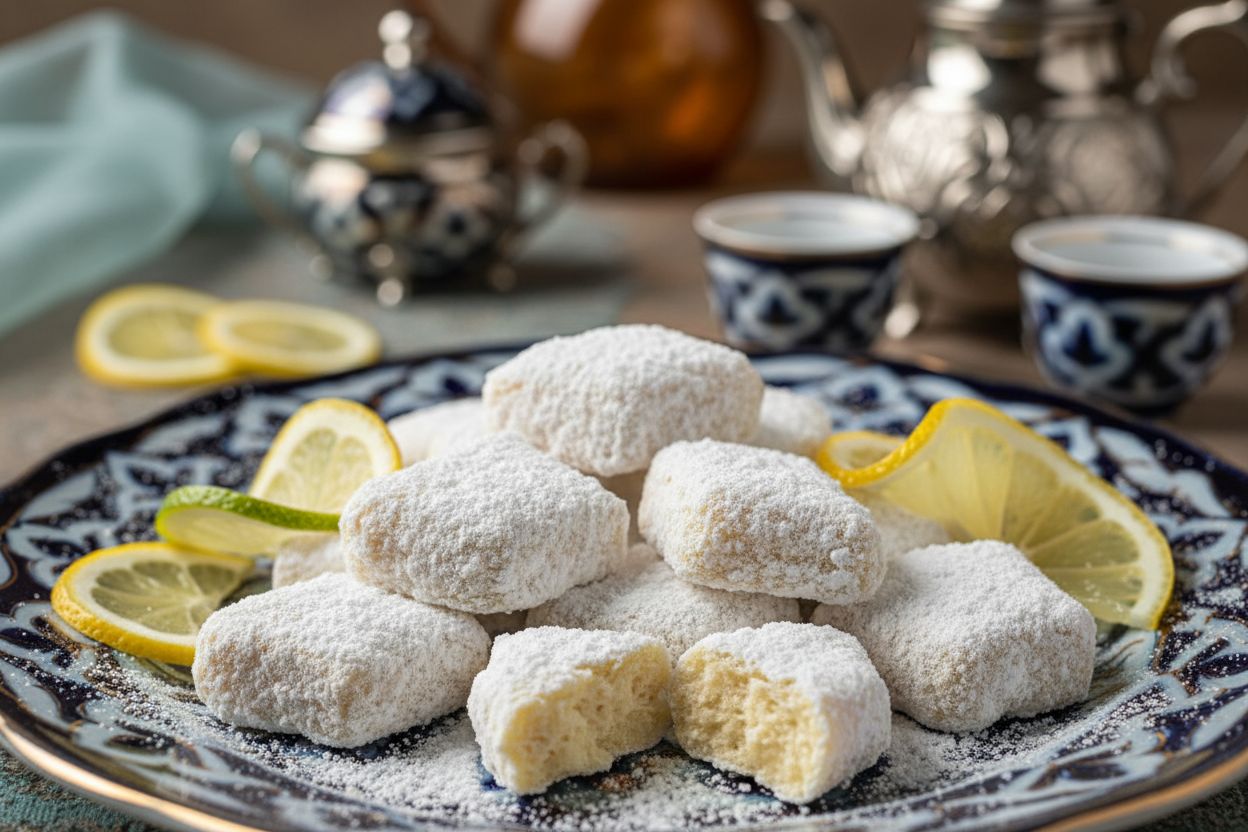



Bukhara Parvarda Bites
Bukhara Parvarda is a classic Central Asian confection from the Silk Road city of Bukhara: a tender, chewy candy with a matte, snowy coat and a clean sweetness. The technique is simple syrup work shaped into bite-size pillows, perfect with tea and for gifting. This streamlined version keeps the spirit and texture while using home-kitchen tools.
Ingredients
- 2 cups (400 g) sugar
- 1 cup (240 ml) water
- 1 teaspoon lemon juice
- 1 teaspoon ghee, for greasing
- 1/2 cup sifted all-purpose flour, for dusting
- 1/4 teaspoon ground cardamom (optional)
Equipment
- Heavy saucepan (2–3 quart)
- Heatproof spatula and a small offset spatula
- Sheet pan or marble board
- Bench scraper or butter knife
- Instant-read thermometer (helpful)
Preparation
- Dust a cool tray generously with the sifted all-purpose flour. Lightly grease a spatula, scraper, and a small area of your counter with a thin film of ghee.
- To the saucepan, add sugar and water. Stir just to hydrate, then place over medium heat. Cook without stirring until the mixture looks clear and begins to bubble around the edges, about 4–6 minutes.
- Add the lemon juice and swirl the pan. Increase heat to medium-high and boil to the soft-ball stage (236–240°F / 113–116°C), typically 8–12 minutes from the first strong simmer. If crystals form on the sides, wash them down with a damp pastry brush.
- When the correct stage is reached, immediately pour the syrup onto the dusted tray. Let it settle for 2–3 minutes until the edges turn matte but the center is still pliable.
- Using the greased scraper, fold the cooler edges toward the center. Begin gently kneading to incorporate a light coating of the dusting while avoiding overworking. If using, sprinkle in the cardamom and fold to distribute.
- When the mass holds its shape yet feels warm and elastic, pick it up with greased hands and stretch it into a short rope, then fold it back on itself. Repeat the stretch-and-fold a dozen times until the candy turns pale and satiny. If it sticks, touch your fingertips to a little of the dusting.
- Roll into a long rope about 1/2 inch (1.25 cm) thick. Cut crosswise into small pillows. Toss the pieces lightly in more dusting and space them apart to dry for 20–30 minutes.
- Gently rub off excess dusting. If you like the classic look, press each piece between two fingers to create a dimple. The texture should be soft-chewy with a delicate coating.
Serving
Enjoy with green or black tea after meals, or pair a few pieces with roasted nuts and dried fruit on a small tea-tray. Their clean sweetness makes a calming finish alongside citrus segments. For gifting, tuck the set candies into parchment-lined tins.
Tips and Notes
- Control texture: a slightly lower temperature gives a softer chew, a touch higher yields a firmer bite. Use visual cues if you lack a thermometer.
- Work quickly but calmly; warm syrup is more pliable, while overcooling makes shaping harder.
- For aroma variations, replace or complement the cardamom with a pinch of finely grated citrus zest added during the folding stage.
Storage
Store in an airtight jar at cool room temperature, layered with parchment if needed. They keep best for about 5–7 days, gradually firming a bit as they dry.
FAQ
Why dust with a wheat coating instead of powdered sugar?
Traditional makers use a fine wheat dusting because it prevents sticking without adding extra sweetness, keeping the finish matte and the chew clean.
Can I use oil instead of ghee?
Yes—neutral oil works, but a touch of ghee adds a faint buttery aroma that echoes bakery versions.
What if my syrup seizes or turns grainy?
It likely crystallized. Next time, avoid stirring once it starts boiling, add the lemon juice, and wash down any rogue crystals with a little water on a pastry brush.