
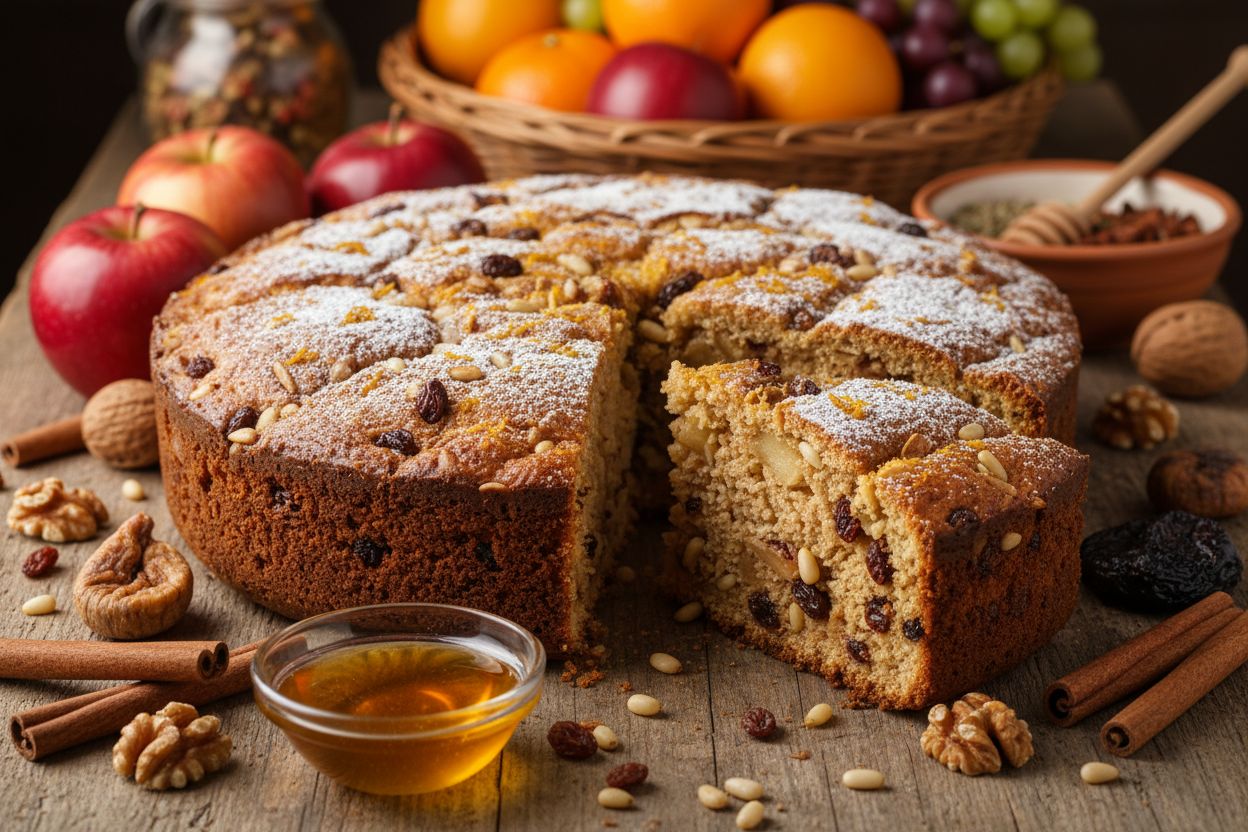



Bustrengo
Background
Bustrengo is a rustic country cake from the hills of Romagna and the Republic of San Marino, born from farm kitchens that prized thrift and flavor. Families would fold seasonal fruit and pantry staples into a dense, moist batter and bake it slowly to perfume the home on winter market days and holidays. The soul of this cake is its blend of grain and fruit: a base of cornmeal and breadcrumbs enriched with orchard apples and sun-sweetened dried figs, often joined by plump raisins for extra chew and fragrance. Each family guarded its own proportions, sometimes adding a nutty crunch, sometimes a bit more fruit, always guided by what was on hand. Today, the cake retains its farmhouse charm—simple to assemble, wonderfully fragrant, and forgiving—equally welcome as a breakfast slice, an afternoon treat, or a comforting dessert.
Ingredients
- 3 medium apples, peeled and diced
- 150 g dried figs, chopped
- 80 g raisins
- 80 ml orange juice
- 500 ml milk
- 3 large eggs
- 150 g sugar
- 2 tbsp honey, plus more to finish (optional)
- 80 ml olive oil, plus a little for the pan
- 120 g cornmeal
- 120 g all-purpose flour
- 80 g breadcrumbs
- 2 tsp baking powder
- 1 tsp cinnamon
- Fine pinch of salt
- Finely grated orange zest (from 1 orange)
- Finely grated lemon zest (from 1 lemon)
- 60 g chopped walnuts
- 30 g pine nuts
Preparation
- Heat the oven to 350°F/175°C and grease a 23–24 cm springform or deep cake pan with a little olive oil. Line the base with parchment.
- Fruit prep: In a small bowl, combine the raisins with the orange juice and set aside to plump while you prepare the batter. In another bowl, mix the diced apples with a spoonful of sugar to lightly coat. Chop the dried figs and set them aside.
- Dry mixture: In a large bowl, whisk together the cornmeal, all-purpose flour, breadcrumbs, remaining sugar, baking powder, cinnamon, and salt until evenly combined and aerated.
- Wet mixture: In a separate bowl or large jug, whisk the milk, eggs, honey, and olive oil until smooth, then stir in the orange zest and lemon zest.
- Combine: Pour the wet mixture into the dry and stir gently until no dry pockets remain. Fold in the plumped raisins with any remaining orange juice, the chopped dried figs, and the diced apples, followed by the walnuts and pine nuts. The batter will be thick and spoonable.
- Pan and bake: Scrape the batter into the prepared pan and smooth the top. Bake until the top is deep golden, the edges pull slightly from the sides, and a skewer inserted in the center comes out with moist crumbs, usually around 50 to 60 minutes.
- Finish: Cool in the pan briefly, then run a knife around the edge, release, and transfer to a rack. For a gentle sheen and extra aroma, warm a little honey and brush it over the top while the cake is still just warm. Let it settle for another 15 minutes before slicing.
How to Serve and Enjoy
Serve Bustrengo in modest wedges while just warm or at room temperature. Its texture is plush and gently nubby from the cornmeal and breadcrumbs, with pockets of tender apples, jammy dried figs, and soft bursts of raisins. A light brush of honey adds shine and a whisper of floral sweetness; a final dusting of finely grated orange zest right before serving perks up the aroma. It pairs beautifully with unsweetened yogurt, a simple espresso, or an after-dinner amaro.
Tips for Success
- Balance the grains: The duo of cornmeal and breadcrumbs is central to the rustic crumb. If your batter looks overly loose after folding in fruit, add a spoon of breadcrumbs to tighten; if it seems too thick, a splash more milk brings it together.
- Season smartly: A pinch of salt and the warmth of cinnamon heighten the fruit. Adjust sweetness by nudging the honey up or down to taste.
- Fruit tenderness: If the dried figs are very firm, soak them briefly in a little warm orange juice before chopping. Drain and add the soaking liquid to the batter for extra fragrance.
- Nuts, not dust: Stir the chopped walnuts and the pine nuts in at the end to preserve their crunch.
Variations
- Fruit-forward: Increase the diced apples for extra juiciness, and complement with more chopped dried figs or a handful of additional raisins.
- Grain emphasis: For a more rustic crumb, slightly increase the cornmeal and reduce the all-purpose flour by the same amount.
- Citrus lift: Add a touch more orange zest and lemon zest, and swap in additional orange juice for part of the milk if you love a brighter profile.
- Nut choices: Use just walnuts for deeper earthiness or just pine nuts for delicate sweetness, or omit nuts altogether.
- Spice tweak: Dial the cinnamon up for a cozier, wintery finish.
- Sweet glaze: Brush the warm cake with extra honey for a glossy top and gentle sweetness.
Storage
Keep the cake covered at cool room temperature once fully cooled. Its moisture from the apples, dried figs, and raisins helps it stay tender. The flavor deepens by the next day. For longer keeping, wrap slices and refrigerate; bring to room temperature before serving, or warm gently.
Frequently Asked Questions
Can I make Bustrengo without nuts?
Yes. Simply leave out the walnuts and pine nuts. The cake will remain wonderfully moist and flavorful from the fruit and grains.
Can I reduce the sweetness?
You can slightly decrease the sugar and balance with a bit more honey for a softer sweetness, or rely on the natural sugars in the apples, dried figs, and raisins.
What if I only have coarse polenta?
Let the batter rest a short while so the coarse cornmeal hydrates before baking, or pulse it briefly in a processor to make it finer.
How do I know it’s done?
Look for a well-browned top, edges that pull slightly from the pan, and a skewer that emerges with just a few moist crumbs. Time is a guide—start checking near the end of the suggested window of 50 to 60 minutes.