


Carne en Vara
Background and origin
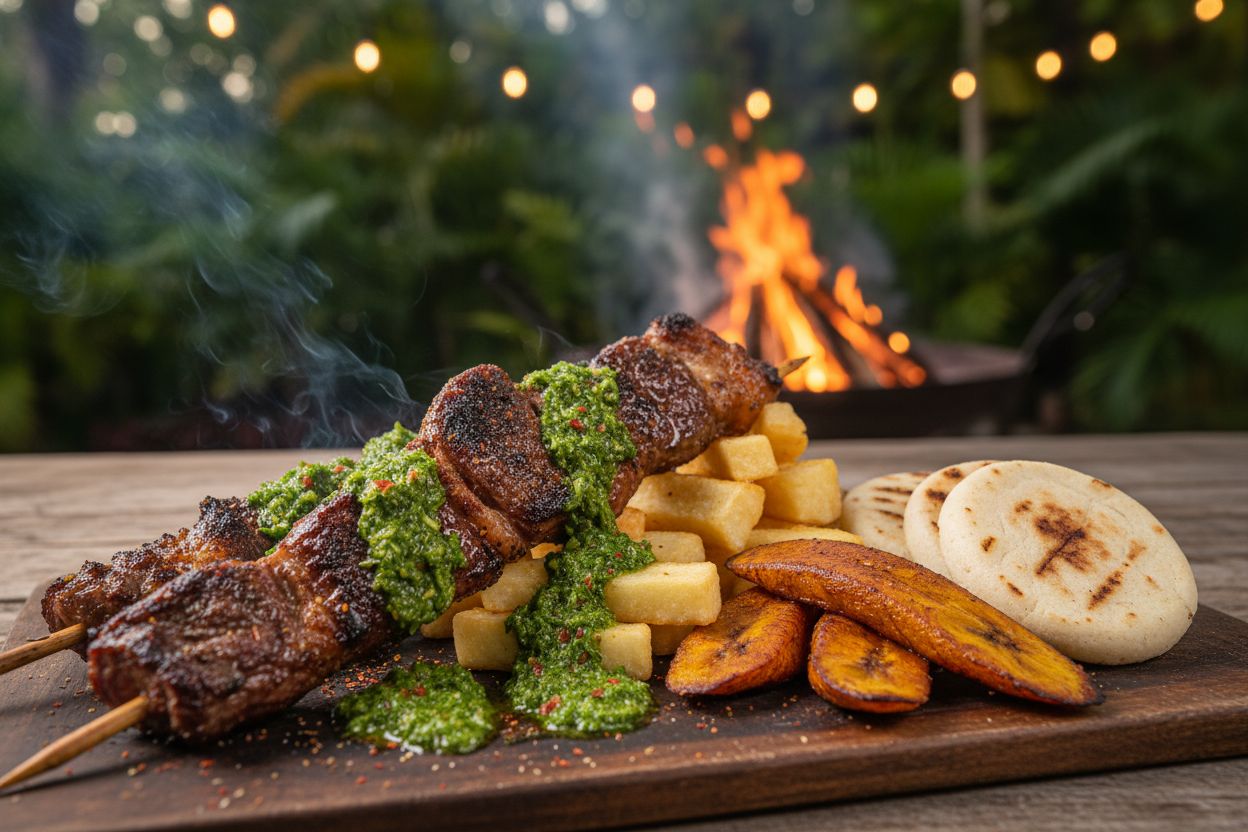
Carne en Vara is a signature open-fire preparation from the Venezuelan Llanos, where ranch hands slow-roast skewered cuts of beef beside a wood fire until deeply bronzed outside and juicy within. The seasoning is intentionally simple—just enough to enhance, not mask—the natural character of the beef. Traditional crews rub the meat with a mix of coarse salt, freshly ground pepper, mashed garlic, earthy cumin, a hint of brick-red annatto, tangy lime, a splash of vinegar, and a film of oil before leaning it near glowing coals to roast slowly. It’s communal food meant for sharing, often served with boiled yuca, grilled plantains, hot arepas, and herbaceous chimichurri.
Ingredients
- 5–7 lb whole cut of beef (sirloin cap, rib roast, or top round work well)
- 2 tablespoons salt
- 1 tablespoon freshly ground pepper
- 6 cloves garlic, crushed to a paste
- 2 teaspoons ground cumin
- 1 teaspoon ground annatto (optional but classic)
- Juice of 2 limes
- 2 tablespoons white vinegar
- 3 tablespoons neutral oil
- To serve: boiled yuca, grilled plantains, warm arepas, and chimichurri
Preparation
- Trim and shape: If needed, trim any hard exterior fat and silver skin from the beef. Keep a thin, even fat cap to baste during roasting.
- Mix the rub: In a bowl, combine the salt, pepper, mashed garlic, ground cumin, ground annatto, fresh lime juice, the vinegar, and the oil to form a loose paste.
- Season thoroughly: Rub the paste all over the beef, working it into crevices. Marinate at least 2 hours in the refrigerator.
- Skewer: Thread the beef lengthwise onto sturdy wooden stakes (varas), securing so it won’t slip as it roasts.
Fire and setup
Build a steady bed of coals using hardwood, then bank the embers into a glowing, even base. Arrange a small V-shaped trench or a safe pit where the varas can lean at a shallow angle, meat facing the heat but not directly over high flames. You want radiant heat for slow roasting, not scorching flare-ups.
Cooking process
- Roast low and steady: Plant the skewers so the beef faces the coals. Roast slowly, rotating every so often for even browning. Plan for roughly 2 hours, adjusting position to maintain gentle, steady heat.
- Baste as needed: If the surface looks dry, brush lightly with a mix of oil, a squeeze of lime, and a touch of mashed garlic. Keep the fat side closer to the heat to self-baste.
- Finish and rest: When the exterior is burnished and the interior reaches your preferred doneness, remove from heat. Sprinkle a pinch of salt over the carved surface and rest for about 10 minutes before slicing.
Serving and enjoying
Slice the beef across the grain into generous ribbons. Serve immediately with warm arepas, tender yuca, caramelized plantains, and a spoonful of bright chimichurri. A final squeeze of lime and a light dusting of salt highlight the smoky crust and juicy interior.
Tips and variations
- Seasoning balance: The trio of salt, acidity from lime and vinegar, plus aromatics like garlic and cumin, defines the profile; adjust to taste. For a deeper color, keep the pinch of annatto.
- Heat management: Keep the meat near gentle radiant heat rather than direct flames. If flare-ups occur, shift the beef slightly farther from the fire and continue.
- Alternative setup: No fire pit? Use a raised crossbar or a sturdy grill to support the varas. Maintain moderate heat and brush the surface with a touch of oil if drying.
- Flavor tweaks: Add extra cumin for warmth, more annatto for color, or swap a portion of the vinegar for more fresh lime juice. Always finish with a light sprinkle of salt after slicing.
- Leftovers: Slice cold beef thin for sandwiches, tuck into split arepas, or serve with leftover yuca, charred plantains, and a drizzle of chimichurri. A few drops of oil can refresh the surface before reheating briefly.