
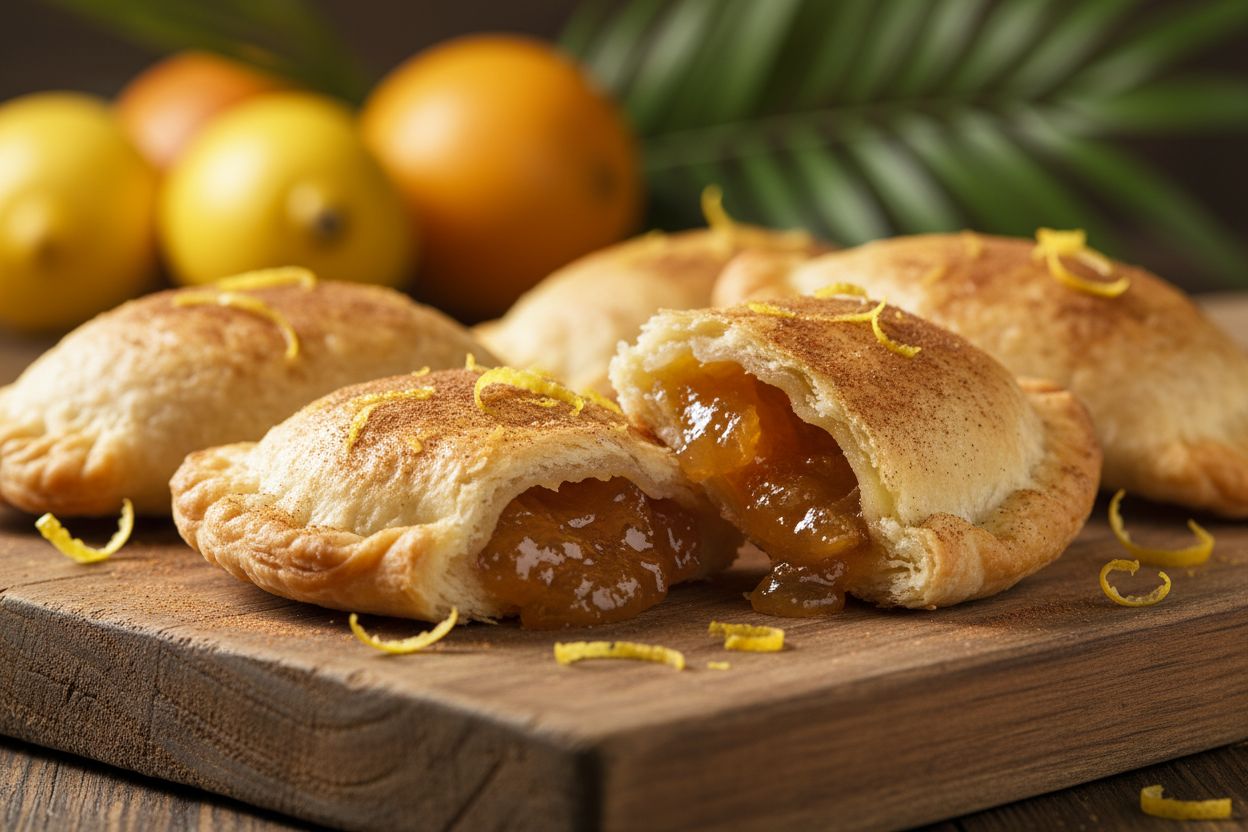



Empanadas de Piña
What are Empanadas de Piña?
Empanadas de Piña are hand-held, fruit-filled pastries with deep roots in Latin American home baking, where tender dough encloses a bright, jammy core. They trace their lineage to Iberian empanadas that were adapted across the Americas, evolving toward sweet versions in regions where tropical fruit preserves became pantry staples. In this version, a soft, flaky pastry wraps a fragrant center of pineapple jam, creating a contrast of crisp crust and luscious filling that works as breakfast, merienda, or dessert. Whether you’re baking for holidays, street-fair nostalgia, or a casual weekend project, the method is approachable and rewarding, and the aroma alone makes the effort worthwhile.
Ingredients
For the dough
- 2 cups all-purpose flour
- 3 tablespoons granulated sugar
- 1/2 teaspoon salt
- 10 tablespoons cold unsalted butter, diced
- 1 large egg, lightly beaten (reserve a little for the wash)
- 3–5 tablespoons cold water, as needed
For the filling and finish
- 1 1/4 cups thick pineapple jam
- 1/2 teaspoon ground cinnamon
- 1 teaspoon finely grated lemon zest
- 1/2 teaspoon vanilla extract
- 1–2 teaspoons cornstarch (optional, if the pineapple jam seems loose)
- 1–2 teaspoons granulated sugar for sprinkling (optional)
- 1 additional egg for wash, beaten with 1 tablespoon cold water
Before you begin
For the flakiest results, keep the dough cool from start to finish and work quickly. A slightly thicker filling helps prevent leaks, so if your pineapple jam is very fluid, a small amount of cornstarch will help set it. Shape and size are flexible: small turnovers for snacks, larger half-moons for dessert plates. This method produces a pastry that’s crisp at the edges and tender inside, with a balanced sweetness that highlights fruit and warm spice.
How to make Empanadas de Piña
1) Make the dough
- Combine the dry ingredients: In a large bowl, whisk together the all-purpose flour, granulated sugar, and salt until evenly distributed.
- Cut in the fat: Scatter the cold cubes of unsalted butter over the dry mixture. Use fingertips or a pastry blender to work the unsalted butter into pea-sized bits, leaving some larger flat shards for extra flake.
- Bring together: Add the beaten egg and 2–3 tablespoons cold water. Toss with a fork until shaggy clumps form. Add more cold water, a teaspoon at a time, just until the dough holds when pressed—avoid over-mixing.
- Chill: Press into a disk, wrap, and refrigerate until firm enough to roll. The dough should feel cool and pliable, not sticky.
2) Prepare the filling
- Stir the fruit center: In a bowl, mix the pineapple jam, ground cinnamon, lemon zest, and vanilla extract until fragrant and evenly combined.
- Adjust texture if needed: If the mixture looks very loose, sprinkle in the cornstarch and fold until smooth. Let stand a moment as it thickens slightly.
3) Roll and cut
- Flour the surface: Lightly dust the counter with a bit of all-purpose flour. Roll the dough to about the thickness of a coin, rotating to prevent sticking. If it softens, return it to the fridge briefly.
- Cut rounds: Use a round cutter or a small bowl to punch out circles. Gather scraps, gently re-roll with a touch more all-purpose flour, and continue.
4) Fill, seal, and finish
- Portion the filling: Place a small spoonful of the pineapple jam mixture in the center of each round, leaving a clean border for sealing.
- Egg wash the edge: Brush the perimeter lightly with the beaten egg mixed with cold water. Fold over to create a half-moon, pressing to seal well and expel air.
- Crimp: Crimp edges with a fork or twist to create a rope-like seal. Transfer to a lined baking sheet and chill until firm to help maintain shape.
- Top and vent: Brush the tops lightly with more egg wash for shine. If you like a sparkling finish, sprinkle a pinch of granulated sugar over each. Cut a small slit on top for steam to escape.
5) Bake
- Heat the oven: Preheat to 375°F (190°C). Bake on the middle rack until the pastry is a deep golden color at the edges and lightly caramelized on top. The filling should be bubbling gently through the vent, and the bottoms should feel crisp when lifted carefully.
- Cool: Let the empanadas rest on the pan briefly, then move to a rack to finish cooling so the crust stays crisp.
Serving and enjoyment
Serve warm or at room temperature, ideally the same day for peak texture. The flaky shell gives way to a sunny, perfumed center of pineapple jam; a light dusting of granulated sugar adds sparkle and crunch. Pair them with coffee, tea, or cold milk. For a dessert plate, add a spoon of vanilla-scented yogurt or a scoop of ice cream and a few curls of citrus peel to echo the lemon zest in the filling.
Tips for success
- Keep everything cool while working so the dough stays easy to handle and bakes up flaky.
- A thicker filling reduces leaks; if needed, stabilize with a touch of thickener and avoid overfilling.
- Seal firmly and vent the top to let steam escape and protect the seams.
- Chilling the shaped pastries before baking helps preserve definition and prevents spreading.
- For a glossy finish, don’t skip a light pastry wash and a small slit for venting.
Make-ahead, storage, and reheating
The unbaked, filled empanadas can be frozen on a tray until solid, then stored in a bag. Bake from frozen on a preheated sheet, adding a little extra time, until golden and crisp. Baked empanadas keep in an airtight container at room temperature for a day; for longer, refrigerate. Reheat in a moderate oven to refresh the crust rather than using a microwave, which softens the pastry.
Simple variations
- Spice lift: Nudge the warmth by increasing the ground cinnamon slightly.
- Citrus twist: Accentuate brightness with extra lemon zest.
- Crunchy finish: Sprinkle more granulated sugar over the top before baking for a crackly lid.
Frequently asked questions
Can I use another fruit preserve?
Yes, but the classic character comes from the tropical tang of pineapple jam. If substituting, choose a thick preserve and adjust sweetness to taste.
How do I prevent leaks?
Keep the filling thick, don’t overfill, seal thoroughly, and chill the shaped pastries before baking. A small steam vent on top also helps.
Why is my crust tough?
Overworking the dough or adding too much liquid can reduce tenderness. Mix gently and stop adding cold water as soon as the dough comes together.