
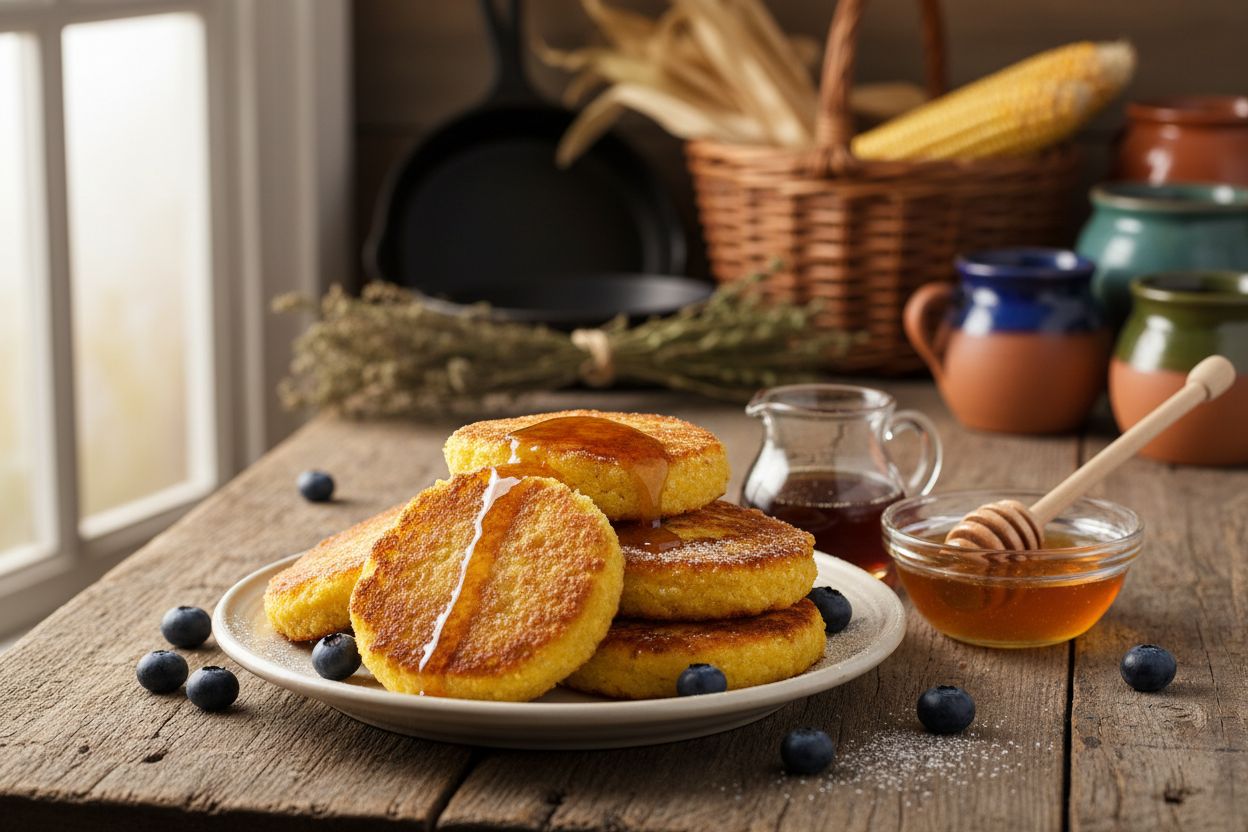



Johnny Cake
Background
Johnny Cake is a time-honored griddled flatbread rooted in Indigenous North American foodways and later embraced by colonial cooks along the Eastern seaboard. At its core is finely ground cornmeal, which sustained communities long before wheat became commonplace. Over centuries, regional spins emerged: some versions are crisp and thin, others tender and pancake-like. Today, many home cooks prepare a lightly sweet, golden round made with cornmeal blended with a small amount of all-purpose flour and leavened with baking powder, then cooked on a hot griddle with a touch of unsalted butter or neutral oil. This recipe highlights a balanced texture—crisp edges and a tender middle—while honoring the straightforward, hearty spirit of the original.
Ingredients
- 1 1/2 cups cornmeal
- 1/2 cup all-purpose flour
- 2 teaspoons baking powder
- 1 teaspoon salt
- 1 tablespoon sugar (optional, for a lightly sweet finish)
- 1 1/4 to 1 1/2 cups milk, as needed for batter consistency
- 2 large eggs
- 3 tablespoons melted unsalted butter, plus more for cooking
- neutral oil, for the griddle or skillet
- Warm water (optional, for thinning if making a thinner regional style)
- For serving: unsalted butter, maple syrup, or honey
Equipment
- Medium mixing bowl and whisk
- Measuring cups and spoons
- Cast-iron skillet or griddle
- Flexible spatula
Preparation
- Combine the dry base: In a bowl, whisk together the cornmeal, all-purpose flour, baking powder, salt, and sugar until evenly blended.
- Mix the wet ingredients: In a separate bowl, whisk the eggs until smooth, then add the milk and melted unsalted butter; whisk to combine.
- Make the batter: Pour the wet mixture into the dry mixture, stirring just until a thick, pourable batter forms. If the batter feels too stiff, add a splash more milk (or a bit of warm water if you prefer a thinner style). Let the batter rest for about 10 minutes to hydrate the cornmeal for a tender bite.
- Preheat the pan: Heat a griddle or cast-iron skillet over medium to medium-low until evenly hot, about 5 minutes. Lightly coat the surface with a thin layer of unsalted butter or a film of neutral oil.
Cooking
- Portion: For classic rounds, use 2 to 3 tablespoons of batter per cake, leaving space between portions.
- Griddle the first side: Cook until the edges look set and the underside is deep golden, about 2 to 3 minutes. Adjust heat as needed so the cakes color slowly and cook through rather than scorching.
- Flip and finish: Turn with a spatula and cook the second side until golden and cooked through, about 1 to 2 minutes. If the batter thickens as it sits, stir in a spoonful of milk or warm water to maintain a gentle flow.
- Hold warm: If making a larger batch, keep finished cakes on a wire rack in a low oven while you continue cooking, and refresh the pan with a touch of unsalted butter or neutral oil as needed.
Doneness Cues
- Edges look set before flipping, and the center springs back lightly when pressed.
- Color is golden to deep golden with lightly crisp rims.
- Interior is tender, not gummy; if gummy, cook the next batch slightly longer per side by 30 to 60 seconds.
How to Serve
Serve Johnny Cakes hot with a pat of unsalted butter melting over the top and a drizzle of maple syrup or honey. For a savory plate, top with a fried egg (already included via the base of eggs in the batter) and a sprinkle of extra salt to taste. A small splash of warm milk whisked into extra maple syrup can create a quick, light glaze if you prefer a gentler sweetness.
Tips and Techniques
- Hydrate the grain: Resting the batter for 10 minutes softens the cornmeal and improves tenderness.
- Heat management: If the cakes brown too quickly, lower the heat and add a small dab of unsalted butter or a thin slick of neutral oil to moderate the temperature across the surface.
- Consistency control: A thicker batter yields denser cakes with more crust; a splash of milk or warm water creates a thinner batter for lacier edges.
- Even mixing: Blend the baking powder thoroughly into the dry mix so lift is uniform across each cake.
- Flavor balance: A pinch more salt accentuates corn flavor; a touch of extra sugar brings gentle sweetness without overwhelming the grain.
Variations
- Traditional thin style: Skip the all-purpose flour and make a spoonable paste with warm water, cornmeal, and a pinch of salt. Cook low and slow, adding a film of neutral oil or a little unsalted butter to encourage even browning.
- Lightly sweet: Add an extra teaspoon of sugar and finish with warm honey or classic maple syrup.
- Richer crumb: Stir in an additional tablespoon of melted unsalted butter for a silkier texture.
Storage and Reheating
- Refrigerate leftovers in an airtight container up to 2 days. Reheat on a dry skillet over medium-low heat for about 2 minutes per side to revive crisp edges.
- Freeze in a single layer, then bag once firm. Reheat from frozen in a skillet over gentle heat, adding a touch of unsalted butter or neutral oil if desired.
FAQs
Why add a little flour?
A small amount of all-purpose flour gives structure so the cakes flip cleanly while keeping the flavor centered on cornmeal.
Can I make them sweeter or completely savory?
Yes. Increase or omit the sugar to taste, and adjust salt accordingly. For serving, stick with a simple pat of unsalted butter or drizzle with maple syrup or honey.
How do I prevent sticking?
Preheat thoroughly, then lightly coat the surface with unsalted butter or neutral oil. If the first batch sticks, wait another 1 to 2 minutes before trying again so the pan reaches steady heat.