
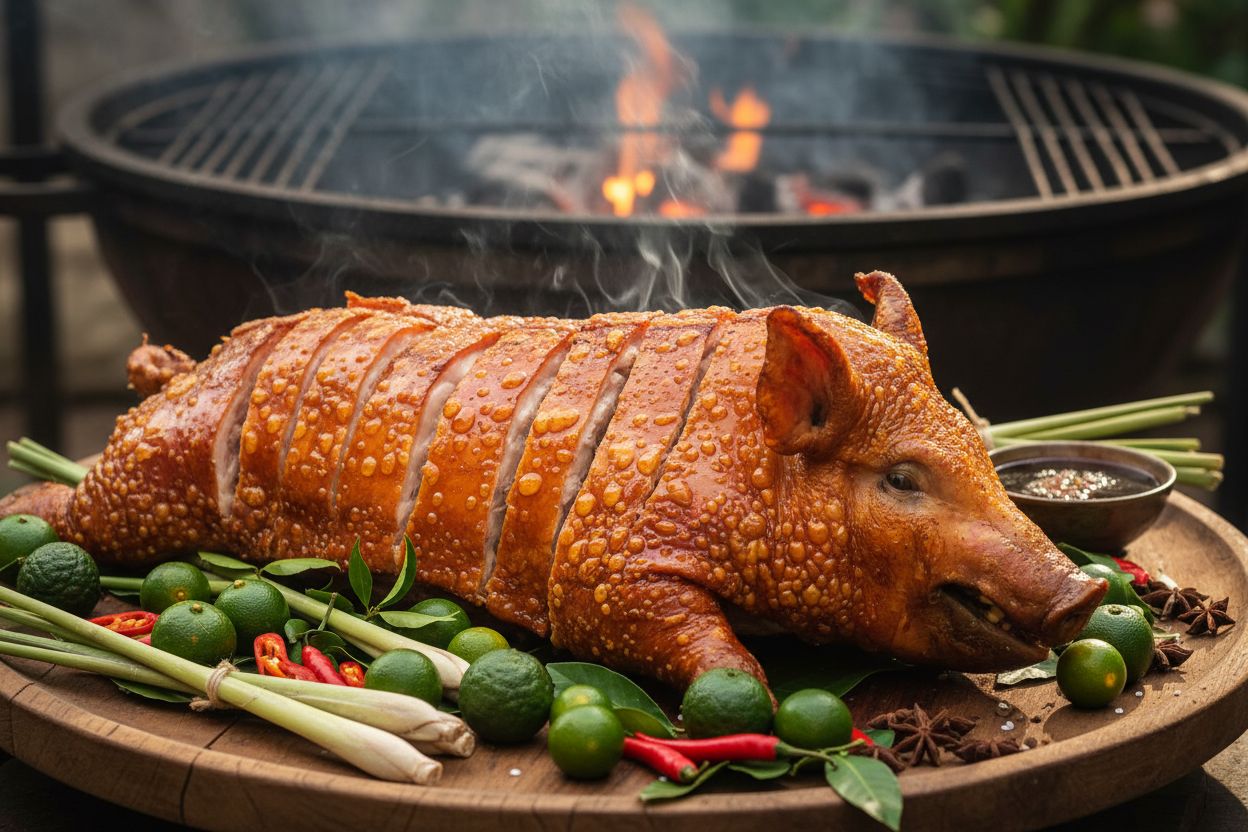



Lechon
What is Lechon?
Lechon is a festive spit-roasted whole hog tradition renowned across the Philippines and celebrated throughout many parts of the Spanish-speaking world. Its hallmark is shatteringly crisp skin and succulent meat slowly roasted over live fire on a rotating spit. The technique emphasizes slow rendering, careful heat control, and patient rotation so that the exterior blisters and turns mahogany while the interior stays juicy. Gatherings, town fiestas, and family milestones often center around a whole roast, making this dish as much about community as it is about flavor.
Ingredients
- 1 whole dressed pork (8–12 kg)
- 3 tablespoons salt
- 2 tablespoons freshly ground black pepper
- 2 heads garlic, crushed
- 6 stalks lemongrass, bruised
- 2 large onion, quartered
- 6 bay leaves
- 1 cup soy sauce
- 1 cup vinegar
- 6 whole calamansi, halved
- 2 cups coconut water
- 2 tablespoons brown sugar
- 2 tablespoons fish sauce
- 1/2 cup neutral oil
- Several sheets of banana leaves for lining and serving
- Ample lump charcoal for the pit or rotisserie
- water, as needed
Preparation
- Clean and dry the hog: Rinse the exterior and cavity of the pork thoroughly with cool water, then pat completely dry with towels. A dry surface helps promote crisp skin later.
- Aromatic paste: In a mortar or processor, pound or pulse half of the garlic with chopped lemongrass and diced onion until coarse. Season the paste with a portion of the salt and black pepper.
- Stuff the cavity: Rub the interior of the pork with the aromatic paste, then add the remaining crushed garlic, the rest of the bruised lemongrass, wedges of onion, bay leaves, and halved calamansi (squeeze a little juice inside, then place the spent halves in the cavity). Stitch or tie the opening securely so the stuffing stays in place on the spit.
- Marinade and baste mix: Whisk together the soy sauce, vinegar, coconut water, brown sugar, and fish sauce. Taste and adjust with more salt and black pepper as needed. Reserve a portion for basting and keep another portion for brushing at the start.
- Season and dry the skin: Prick the skin of the pork lightly all over with a sharp pin or skewer, taking care not to pierce into the meat. Rub the skin evenly with the remaining salt. Let the surface air-dry until tacky to the touch.
Cooking
- Build the fire: Light a generous bed of charcoal in a long pit or beneath a sturdy rotisserie setup. Allow the coals to ash over for steady, even heat.
- Mount and start: Skewer the pork securely on the spit, truss as needed so it turns evenly, and brush the entire surface with a thin film of oil. Give the skin a quick initial brush of the marinade mixture of soy sauce, vinegar, coconut water, brown sugar, and fish sauce.
- Slow rotation and baste: Begin rotating the spit over moderate heat. Maintain a consistent distance so fat renders slowly and the skin colors evenly. Periodically baste with the reserved marinade and a light drizzle of oil.
- Roast to doneness: Continue cooking, adding fresh charcoal as needed to sustain heat, until the skin is blistered and glassy and juices run clear at the thickest parts. Expect a gentle, unhurried roast of about 4 to 5 hours, depending on size and fire intensity.
- Finish and rest: Toward the end, briefly increase heat by raking hotter coals closer to crisp the last patches of skin, then lift the pork off the heat and allow it to rest so the juices redistribute.
Serving and Enjoying
Transfer the roast to a platter lined with banana leaves. Crackle the skin by tapping with the back of a knife, then carve into large, juicy slabs with shards of crackling. For a classic dip, mix vinegar with a splash of soy sauce and a squeeze of calamansi; season to taste with a pinch of salt and a touch of black pepper. Enjoy the meat and skin hot, with juices pooled on the platter for spooning over each slice.
Tips and Notes
- Dry skin is key to blistering; keep the surface moisture-free after cleaning and avoid excessive brushing early in the roast.
- Rotate steadily and manage heat in zones so you can move the spit closer or farther from the fire as needed.
- For an indoor workaround, use a sturdy rack over a roasting pan in a hot oven and place a tray with a little water below to catch drips and reduce smoke; finish under high heat to crackle the skin.