
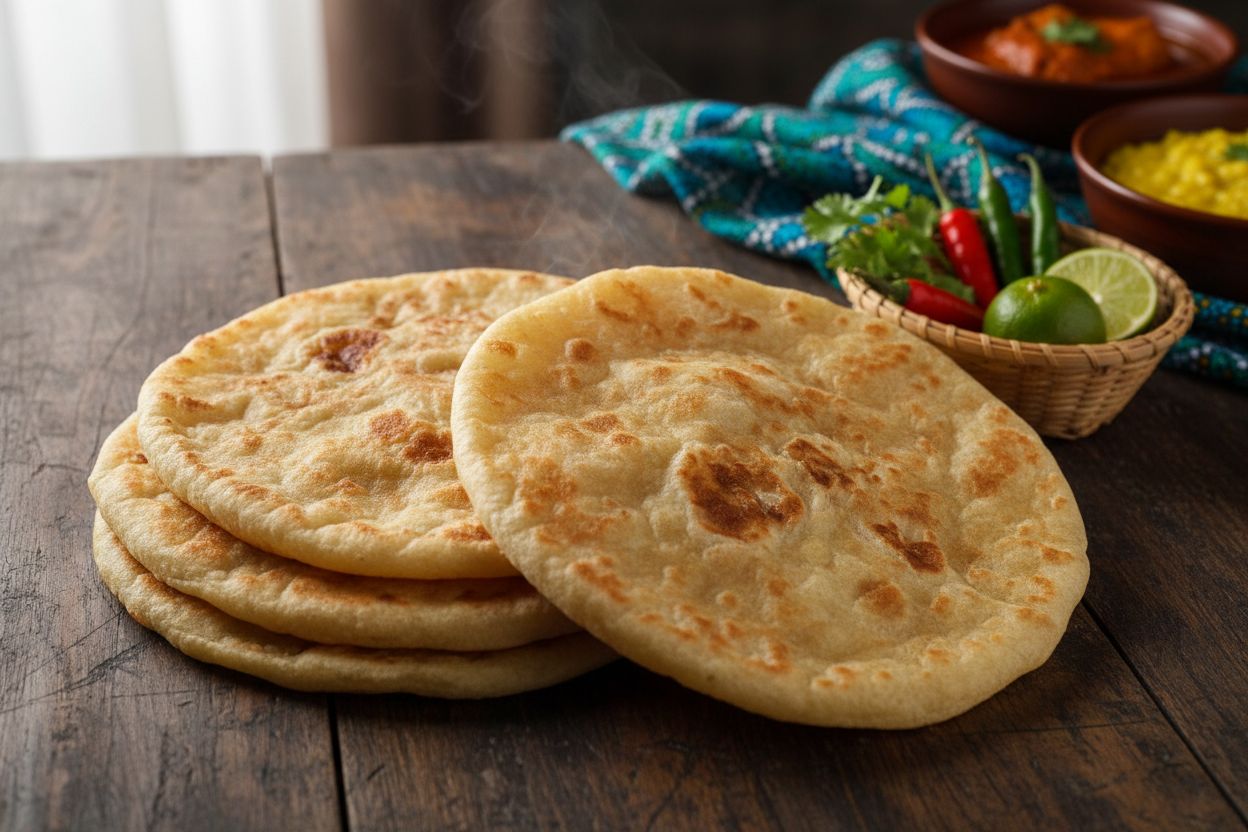



Roshi
Roshi is a beloved Maldivian flatbread that pairs effortlessly with breakfasts and savory mains alike. Soft yet resilient, it is hand-rolled and cooked on a hot surface until pale gold with scattered brown freckles. In island homes, it is a daily staple—simple to make, satisfying to eat, and versatile enough to accompany robust stews or light sides. This version focuses on clear technique and a minimalist set of pantry staples so you can master the fundamentals and enjoy consistent results at home.
Ingredients
- 2 cups flour
- About 3/4 cup water, added gradually
- 1/2 teaspoon salt
- 2 tablespoons oil, plus a little extra oil for cooking
Equipment
- Mixing bowl
- Rolling pin
- Cast-iron skillet, tawa, or heavy frying pan
- Flat spatula
Preparation
- Combine the dry base: In a mixing bowl, whisk the flour with the salt so the seasoning disperses evenly. This small step helps the dough feel uniform from the first mix to the final roll-out.
- Add liquid gradually: Pour a little water into the center and begin mixing with your fingertips. Continue adding water in small amounts, stirring from the center outward, until the mixture forms a shaggy mass. Aim for a supple feel rather than a sticky one.
- Enrich and bind: Drizzle in the oil and knead until the dough transitions from rough to smooth. The oil helps tenderness and makes the dough easier to roll thinly later.
- Knead to develop structure: Turn the dough onto a lightly sprinkled surface of flour. Press, fold, and rotate repeatedly until it feels elastic and cohesive. If the dough resists or cracks, work in a few drops of water. If it sticks, dust very lightly with flour.
- Rest the dough: Shape into a ball, coat with a faint film of oil, and cover. Let it relax until pliable and easy to roll. This rest helps the gluten unwind so the discs won’t spring back.
- Divide and pre-shape: Split the dough into equal pieces (golf-ball size works well). Roll each piece between your palms into a smooth ball and keep them covered so the surface stays supple.
Cooking Process
- Preheat the pan: Set a heavy skillet or tawa over medium heat until thoroughly hot. Even heat is key to a soft, evenly colored roshi with distinct brown speckles.
- Roll a disc: Dust the work area with a whisper of flour. Flatten one dough ball and roll from the center outward, rotating frequently, until you have a thin, even circle. Use as little flour as possible so the surface doesn’t dry.
- Cook the first side: Lay the disc onto the hot pan. When small bubbles and light spots appear and the underside shows scattered brown marks, flip with a spatula.
- Cook the second side: As it puffs lightly, press gently on any air pockets to encourage even contact. Brush or dab a minimal amount of oil around the edges if you like a softer finish, then flip once more for a brief sear to set the surfaces.
- Adjust as you go: If the roshi colors too fast, lower the heat; if it stays pale for too long, nudge the heat up. Aim for tender texture with light freckling rather than deep charring.
- Repeat and stack: Transfer each finished roshi to a covered plate, stacking them so residual steam keeps them pliable. If desired, brush the top with a hint of oil to prevent dryness.
How to Enjoy
Serve roshi warm, tearing pieces and scooping up gravies, stews, or simple sautéed vegetables. It’s equally at home beside breakfast spreads or light evening meals. The neutral taste balances bold spices and tangy sauces, and its soft structure makes it perfect for dipping, wrapping, or layering.
Storage and Reheating
Wrap leftover roshi in a clean cloth or airtight container once fully cool. To reheat, place on a warm pan until flexible again, adding a tiny brush of oil if the surface feels dry. You can also warm them stacked and covered so gentle steam restores softness.
Tips and Troubleshooting
- If the dough feels tight or cracks at the edges while rolling, massage in a few drops of water and let it relax briefly before trying again.
- If the surface sticks, use a minimal dusting of flour and shake off excess so it doesn’t toughen the exterior.
- For a softer bite, brush cooked roshi with a light film of oil while still warm and stack immediately under cover.
- Season to preference: you can amplify the base flavor slightly by adjusting the salt in small increments.
- If the dough feels dense, knead a bit longer to build elasticity, or incorporate a touch more water to reach a supple consistency.
- Heat management matters: steady, moderate heat helps create gentle blisters without drying out the roshi.
Make-Ahead Notes
You can prepare the dough in advance: coat it with a thin layer of oil, cover well, and store in the refrigerator. Bring it back to cool room temperature before rolling so it stretches without tearing. Cooked roshi also freeze well when wrapped tightly; reheat on a dry pan, finishing with a delicate brush of oil to refresh the sheen.