
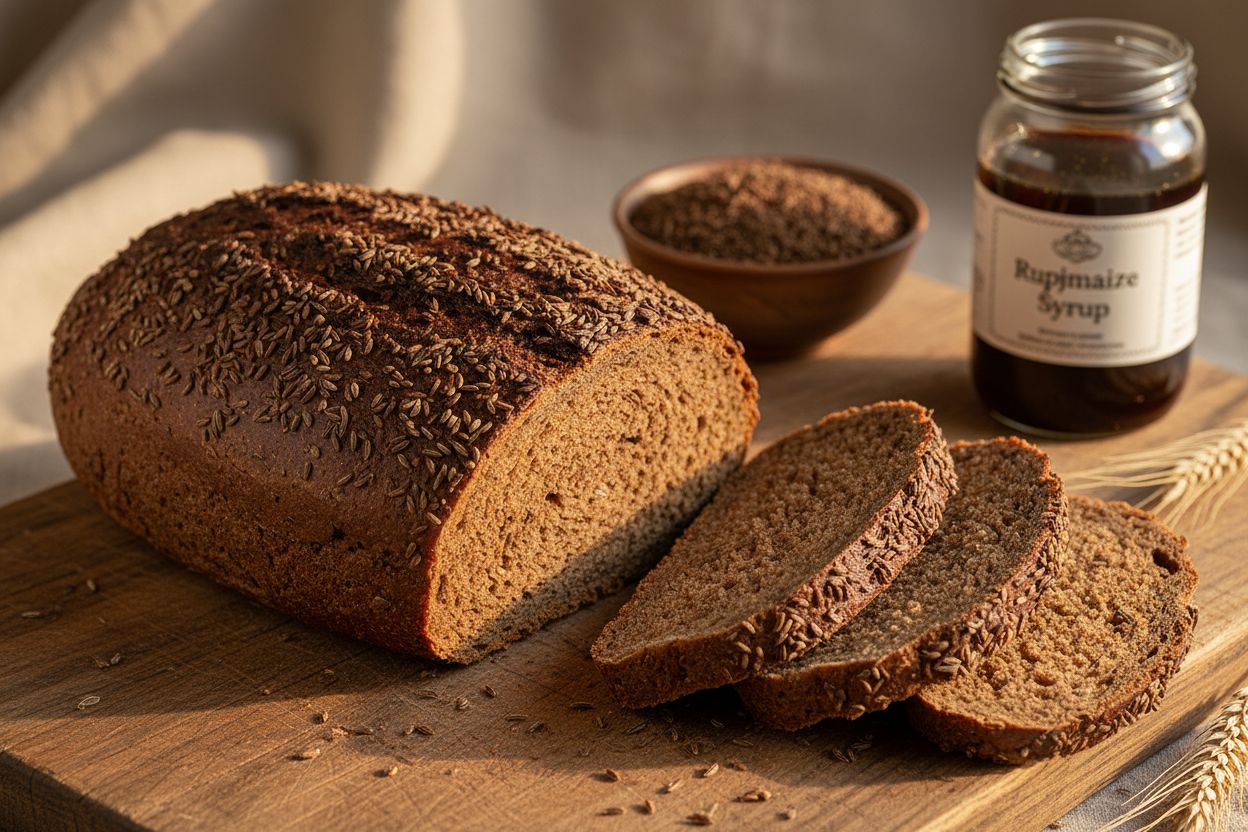



Rupjmaize
Background
Rupjmaize is the iconic Latvian dark loaf treasured for its hearty crumb, subtle sweetness, and aromatic spice. Baked across the Baltic region for centuries, the bread traditionally relied on fermentation to transform coarse grains into a deeply flavored staple that traveled well and nourished families through long winters. Today, home bakers replicate that character by cultivating a tangy starter, balancing natural sweetness with gentle bitterness from roasted grains, and baking a dense yet tender loaf that slices cleanly and keeps beautifully. The result is a bread with a rich color, a tight but moist interior, and a crackly crust that softens after resting, making it perfect for open-faced sandwiches and everyday meals.
Ingredients
- 700 g rye flour
- 200 g wheat flour
- 200 g active sourdough starter
- 550 g room-temperature water
- 12 g fine salt
- 2 tsp lightly crushed caraway seeds
- 2 tbsp dark molasses
- 1 tsp instant yeast (optional, for a faster rise)
- 1 tbsp diastatic rye malt (optional, for color and aroma)
- 1 tbsp neutral oil (for greasing)
- 1 tbsp cornmeal (for dusting)
Equipment
- Large mixing bowl and sturdy spoon or dough whisk
- Bench scraper
- 9x5 inch loaf pan or oval banneton and baking stone
- Kitchen scale
- Thermometer (optional)
- Lid or plastic wrap for covering dough
- Wire rack
Preparation
- Build or refresh the sourdough starter so it is lively and doubling consistently before mixing. If you prefer a hybrid rise, measure the optional instant yeast now so it is ready to add.
- In a large bowl, thoroughly combine the rye flour, wheat flour, and optional rye malt. Stir in the caraway seeds to distribute the spice evenly.
- In a separate vessel, whisk the water with the molasses until dissolved. Mix in the sourdough starter; add the optional instant yeast if using.
- Pour the wet mixture over the dries. Stir until no dry patches remain. The dough will be thick, tacky, and paste-like due to the high percentage of rye flour; this is expected.
- Cover and rest for autolyse for about 30 minutes to allow the flours to hydrate fully.
- Sprinkle in the salt and mix vigorously with a spoon or by hand until fully incorporated, about 2 minutes. Avoid traditional kneading; gentle but thorough mixing is ideal for doughs rich in rye flour.
First Rise
- Lightly coat the bowl with a thin film of oil, smooth the surface of the dough with wet hands, and cover. Let it ferment until risen by roughly 50% and showing small bubbles at the edges, typically 2 to 4 hours at room temperature. Warmer kitchens shorten the rise; cooler spaces lengthen it.
- If using only the sourdough starter without the optional instant yeast, expect a slower schedule. If your room is cool, allow up to 5 hours for a gentle, flavor-forward rise.
Shaping
- Prepare a loaf pan by brushing it with oil and dusting the base and sides with cornmeal. If free-form baking, line a banneton with a cloth dusted with a blend of rye flour and cornmeal.
- Scrape the dough onto a lightly moistened surface. With wet hands or a damp scraper, form a tight cylinder for a pan loaf, or an oval for hearth baking. Aim to keep as much gas in the dough as possible; avoid aggressive handling.
- Transfer to the prepared pan or banneton. If using a pan, smooth the top with wet fingers and sprinkle a thin veil of rye flour for a rustic finish.
Second Rise
- Cover and proof until the dough has expanded noticeably and springs back slowly when gently pressed, generally 45 to 75 minutes depending on temperature and whether the optional instant yeast was used.
- During this time, preheat the oven to 230°C/450°F. For hearth baking, preheat a stone or steel for at least 30 minutes to ensure a robust oven spring and a well-set base.
Baking
- For a pan loaf, place the pan on the center rack. For a hearth loaf, invert onto a parchment-lined peel, score, and slide onto the hot surface. Bake at 230°C/450°F for 15 minutes to set the crust.
- Reduce the oven to 200°C/390°F and continue baking for another 35 to 45 minutes, until the loaf sounds hollow when tapped and an internal thermometer registers about 96°C/205°F.
- If the top darkens too quickly, tent loosely with foil during the final 15 minutes.
Cooling and Slicing
- Remove to a wire rack, release from the pan, and let the loaf cool completely for at least 2 hours. This rest allows the crumb to stabilize and moisture to redistribute.
- For the most authentic texture and flavor, wrap the cooled loaf and let it mellow for 12 to 24 hours before slicing. Use a sharp serrated knife to cut thin, even slices.
How to Enjoy
Rupjmaize shines in simple, sturdy slices. Enjoy it open-faced, toasted lightly to accentuate its caramel notes, or served alongside soups and stews where its robust character complements savory broths. The bread’s gentle sweetness and subtle spice make it equally at home with hearty toppings or a drizzle of your favorite spread. Because the loaf stores well, keep it wrapped at cool room temperature and slice as needed for snacks and meals throughout the week.
Tips and Troubleshooting
- If the dough feels overly stiff, add a splash of water to reach a thick paste consistency; if too loose, fold in a small spoonful of rye flour.
- A sluggish rise often indicates a cool room or a sleepy sourdough starter. Give it more time, or use the optional instant yeast for insurance.
- For a deeper color and malty aroma, include the optional rye malt and ensure your oven is fully preheated.
- If the crust softens during storage, refresh slices briefly in a warm oven for 5 minutes to revive the exterior.
- Crumb too gummy? Extend the bake by 5 to 10 minutes and be sure the loaf cools completely before slicing.
- For a silkier dough surface and easier handling, wet your hands rather than dusting with more rye flour, which can toughen the crust.