
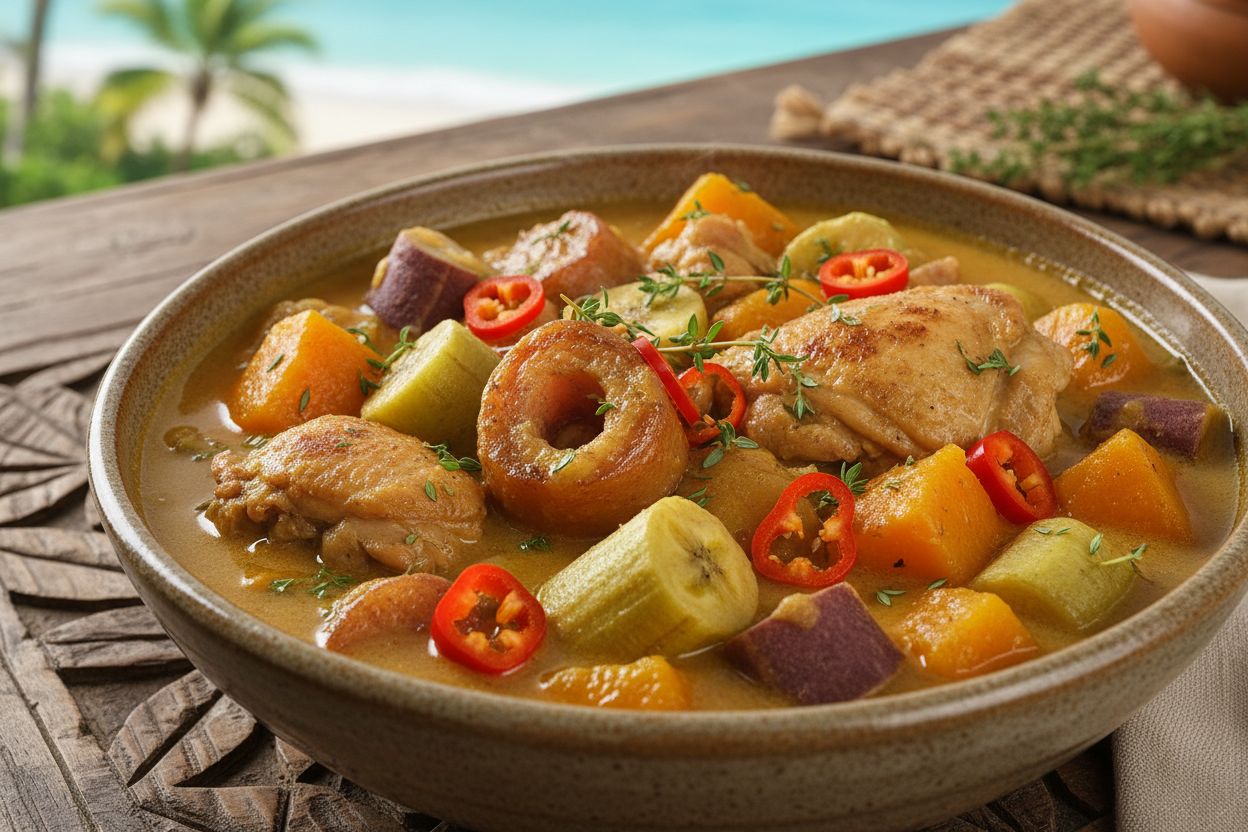



Sancoche
About This Dish
Sancoche is a hearty Caribbean one-pot celebrated across the islands for its comforting balance of starchy provisions, savory broth, and fragrant aromatics. Families gather around the bubbling pot on weekends and holidays, sharing a meal that is as communal as it is nourishing. Though each island and household shapes the pot to local tastes, the soul of Sancoche remains the same: a layered, slowly built stew-soup with soft dumplings, tender meats, and a velvety finish. Its story is one of resourcefulness and generosity, where a variety of humble market finds are transformed into a dish with depth, warmth, and character.
Ingredients
- salted pigtail
- chicken thighs
- pigeon peas
- coconut milk
- pumpkin
- green banana
- plantain
- cassava
- sweet potato
- corn on the cob
- carrot
- onion
- garlic
- scallion
- celery
- thyme
- Scotch bonnet pepper
- bay leaf
- allspice
- black pepper
- salt
- flour
- water
- vegetable oil
- lime
Preparation
- Rinse the salted pigtail under cool running water to remove surface salt. If very salty, briefly blanch it in simmering water, then drain. Set aside.
- Pat the chicken thighs dry and season with a pinch of salt, a crack of black pepper, and a squeeze of lime. Set aside while you prepare the pot base.
- Dice the onion, mince the garlic, chop the scallion and celery, and ready a few sprigs of thyme.
- Peel and chunk the starchy provisions so they cook evenly: cube the pumpkin, slice the green banana and plantain, chunk the cassava and sweet potato, cut the carrot into coins, and slice the corn on the cob into rounds.
- For simple dumplings, combine flour, a pinch of salt, and just enough water to form a soft dough. Knead briefly with a touch of vegetable oil until smooth. Pinch into small pieces and roll into little logs or discs; keep covered so they do not dry out.
- Rinse the pigeon peas. If using pre-cooked, drain well; if using dried that are already cooked, ensure they are tender and ready for the pot.
Cooking Process
- Warm a heavy pot over medium heat with a film of vegetable oil. Sear the chicken thighs until lightly browned. Add the salted pigtail and let it render gently. Stir in the onion, garlic, scallion, and celery, cooking until glossy and fragrant. Tumble in a few sprigs of thyme, the bay leaf, and a pinch of allspice.
- Pour in plenty of hot water to cover the meats by a few inches, scraping up any browned bits. Bring to a lively simmer and skim any foam for a clean broth. Let the flavors mingle until the chicken thighs and salted pigtail begin to turn tender.
- Stir in the coconut milk and add the pigeon peas. Maintain a gentle simmer so the stew remains creamy and unified.
- Add the sturdier provisions first so they begin softening in the flavorful broth: the cassava, plantain, and green banana. Follow with the sweet potato, pumpkin, carrot, and the corn on the cob rounds. Season the pot with a little more salt and black pepper, adjusting gently as you go.
- Nestle the dumplings into the simmering liquid and tuck in the whole Scotch bonnet pepper. Keep it intact for aroma and gentle heat, or pierce it lightly only if you prefer more fire. Continue simmering until the dumplings are cooked through and the provisions are tender but not falling apart.
- For body and silkiness, lightly mash a few pieces of pumpkin against the side of the pot; stir to thicken the broth. If needed, splash in a bit more water for a looser finish or a spoon of flour whisked with water for extra body.
- Finish with a bright squeeze of lime and a final handful of chopped scallion. Taste and adjust with salt and black pepper. Lift out the Scotch bonnet pepper, woody stems of thyme, and the bay leaf before serving.
Serving and Enjoying
Ladle Sancoche into deep bowls, making sure each serving gets a share of dumplings, tender meats, and colorful provisions. A final spoon of coconut milk on top adds sheen and gentle sweetness, while one more squeeze of lime brightens the whole bowl. For a mellow finish, crack a touch of black pepper just before it reaches the table. Eat slowly, letting the warmth and creaminess carry the spices and herbs in each bite.
Variations and Tips
- Richer broth: Stir in extra coconut milk near the end for a silkier finish.
- Heat control: Keep the Scotch bonnet pepper whole for aroma with mild heat. For more intensity, gently pierce it and monitor the pot.
- Protein balance: Use more of the chicken thighs and less of the salted pigtail if you prefer a lighter profile, or the reverse for a deeper, brinier backbone.
- Texture tuning: If the stew feels thin, mash more pumpkin or whisk a spoon of flour with cool water and stir it in gently as it simmers. If too thick, loosen with hot water.
- Seasoning arc: Layer small pinches of salt and black pepper from start to finish rather than adding a large amount at once; this keeps the broth balanced.
- Garnish: A scattering of fresh scallion at the end lifts the aroma.
Make-Ahead and Storage
Sancoche often tastes even more rounded after a gentle overnight rest as the flavors settle. Cool the pot safely, store it airtight, and rewarm slowly so the dumplings remain tender and the broth stays creamy. If the stew thickens in the chill, loosen it with a splash of hot water during reheating and finish with a touch of coconut milk for fresh gloss.
Why This Works
The sear on the chicken thighs builds savory depth, while the salted pigtail lends body and gentle salinity to the base. Aromatics like onion, garlic, scallion, celery, and thyme create a layered foundation. The creamy sweep of coconut milk rounds sharp edges, the pigeon peas add earthy bite, and gentle warmth from the whole Scotch bonnet pepper perfumes the pot without overwhelming it. Starches such as cassava, green banana, plantain, sweet potato, pumpkin, carrot, and corn on the cob thicken and sweeten naturally as they tenderize, delivering the cozy, spoon-coating texture that makes Sancoche so beloved.