
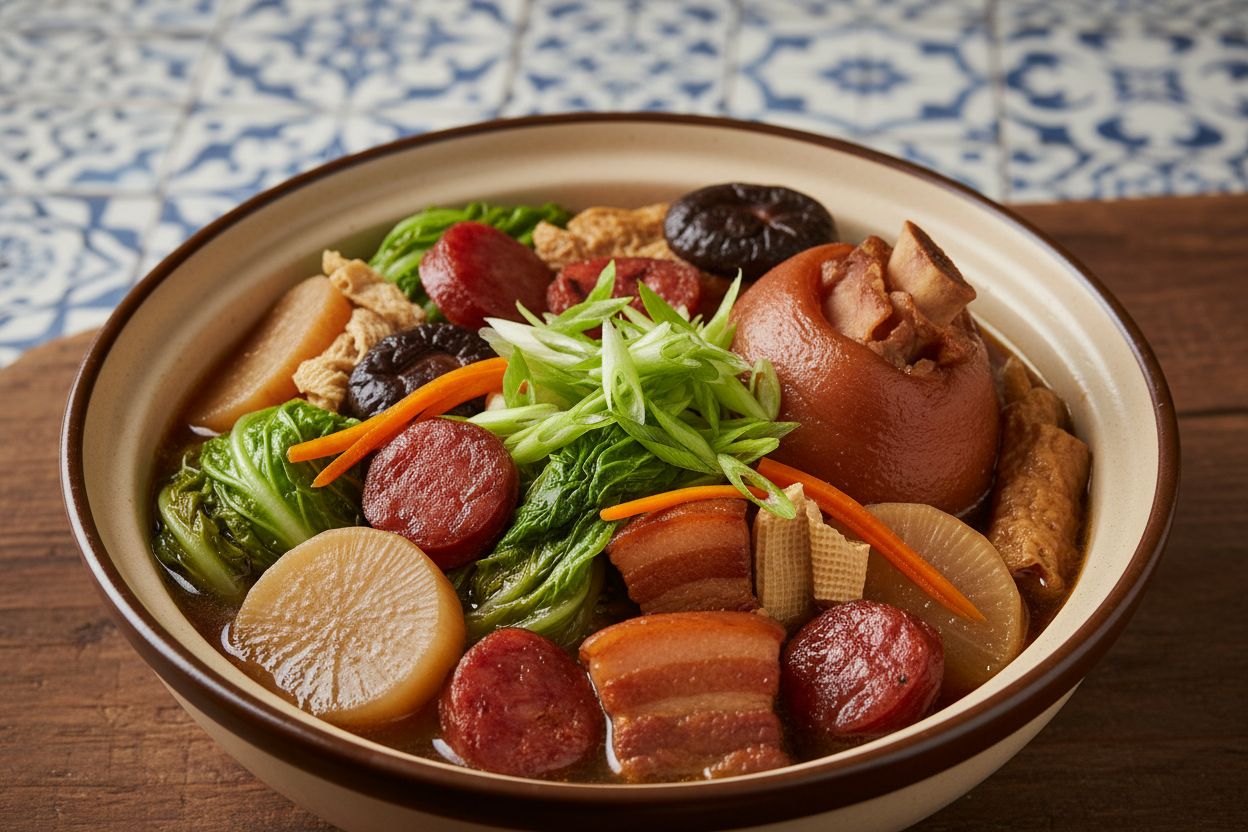



Tacho Macaense
Background
Tacho Macaense is a celebratory Macanese hotpot-stew born at the crossroads of Southern China and the Portuguese world. It brings together salted and cured meats, winter vegetables, and layered aromatics into a single warming pot meant for family tables and festive gatherings. Over time, cooks in Macau adapted Iberian techniques to local tastes, building depth from preserved elements, balancing savory richness with gentle sweetness, and finishing with fresh greens for contrast. While families guard their own traditions, the spirit of the dish is consistent: one pot, many textures, and a broth that tells the story of cultural exchange.
Ingredients
- pork belly (about 700 g, skin-on, cut into large cubes)
- Chinese sausage (2 links, sliced)
- chourico (1 link, sliced)
- ham hock (1 small, rinsed)
- Napa cabbage (1 small head, cut into wide chunks)
- daikon (1 medium, peeled and thickly sliced)
- carrots (2, peeled and cut into big pieces)
- dried shiitake mushrooms (8, rinsed)
- tofu skin (2 sheets, cut into large rectangles)
- garlic (4 cloves, minced)
- ginger (a 5 cm piece, sliced)
- bay leaf (1)
- star anise (2 pods)
- light soy sauce (2 tbsp)
- dark soy sauce (1 tbsp)
- rice wine (60 ml)
- brown sugar (1 tbsp)
- chicken stock (750 ml)
- water (250 ml, plus extra if needed)
- neutral oil (2 tbsp)
- salt (to taste)
- white pepper (to taste)
- scallions (2, thinly sliced)
Preparation
- Place the dried shiitake mushrooms in a bowl and cover with warm water; allow them to soften fully, then squeeze out excess and reserve the rich soaking liquid separately.
- Rinse the tofu skin gently, pat dry, and cut into large pieces sturdy enough to hold their shape.
- Cut the Napa cabbage into wide chunks, slice the daikon thickly, and cut the carrots into big pieces; slice the Chinese sausage and the chourico on a bias.
- Pat the pork belly very dry and cut into large cubes; if the skin is on, score it lightly to help render.
- Rinse the ham hock and set aside to drain.
- Prep aromatics: mince the garlic, slice the ginger, and thinly slice the scallions for garnish.
Cooking Process
- Warm the neutral oil in a heavy pot over medium heat and brown the pork belly on all sides until golden and rendered at the edges; transfer the pork belly to a plate, leaving the flavorful fat in the pot.
- Add the garlic and ginger to the pot; stir just until aromatic, then add the Chinese sausage and the chourico to lightly toast and render along the edges.
- Nestle in the ham hock, then add the bay leaf and the star anise, letting the spices bloom in the fat for a moment.
- Pour in the rice wine to deglaze, scraping up any browned bits stuck to the bottom for deep flavor.
- Add the light soy sauce, the dark soy sauce, and the brown sugar; stir, then pour in the chicken stock and some of the reserved soaking liquid.
- Return the pork belly with any juices to the pot and add enough water to barely cover the solids; adjust heat to maintain a gentle simmer.
- Let the pot bubble quietly until the ham hock yields to a fork and the pork belly is plush; skim excess fat from the surface as it rises to keep the broth balanced.
- Stir in the daikon and the carrots, then add the softened dried shiitake mushrooms; simmer gently until the roots are just tender.
- Add the Napa cabbage and the tofu skin, pressing them into the broth; cook until the greens are silky and the bean curd sheets have absorbed the flavorful liquid.
- Taste and season with salt and a light dusting of white pepper; off the heat, let the stew rest briefly to settle, then finish with the fresh bite of the scallions.
How to Enjoy
Serve Tacho Macaense family-style in a wide pot so everyone can scoop a balanced mix of meats, vegetables, and broth. A bed of steamed rice or a torn piece of crusty bread will catch the juices and make the most of the pot liquor. Let the pot linger at the center of the table to encourage second helpings; the flavor deepens as the elements rest in the broth. For next-day meals, reheat gently and, if the broth has concentrated, loosen it with a splash of hot liquid to return it to a spoonable texture; the stew’s character becomes even rounder after a night in the refrigerator.