
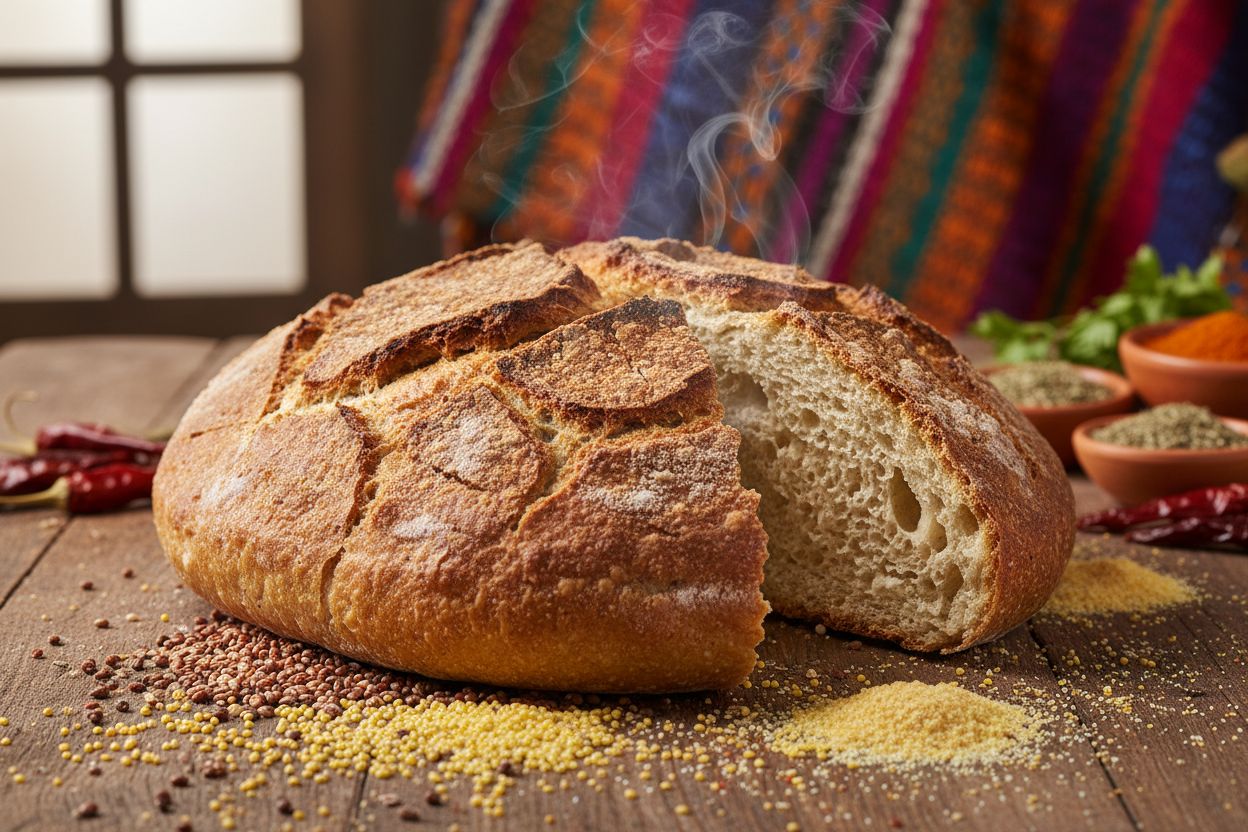



Tapalapa
Overview
Tapalapa is a beloved West African hearth bread with a baton-like shape, a hearty chew, and a deeply satisfying crust. Baked fresh in the morning and sold on street corners and at market stalls, it is commonly split and stuffed with savory fillings or enjoyed plain alongside tea. The loaf’s character comes from a balanced blend of local grains, gentle fermentation, and assertive heat that caramelizes the exterior while keeping the interior pleasantly moist and springy. What follows is a home-oven method that preserves that rustic personality while remaining achievable for any baker.
Ingredients
- millet flour
- sorghum flour
- all-purpose flour
- active dry yeast
- warm water
- salt
- sugar
- vegetable oil
- cornmeal (optional)
- rice flour (optional)
Notes on the blend
A classic tapalapa profile balances the nutty aroma of millet flour and the earthiness of sorghum flour with the structure-building gluten of all-purpose flour. A spoonful of sugar helps awaken the aroma during fermentation, while a pinch of salt sharpens flavor. A touch of vegetable oil makes shaping smoother without softening the crust too much.
Preparation
- Bloom the leavening: In a mixing bowl, combine warm water with a pinch of sugar, then sprinkle in active dry yeast. Stir and let it stand until foamy; set a cooking time to keep the bloom consistent.
- Whisk the dry mix: In a separate large bowl, whisk together millet flour, sorghum flour, and all-purpose flour with salt. For a slightly coarser crumb, fold in a spoon or two of cornmeal; for a silkier finish, swap a spoon of the blend with rice flour.
- Form the dough: Pour the foamy mixture into the dry bowl. Mix until a shaggy mass forms, then add a drizzle of vegetable oil. Knead until the dough feels cohesive and elastic, lightly dusting the work surface with a touch of all-purpose flour only if sticking is excessive.
- First rise: Lightly coat a clean bowl with vegetable oil, place the dough inside, and cover. Let it rise until puffed and airy. If the room is cool, position it in a warm spot to encourage the active dry yeast to work steadily.
- Divide and pre-shape: Turn the dough onto a surface dusted with a whisper of all-purpose flour. Divide into baton-sized pieces. Gently pat each piece into a rectangle, roll it up tightly, and pinch the seam to seal. Rest briefly to relax the gluten.
- Final shape: Roll each piece into a slender loaf with tapered ends, the hallmark tapalapa silhouette. If you like a slightly heartier bite, lightly coat the exterior with a thin sprinkle of cornmeal before proofing.
- Proof: Arrange loaves seam-side down on parchment or a lightly dusted peel, leaving room for expansion. Cover and let them rise until they hold a gentle fingerprint without collapsing. Avoid overproofing to preserve oven spring.
- Preheat and steam: Heat the oven hot with a baking stone or steel inside. Place a pan on a lower rack to create steam. Right before baking, slash each loaf with a swift cut to guide expansion.
- Bake: Load the loaves, add a splash of water to the hot pan for steam, and bake until the crust turns deep brown and the bottoms sound hollow when tapped. Track the bake with a quick glance at your cooking time if desired.
- Cool: Transfer loaves to a rack and let them cool until the crumb sets. Resist cutting too soon; a short wait protects the texture you worked to build.
Serving and enjoying
Tapalapa shines warm, split lengthwise and stuffed with street-side favorites like bean stews, fried fish, egg omelets, or crisp salads. For breakfast, pair it with hot tea; for lunch, use it like a rustic baguette for hearty sandwiches. The crust is meant to be boldly colored, so do not shy away from a deep bake that brings out roasted notes and a satisfying crackle.
Tips and variations
- Bolder grain character: Increase the share of millet flour or sorghum flour slightly for a more pronounced, nutty aroma, balancing with enough all-purpose flour to keep structure.
- Crust control: For an extra-crisp finish, vent steam after initial oven spring and allow the loaves to finish in a drier environment.
- Softer crumb: Add a small extra drizzle of vegetable oil during mixing; keep an eye on hydration so the dough stays workable.
- Flavor lift: A tiny extra pinch of sugar amplifies browning and aroma, but do not overshadow the savory depth provided by salt.
Storage
Let loaves cool fully, then store at room temperature in a breathable bag to preserve crust. To revive day-old slices, a brief warm-up in the oven restores the crusty edge while keeping the interior tender.