
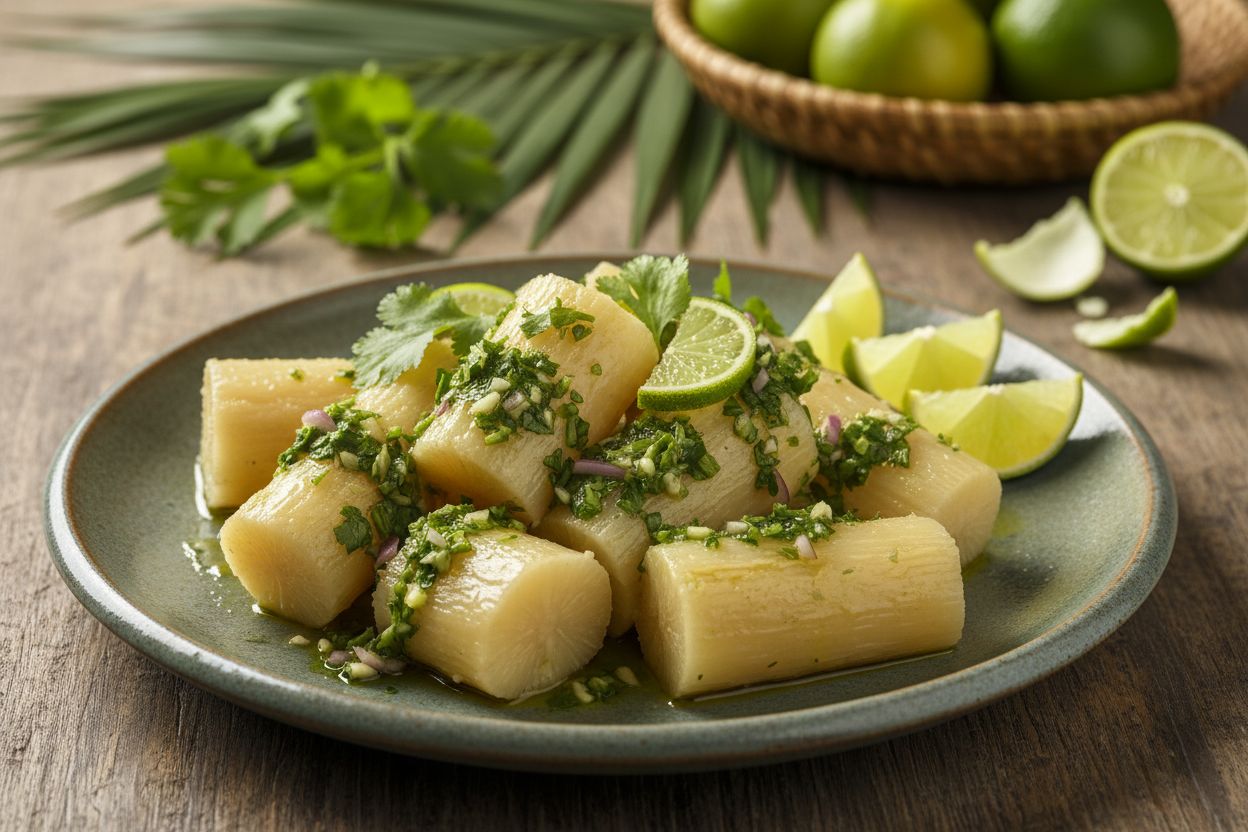



Yuca hervida
yuca hervida is a foundational boiled root preparation cherished across the Caribbean and Latin America. At its heart, the dish is simple: tender chunks of yuca gently simmered in seasoned water until creamy within, then finished with a bright, garlicky drizzle that often features garlic, fragrant olive oil, zesty lime, a touch of vinegar, soft ribbons of onion, fresh cilantro, and pinches of warm oregano and cumin, with a subtle bay perfume from a single bay leaf. Because yuca is rich in starch, a well-salted bath of water seasoned with salt helps the pieces cook evenly and taste fully seasoned throughout; finishing with a sprinkle of pepper ties it all together. Historically, boiling yuca has been a practical way to transform a tough, fibrous root into a nourishing staple. Over centuries, cooks learned that a whisper of bay leaf in the pot and a splash of citrus like lime in the final dressing lift the earthy sweetness of yuca, while garlic, onion, and cilantro add savor and brightness. Today, yuca hervida is as at home next to grilled meats as it is starring as a satisfying side, proving that humble ingredients—yuca, water, and salt—can sing with the right accents of olive oil, garlic, lime, vinegar, onion, cilantro, oregano, cumin, pepper, and bay leaf.
Ingredients
- 2 pounds yuca, peeled and cut into 3-inch batons, tough core removed
- 8 cups water
- 2 tablespoons salt, plus more to taste
- 1 bay leaf
- 4 cloves garlic, finely minced
- 1/3 cup olive oil
- 2 tablespoons fresh lime juice, plus extra wedges for serving
- 2 tablespoons vinegar (white or apple cider)
- 1 small onion, very thinly sliced
- 2 tablespoons chopped cilantro
- 1/2 teaspoon dried oregano
- 1/4 teaspoon ground cumin
- 1/4 teaspoon ground pepper, or to taste
Preparation
- Peel the yuca: Trim the ends of the yuca, cut it into manageable lengths, and score the thick skin lengthwise. Slide the blade under the tough rind to lift it off, revealing the creamy interior. Halve each piece and pry out any woody core so the yuca cooks evenly and becomes tender throughout.
- Rinse and cut: Rinse the peeled yuca under cool water and cut into batons or chunks. Keeping similar sizes helps each piece of yuca cook at the same pace.
- Make the dressing (mojo-style): In a bowl, combine the minced garlic, the sliced onion, the chopped cilantro, the dried oregano, the ground cumin, and the ground pepper. Add the olive oil, the fresh lime juice, and the vinegar, then stir to combine. Taste and season with a pinch of salt if desired; the final dish will also be seasoned from the cooking liquid.
Cooking process
- Season the pot: Add the water to a pot large enough to hold the yuca in a comfortable layer. Stir in the salt and drop in the bay leaf. Bring to a gentle simmer.
- Cook the yuca: Slip the prepared yuca into the simmering water. Cook until a knife slides in with little resistance, usually about 20–30 minutes, depending on piece size and the age of the yuca. The exterior should be intact while the center turns plush and creamy.
- Drain and steam off: Carefully drain the cooked yuca. Let residual heat steam away surface moisture so the pieces can absorb the dressing without becoming watery.
- Dress and finish: Transfer the hot yuca to a serving bowl. Spoon over the mixture of olive oil, garlic, onion, lime, and vinegar, with the oregano, cumin, and pepper. Toss gently to coat, sprinkle with the fresh cilantro, and adjust with a little more salt or a squeeze of lime as needed.
Why this works
Boiling yuca in well-seasoned water with salt ensures every bite is flavored from the inside out. The subtle aroma of a single bay leaf perfumes the pot without overpowering the gentle sweetness of yuca. The dressing layers flavors: fruity olive oil carries fat-soluble aromas, while acidic lime and vinegar brighten the natural earthiness. Pungent garlic and mellow onion add depth; herbal cilantro and oregano freshen; warming cumin and a dusting of pepper round it out. Because cooked yuca is starchy and porous, it eagerly absorbs the seasoned olive oil and citrus-spiked juices, yielding a satisfying, silky interior with a glossy, flavorful sheen.
Serving and enjoyment
Serve yuca hervida warm, dressed generously with the olive oil mixture and a shower of cilantro. Offer extra wedges of lime for those who like a brighter finish and keep a small pinch bowl of salt and a twist of pepper nearby for final adjustments. A few extra strands of tender onion on top add sweetness and crunch, while the aroma of the original bay leaf simmer lends quiet depth to the whole plate. The result is rustic comfort: creamy pieces of yuca with garlicky, citrusy sparkle from garlic and lime, pleasant richness from olive oil, the snap of onion, and the freshness of cilantro.
Tips and troubleshooting
- Choosing the root: Look for firm, heavy yuca with unblemished skin. Pale, dry ends can signal age; fresh yuca cooks more evenly and tastes sweeter.
- Peeling cleanly: The rind of yuca is thick. Score lengthwise, then pry off big sheets to avoid gouging the flesh. Remove any stringy core so the yuca turns tender when simmered in water.
- Seasoning the pot: Salting the water with ample salt before adding yuca is key; the interior absorbs seasoning better during cooking than after.
- Avoiding mush: Keep the simmer gentle, not a hard boil, so the edges of yuca stay intact. Test doneness with a knife rather than waiting for pieces to break apart.
- Flavor balance: Adjust the dressing to your taste—more garlic for punch, extra lime or a splash of vinegar for zip, a drizzle more olive oil for silk, and a final pinch of salt and hint of pepper to finish.
Variations
- Garlic-forward: Increase the minced garlic and let it sit briefly in the acidic mix of lime and vinegar to mellow before adding the olive oil.
- Lime-cilantro brightness: Double the chopped cilantro and add an extra squeeze of lime for a greener, zestier finish.
- Onion lovers: Gently warm a spoonful of olive oil and briefly soften the sliced onion until translucent, then fold into the dressing for a sweeter profile.
- Earthy spice: Emphasize dried oregano and ground cumin, finishing with a touch more pepper for warmth.
Storage and reheating
Refrigerate leftover yuca in a shallow container, lightly coated with the dressing of olive oil, garlic, onion, lime, and vinegar to keep it moist. To reheat, either steam gently over a little water or warm in a pan with a drizzle of olive oil, then refresh with a squeeze of lime, a sprinkle of salt, and a touch of pepper. Re-garnish with fresh cilantro if you like.
Frequently asked questions
Can I use frozen yuca?
Yes. Many markets carry frozen, peeled yuca that saves time. Simmer it in seasoned water with salt and a bay leaf until tender, then finish with the dressing of olive oil, garlic, onion, lime, vinegar, cilantro, oregano, cumin, and a sprinkle of pepper.
How do I know when the yuca is done?
Insert a thin knife into a piece of yuca; it should meet little resistance and the interior should look creamy rather than chalky. The edges should stay intact, not ragged. If it’s still firm, continue simmering and check again soon; the gentle seasoning of salt in the water ensures the yuca stays flavorful.
My yuca tastes bland. What should I adjust?
First, ensure the cooking water was well seasoned with salt. Then brighten with extra lime and a drizzle of olive oil. A pinch more oregano, a dusting of cumin, and a crack of pepper can add dimension, as can a few more strands of onion and chopped cilantro.
Can I make it ahead?
Yes. Boil the yuca until tender, drain, and toss lightly with a spoonful of olive oil so it doesn’t dry out. Just before serving, warm gently and dress with the mixture of garlic, onion, lime, vinegar, oregano, cumin, pepper, and fresh cilantro, adjusting salt to taste.