
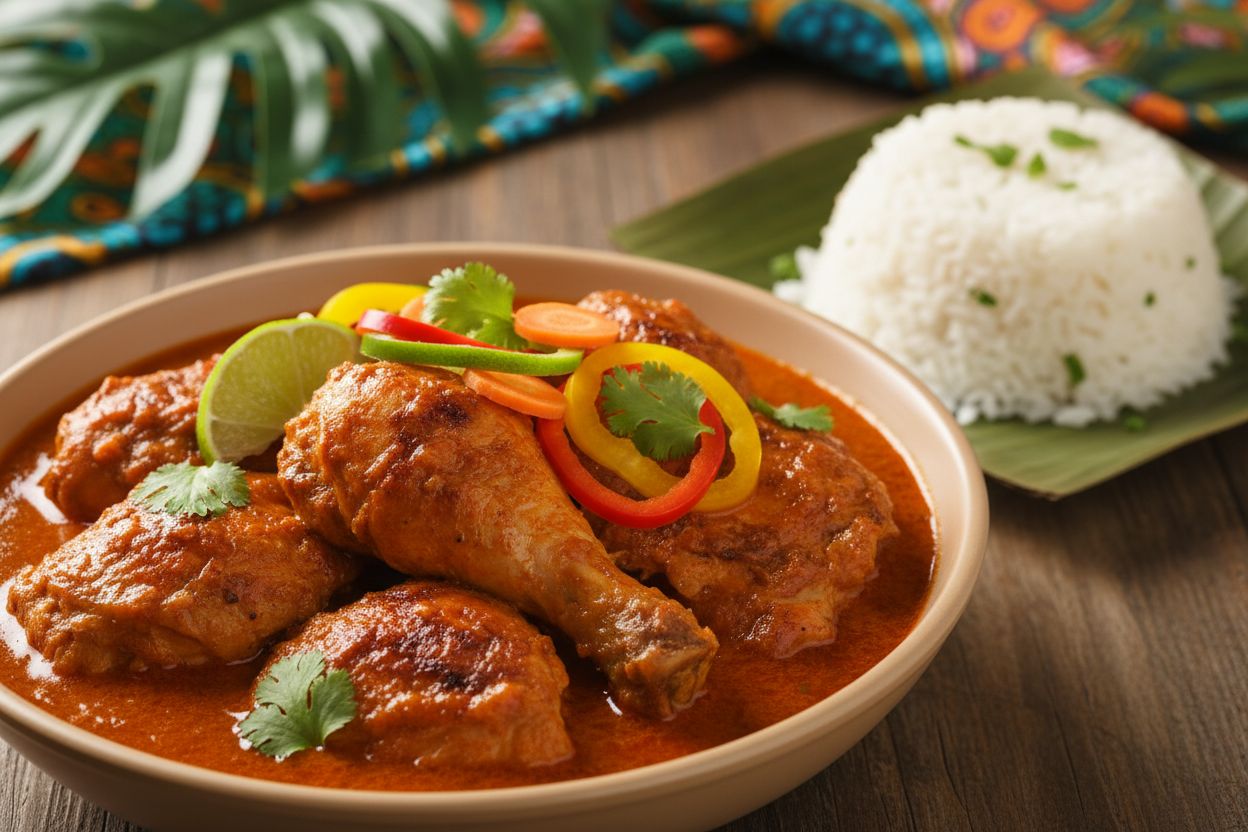



Belizean Stew Chicken
Overview
Belizean Stew Chicken is a cornerstone of home cooking across Belize, reflecting Afro-Caribbean, Maya, Garifuna, and Creole influences. The hallmark color and aroma come from achiote paste, a spice blend that gives the meat a brick-red hue and gentle earthiness. Traditionally braised until tender and glossy, it is commonly served with rice and beans, plantains, and a simple salad. This recipe captures a well-loved household version: caramelizing a touch of sugar in hot fat, searing the seasoned chicken, and simmering in a fragrant base of aromatics and herbs until the sauce clings to every piece.
Ingredients
- 2 to 3 lb chicken, cut into bone-in pieces
- 2 tbsp achiote paste
- 1 lime, juice and zest
- 1 tbsp soy sauce
- 1 tbsp Worcestershire sauce
- 4 cloves garlic, minced
- 1 large onion, sliced
- 1 tsp dried thyme
- 1 tsp ground cumin
- 1 tsp ground black pepper
- 1½ tsp salt, more to taste
- 1 tsp ground allspice or 4 whole berries
- 1 tbsp brown sugar
- 3 tbsp vegetable oil
- 2 cups water (adjust as needed)
- 1 bell pepper, sliced
- 1 large carrot, chunked (optional)
- 1 large potato, chunked (optional)
- 1 bay leaf
- 2 tbsp chopped cilantro for garnish
Preparation
- Make a quick seasoning paste: In a bowl, mash the achiote paste with the juice and zest of the lime, then stir in the soy sauce, Worcestershire sauce, half of the minced garlic, the dried thyme, the ground cumin, the ground black pepper, and the salt. Mix until smooth and spreadable.
- Season the meat: Pat the chicken dry, add to the bowl, and coat thoroughly with the paste, working it under the skin where possible for deeper flavor.
- Prep aromatics and vegetables: Set the sliced onion, remaining minced garlic, and sliced bell pepper aside for sautéing. If using roots, prepare the chunks of carrot and potato and keep them ready to add later.
Cooking Process
- Build the caramel base: Warm a heavy pot over medium heat with the vegetable oil. Sprinkle in the brown sugar and let it melt and foam, darkening to a mahogany color. This step develops the signature glaze and color.
- Sear the meat: Add the seasoned chicken in a single layer. Let it take on color before turning. Sear all sides until nicely browned and coated in the caramelized base.
- Sauté aromatics: Add the sliced onion, the remaining garlic, and the bell pepper. Stir to soften the vegetables, scraping up any fond that has formed.
- Season the pot: Sprinkle in the ground allspice (or add whole berries), the dried thyme, a pinch more black pepper, and a little salt if needed.
- Braise: Pour in enough water to come about one-third up the sides of the chicken. Tuck in the bay leaf. Bring to a gentle simmer, cover, and cook until the meat is tender and the sauce thickens to a spoon-coating consistency.
- Optional roots: Stir in the carrot and the potato. Continue simmering until the vegetables are tender and the braising liquid reduces to a glossy gravy.
- Finish: Taste and adjust with a touch more salt or black pepper. For a savory boost, swirl in a small splash of soy sauce or Worcestershire sauce. Brighten with a quick squeeze of the remaining lime, then discard the bay leaf.
- Garnish: Scatter the chopped cilantro over the top and let the stew rest briefly so the juices settle.
How to Enjoy
Serve the chicken and gravy over white rice and beans, or alongside fried plantains and a crisp salad. A final squeeze of lime and a sprinkle of fresh cilantro add brightness to the rich, savory sauce. Leftovers make exceptional fillings for tacos or sandwiches; warm gently with a splash of water to loosen the sauce and maintain tenderness.
Tips and Variations
- Color and depth: If the caramel seems pale, let the brown sugar darken a bit more before adding the chicken, but avoid burning. The goal is bittersweet depth, not bitterness.
- Heat level: Add minced habanero to the aromatics if you like heat; keep seeds out for a mellower burn. If adding it as an ingredient, treat it like the other aromatics.
- Stock vs water: Substitute chicken stock for some of the water if you want a richer sauce; keep the salt levels in mind.
- Herb finish: If you prefer a different herbal note, swap part of the cilantro for parsley while keeping the essential base of achiote paste intact.
- Serving idea: Spoon extra sauce over the plate; the glossy gravy is the star. A wedge of lime at the table lets each person adjust acidity to taste.
Troubleshooting
- Too salty: Balance with a little more water and a squeeze of lime; simmer briefly to re-glaze.
- Not enough color: Let the brown sugar caramel develop more next time and ensure good contact when searing the chicken.
- Thin sauce: Simmer uncovered so some water evaporates; the natural gelatin from the chicken will help the gravy thicken.
- Bitterness: If the caramel goes too dark, start again; scorched brown sugar will carry through the whole dish.