
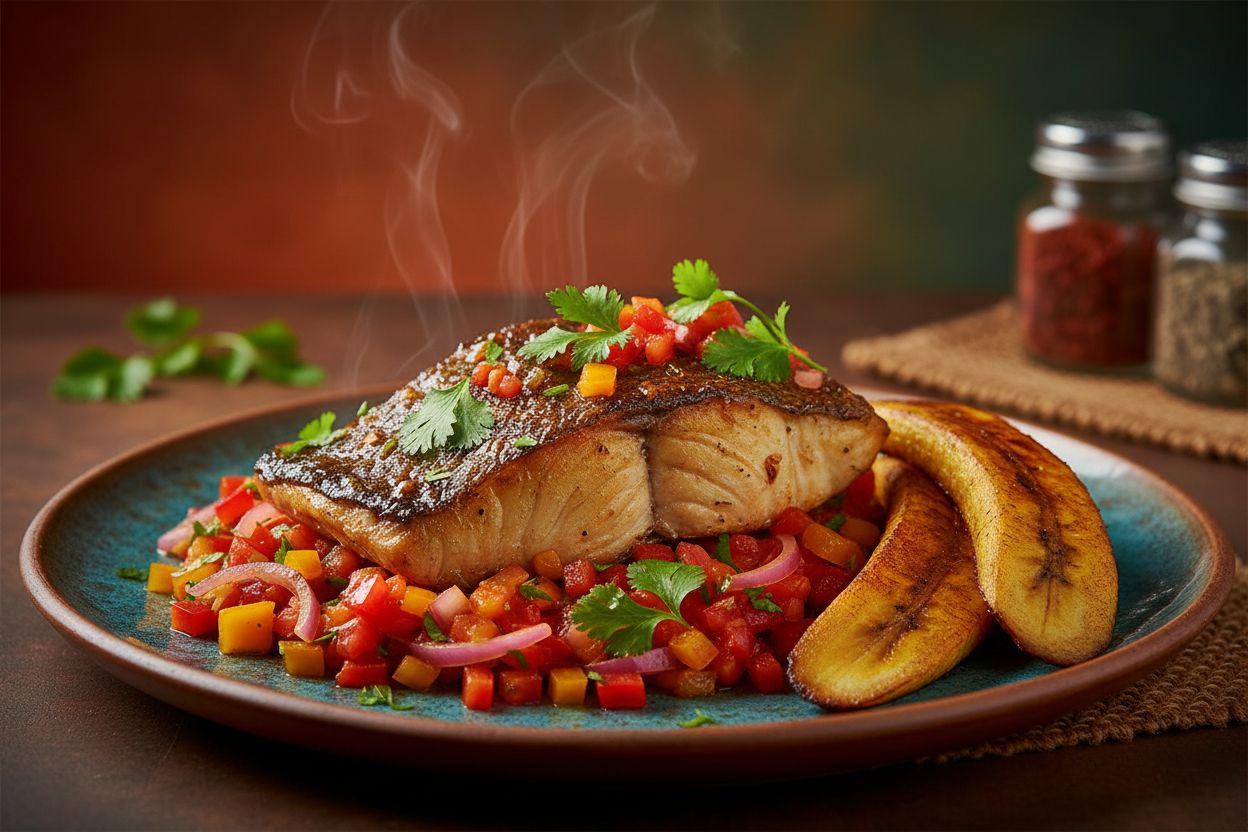



Capitaine braisé
Background
Capitaine braisé is a cherished West African grilled whole-fish tradition, celebrated for its smoky char, gently spicy aroma, and convivial, share-at-the-table style. Market-side vendors and home cooks alike prepare the fish with deep crosswise scores, a bold herb-and-spice paste, and steady heat over live fire or a hot oven, creating juicy flesh beneath a crisped, lightly blackened skin. Though each region adds its own touch—some lean herbaceous, others more peppery—the method remains straightforward: clean, season generously, grill patiently, and serve immediately with bright acidity and fire-kissed vegetables.
Ingredients
- Nile perch (whole, scaled and cleaned; about 1.5–2 kg)
- lemon (1–2, for juice and serving)
- onion (1 medium)
- garlic (3–4 cloves)
- ginger (2–3 cm knob)
- chili (to taste)
- salt
- black pepper
- smoked paprika
- thyme
- parsley
- vegetable oil
- Dijon mustard
- bouillon cube
- bell pepper
- tomato
- plantain (optional side)
Equipment
- Charcoal or gas grill (or a hot oven with broiler)
- Sharp knife and cutting board
- Mortar and pestle or blender
- Tongs and wide spatula
- Basting brush
- Paper towels and a large tray
Preparation
- Pat the Nile perch dry, then score the skin on both sides with 2–3 diagonal cuts per side to help the seasoning penetrate and to promote even cooking.
- Make the braising paste: blend or pound onion, garlic, ginger, chili, a handful of parsley, 1–2 teaspoons smoked paprika, 1 teaspoon thyme, 1 teaspoon freshly ground black pepper, 1–2 teaspoons salt, the juice of 1 lemon, 2–3 tablespoons vegetable oil, 1 teaspoon Dijon mustard, and 1 crushed bouillon cube until smooth and spoonable.
- Rub most of the paste over and inside the scored Nile perch, pushing it into the cuts and cavity; reserve a few tablespoons for basting. Let the fish rest at least 30 minutes (up to 60 minutes) so the seasoning permeates.
Cooking
Charcoal or gas grill
- Preheat to medium-high; clean and oil the grate with a light coat of vegetable oil.
- Lay the seasoned Nile perch on the grate at a slight angle. Grill the first side until the skin releases and shows good char, about 6–9 minutes depending on thickness. Avoid moving it early.
- Flip carefully with a wide spatula and tongs. Baste with the reserved paste thinned with a spoon of vegetable oil. Add sliced rings of bell pepper and tomato to the grill; they will soften in about 5 minutes.
- Grill the second side until the flesh flakes and is just opaque at the backbone; total time is typically 12–18 minutes, depending on heat and fish size. Rest off heat for 5 minutes.
Oven method
- Heat the oven to 230°C/450°F. Place the Nile perch on an oiled rack set over a tray. Roast for 12 minutes, flip, then roast another 8–12 minutes. Broil the top for an extra 2–3 minutes for a charred finish.
- Toss slices of bell pepper and tomato with a touch of vegetable oil, add to the tray for the final 5–8 minutes, and roast until tender.
Serving and enjoyment
Transfer the fish to a platter and spoon on any resting juices. Finish with a squeeze of lemon, a light gloss of vegetable oil, and chopped parsley. Serve immediately with grilled bell pepper, blistered tomato, and optional fried plantain. Eat family-style, letting everyone pull tender flakes from the fish and swipe them through the smoky juices.
Tips and variations
- Heat level: adjust chili to taste; add it to the paste for direct heat or reserve some for a table sauce.
- Herb balance: increase parsley for a greener profile or lean into earthiness with a pinch more thyme.
- Mustard note: a touch of Dijon mustard adds gentle tang and helps emulsify the paste; use sparingly so it does not dominate.
- Alternative fish: if you cannot source Nile perch, choose another firm, meaty whole fish and apply the same technique.
Make-ahead, storage, and reheating
You can season and refrigerate the fish for up to 12 hours before cooking. Leftovers keep well, chilled and covered, for up to 2 days; reheat briefly under a hot broiler for 5–8 minutes, then refresh with a squeeze of lemon and a touch of vegetable oil.
Troubleshooting
- If the seasoning tastes too salty, balance with more lemon and a splash of vegetable oil.
- If the heat is overwhelming, reduce the amount of chili next time and bolster herbs like parsley and spices like smoked paprika.
- If sticking occurs, wait longer before flipping and ensure the grate is brushed with vegetable oil.