



Dumboy
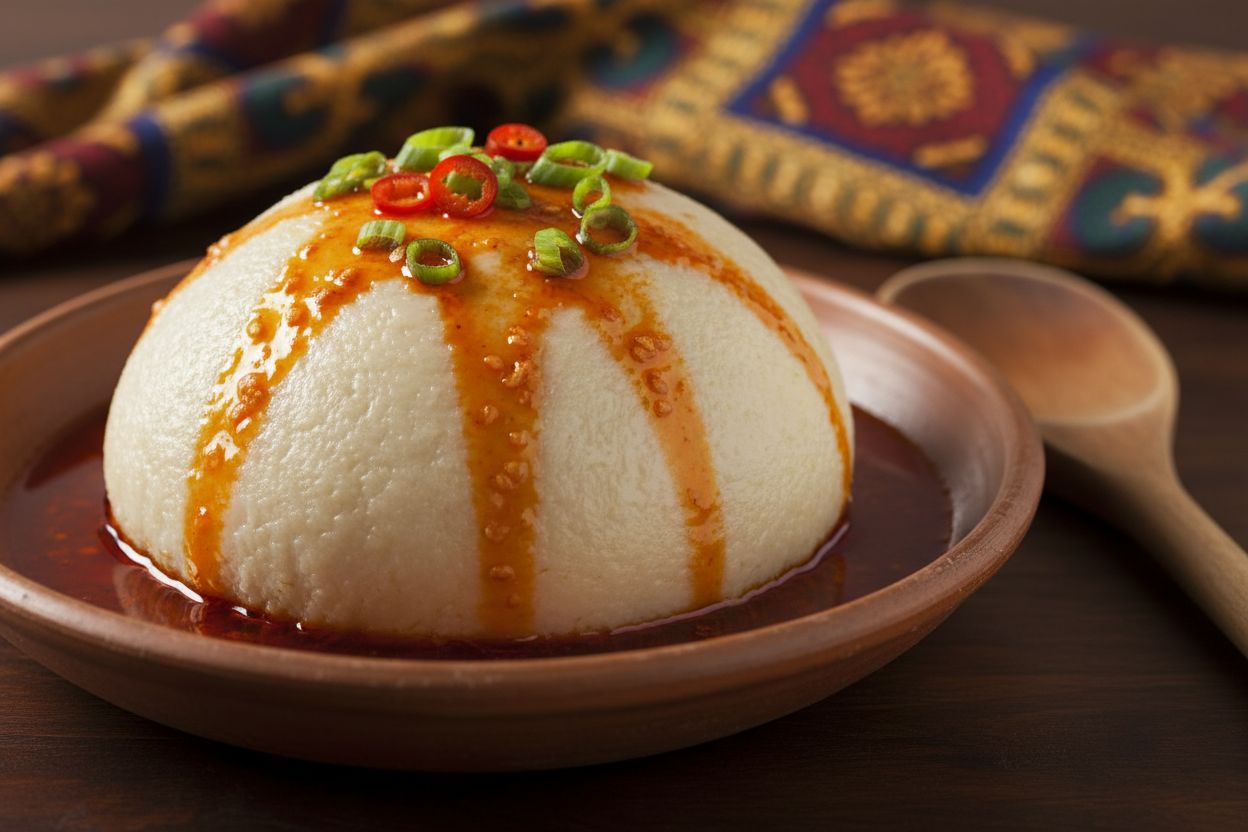
Dumboy is a beloved Liberian staple made by pounding cooked cassava into a smooth, elastic, and communal ball that pairs beautifully with hearty soups and sauces. Across Liberia, gathering to pound, turn, and fold the hot mass into a glossy mound is part of the experience—rhythmic, social, and celebratory. While similar to fufu found elsewhere in West Africa, dumboy highlights the unique texture and aroma of West African cassava, and it is often enjoyed with pepper soup, palm butter, torborgee, or okra-based stews. The process centers on heat, steady pounding, and a touch of palm oil to keep things supple and fragrant.
Ingredients
- 4–5 medium cassava tubers (about 2.5–3 kg), peeled and cut into chunks
- water for rinsing, boiling, and adjusting texture
- salt to taste (optional)
- 2–3 tablespoons palm oil for greasing hands, tools, and finishing
Time and yield
Active time: 30–40 minutes; total time: 45–60 minutes; serves 4–6.
Before you begin
Use fresh, firm cassava with white flesh and no sour or alcoholic smell. Keeping a small bowl of warm water nearby and a little palm oil for greasing your hands and tools will make the pounding and shaping easier and cleaner.
Preparation
- Peel and prep: Cut off both ends of each cassava tuber, score the thick skin lengthwise, then pry it off. Slice into large chunks, removing any tough fibrous core if present. Rinse the pieces under plenty of water.
- Boil: Place the chunks in a large pot and cover with fresh water by a few centimeters. Add a pinch of salt if you like a lightly seasoned base. Bring to a steady boil and cook until the pieces are very tender and the edges look slightly translucent, about 20–25 minutes.
- Steam-dry: Drain thoroughly, then return the hot pieces to the warm pot and let residual heat drive off surface moisture for about 2–3 minutes. This helps the dough come together without becoming watery.
Pounding and forming
- Set up: Transfer the hot cassava to a heavy mortar, a stand mixer bowl, or a sturdy heatproof bowl. Lightly grease your pestle, dough hook, or a thick wooden spoon with palm oil.
- Pound and fold: Pound firmly, turning and folding the mass after every few strikes to work all sides evenly. Continue until the mixture becomes smooth, glossy, and elastic, about 8–12 minutes. If the dough looks dry or begins to crack, sprinkle in 1–2 tablespoons warm water and keep pounding. If it sticks excessively, lightly grease your tool again with a touch of palm oil.
- Adjust texture: Aim for a cohesive dough that stretches slightly without tearing. Add tiny splashes of warm water if too dense or a smear of palm oil if sticking; pound briefly after each adjustment to integrate.
- Shape and rest: With lightly greased hands, gather the dough and shape it into a smooth, tight ball. Brush the surface with a thin sheen of palm oil to prevent drying and let it sit for about 5 minutes so the surface settles.
Serving
Serve the warm ball in a shallow, lightly greased bowl. Traditionally, diners pinch off a small portion, press a thumbprint, dip into soup or sauce, and eat. Dumboy plays especially well with pepper soup, palm butter, torborgee, and okra-based sauces. For aroma and sheen, rub a faint film of palm oil over the top just before bringing it to the table.
Tips
- Tool choices: A wooden mortar and pestle is classic, but a heavy spoon in a sturdy bowl or a stand mixer fitted with a dough hook can help. If using a mixer, pause often to scrape down and lightly oil the hook with palm oil.
- Season lightly: A small amount of salt in the boil is enough; the soups and sauces usually carry most of the seasoning.
- Moisture control: Keep a cup of warm water at hand to soften the dough in tiny increments. If it gets sticky or dull, a dab of palm oil restores gloss and handling.
Storage and reheating
Wrap leftovers tightly while still slightly warm to prevent drying. Refrigerate and reheat by steaming with a splash of water until warmed through, about 5–8 minutes. Lightly grease the surface with palm oil before serving to refresh the shine and aroma.