
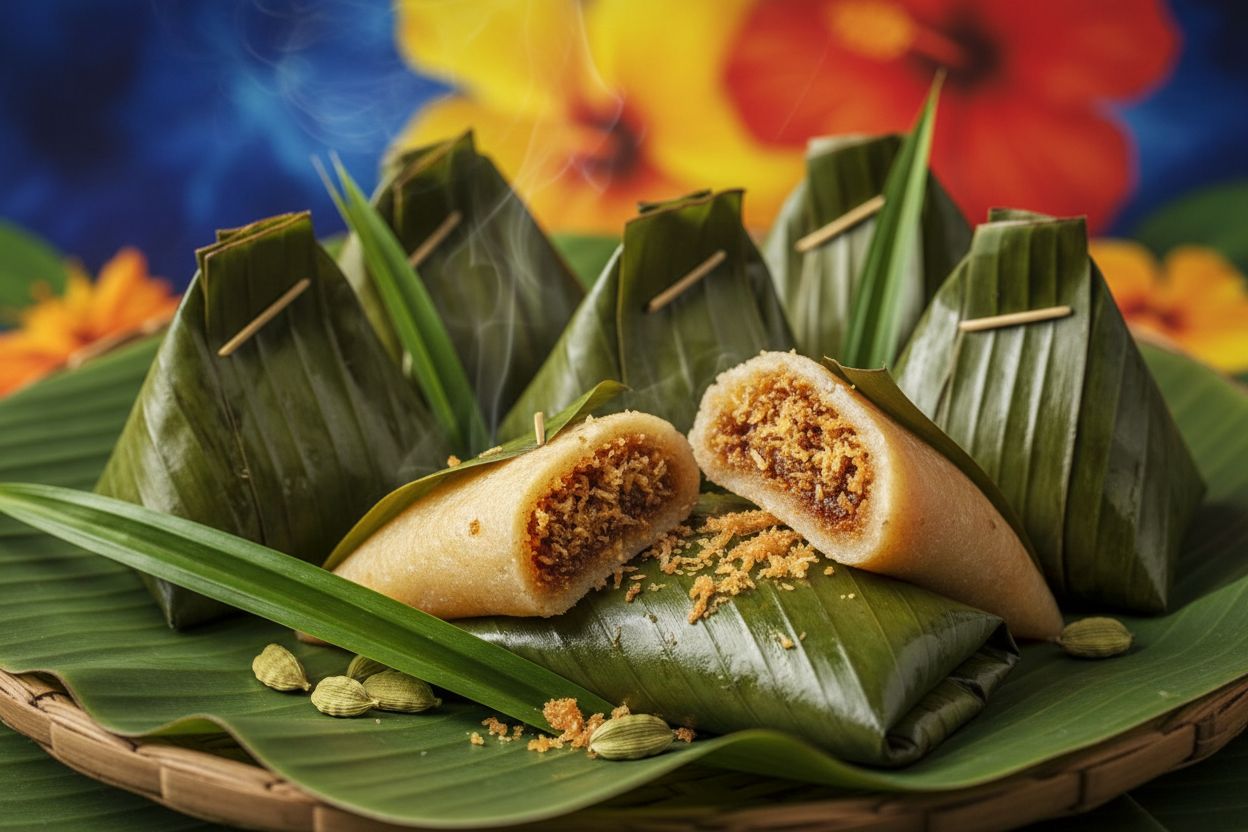



Huni Hakuru Folhi
Rooted in island kitchens across the Maldives, Huni Hakuru Folhi is a gently sweet, leaf-wrapped cake that showcases huni hakuru blended with grated coconut, bound by delicate rice flour and enriched with fragrant coconut milk. Traditionally cooked inside pliant banana leaves—often perfumed with pandan leaves—the batter sets into tender slices that pair beautifully with afternoon tea. A touch of cardamom, a whisper of salt, and a finish of ghee or coconut oil round out the aromas that make this classic so beloved.
Ingredients
- grated coconut — 2 cups, lightly packed
- huni hakuru — 1/2 cup (or to taste)
- rice flour — 1 cup
- coconut milk — 1 cup, well-stirred
- cardamom — 1/2 teaspoon, freshly ground
- salt — a small pinch
- banana leaves — several pieces for wrapping
- pandan leaves — a few strips, optional for aroma
- ghee — 1 tablespoon, plus more as needed
- coconut oil — 1 tablespoon, optional for brushing
- water — for the steamer
Preparation
- Prepare the wraps: Trim and clean the banana leaves, then briefly pass them over low heat to make them supple. If using, cut a few thin strips of pandan leaves to tuck inside each parcel for fragrance.
- Mix the batter: In a bowl, combine grated coconut, huni hakuru, rice flour, coconut milk, cardamom, and salt. Stir until it forms a thick, spreadable mixture. If it seems too stiff, add a splash more coconut milk; if too loose, sprinkle in a little extra rice flour.
- Assemble: Lightly grease the center of each piece of banana leaves with a touch of ghee or a brush of coconut oil. Spoon some mixture onto the leaf, place a strip of pandan leaves on top (optional), then fold into a snug parcel.
- Steam: Bring water to a steady simmer in a steamer. Arrange the parcels seam-side down and steam until set, about 20 minutes, depending on thickness.
- Finish: For extra aroma, quickly swipe each parcel across a hot pan with a dab of ghee or a thin sheen of coconut oil to lightly kiss the banana leaves with heat.
- Serve: Unwrap while warm. Drizzle with a thread of warmed huni hakuru if you like, and enjoy with tea.
Tips and Serving
- Texture: A well-balanced batter should hold its shape on the banana leaves but still spread easily. Adjust with tiny additions of coconut milk or rice flour as needed.
- Aroma: The gentle perfume of pandan leaves complements huni hakuru and grated coconut; omit if unavailable and finish with a little extra cardamom.
- Finish: A light brush of ghee or coconut oil before serving boosts shine and flavor without overpowering the sweetness of huni hakuru.
- Storage: Keep leftovers wrapped in the same banana leaves and refrigerate. Gently re-steam over simmering water until warmed through.
Notes
For a slightly deeper sweetness, warm the huni hakuru first so it blends smoothly with the grated coconut. If the batter tastes too sweet, balance with a pinch more salt or a whisper of extra cardamom. The gentle leaf fragrance and the tender crumb come from the harmony of rice flour, coconut milk, and steam—simple, island-style comfort.