
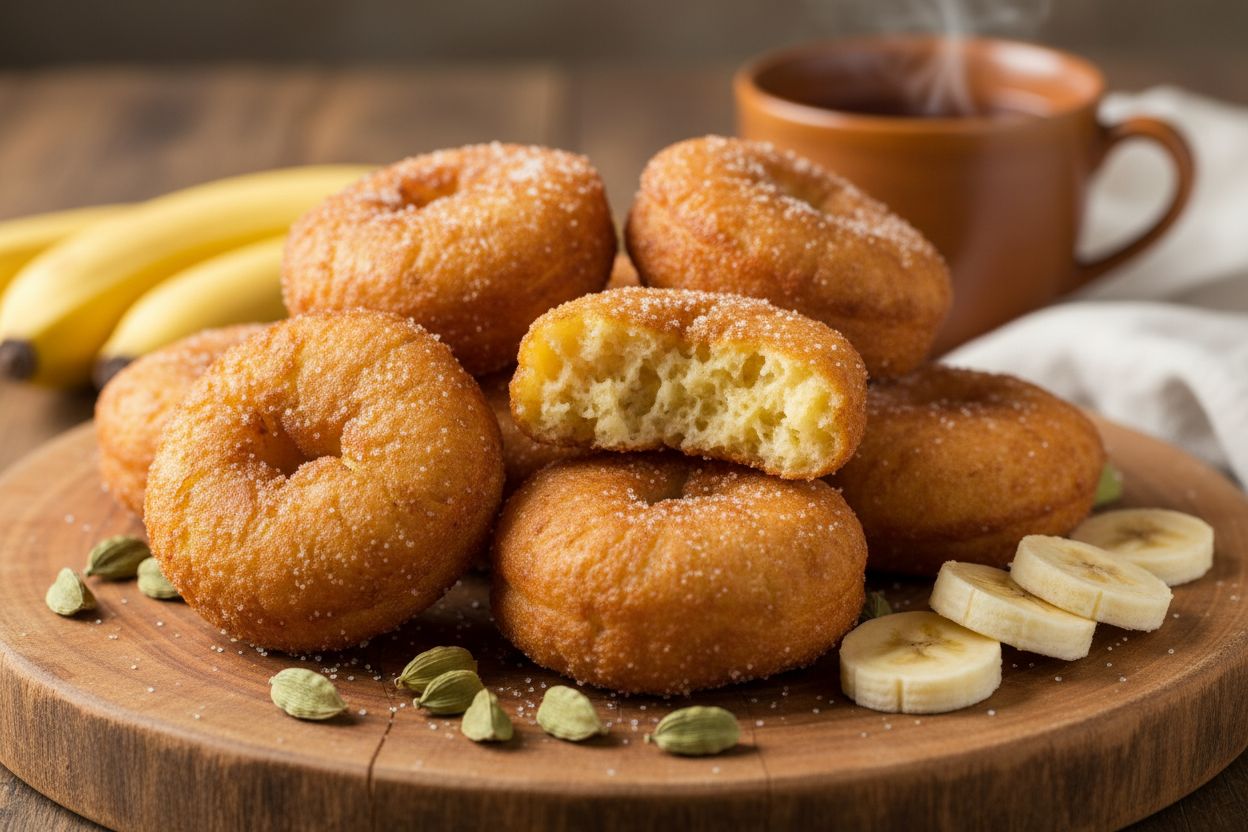



Kabalagala
Kabalagala is a cherished Ugandan street snack and home treat made from mashed ripe bananas bound with earthy cassava flour, then shallow fried in fragrant vegetable oil to yield rounds that are crisp at the edges and tender within. Rooted in the culinary traditions of central Uganda, these banana fritters are an everyday pleasure for breakfast, teatime, or a quick bite on market days. While recipes vary from family to family, the heart of Kabalagala remains the simple pairing of sweet bananas and starchy cassava flour, sometimes scented with a hint of warm cardamom and balanced with a pinch of salt.
Ingredients
- 4 large overripe bananas
- 2 cups finely ground cassava flour (add more as needed for a soft dough)
- 1/4 teaspoon salt
- 1/2 teaspoon ground cardamom (optional)
- 1 to 2 cups vegetable oil for shallow frying
Preparation
- Peel the bananas and place them in a wide bowl. Mash thoroughly with a fork or potato masher until mostly smooth with a few small soft bits for texture.
- Sprinkle in the salt and, if using, the ground cardamom. Add the cassava flour in stages, stirring to form a thick, scoopable dough that is not wet or runny. The exact amount of cassava flour can vary depending on the sweetness and moisture of the bananas.
- Let the mixture rest for 5 to 10 minutes so the cassava flour hydrates and the dough holds together more easily.
- With lightly oiled hands, pinch off portions and shape into small patties about the size of your palm, roughly 1 cm thick. Keep the remaining dough covered so it does not dry out.
Cooking Process
- Set a heavy skillet over medium heat and pour in enough vegetable oil to create a shallow layer (about 0.5 to 1 cm). Warm until a small drop of batter sizzles gently on contact.
- Lay the shaped patties in the hot vegetable oil without crowding the pan. Fry each side for about 2 to 3 minutes, until deep golden at the edges and lightly browned across the surface.
- Flip once, cook the second side for another 2 to 3 minutes, then transfer to a rack or paper-lined plate to drain. Continue with remaining dough, adding more vegetable oil as needed and allowing it to return to temperature between batches.
How to Enjoy
Serve Kabalagala warm, ideally soon after frying, when the outside is crisp and the center is soft. The natural sweetness of the bananas pairs beautifully with a cup of spiced tea or coffee. For a fragrant lift, dust lightly with extra ground cardamom before serving. A tiny pinch of finishing salt can also heighten the flavor.
Tips and Variations
- Ripeness matters: very ripe bananas make the batter sweet and cohesive.
- Adjust texture: if the dough feels sticky, add a spoonful of cassava flour; if too dry, mash in a little more of the bananas.
- Heat control: keep the vegetable oil at a steady medium heat so the fritters cook through without scorching.
- Flavor twist: a whisper of cardamom adds warmth; keep salt minimal to let the fruit shine.
Storage
Kabalagala is best fresh, but leftovers can be cooled completely and stored airtight at room temperature for a day. Rewarm in a dry skillet over low heat until edges are crisp again.
FAQs
What gives Kabalagala its structure?
Starchy, fine cassava flour binds the mashed bananas, allowing the patties to hold their shape while frying.
Can I substitute the flour?
Traditional Kabalagala relies on cassava flour for its characteristic flavor and texture, so substitutions change the result significantly.
Which oil works best?
Neutral, high-heat vegetable oil delivers crisp edges without competing flavors.
Is added sugar necessary?
No. Very ripe bananas bring ample sweetness, which is the hallmark of Kabalagala.