
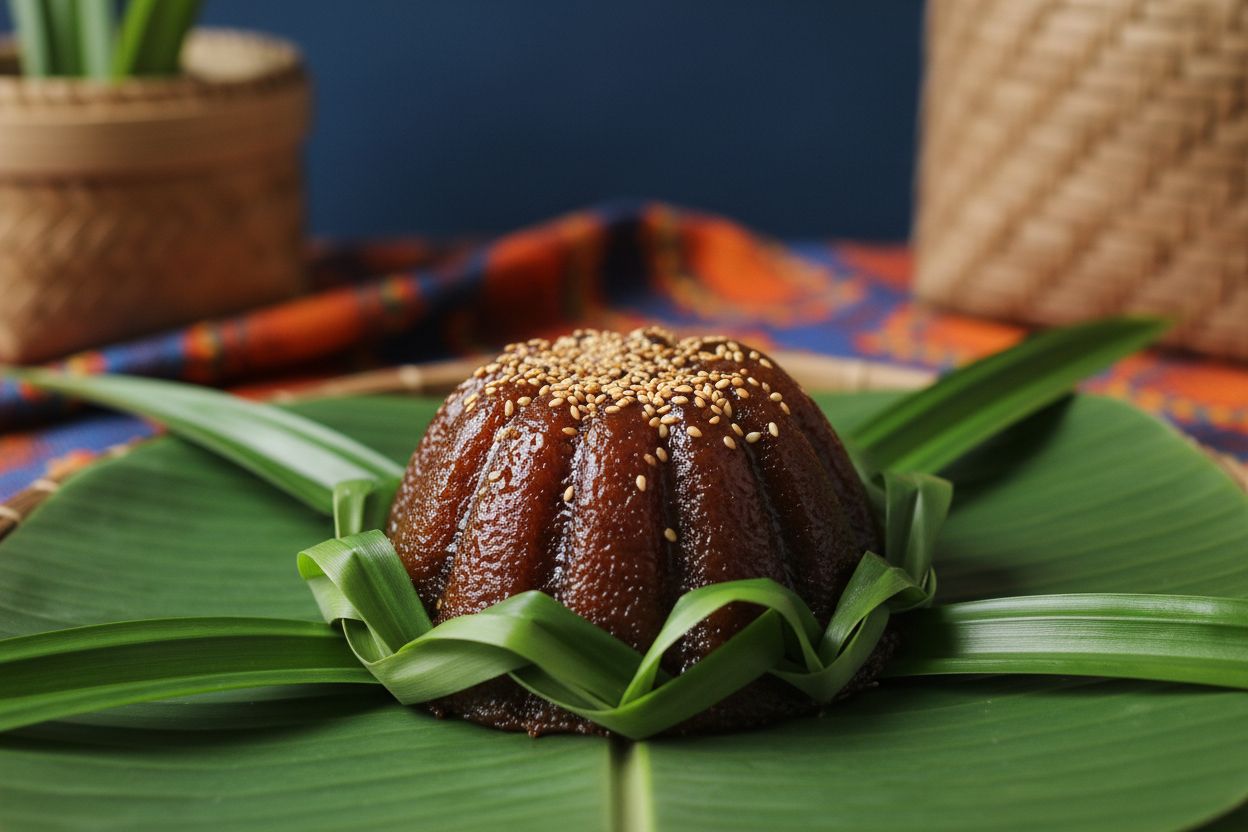



Kalamay
Overview
Kalamay is a beloved Filipino sticky confection enjoyed at town fiestas, family gatherings, and everyday merienda. Traditionally presented in coconut shells or wrapped in leaf-lined trays, it is known for its glossy sheen, dense chew, and deep caramel notes. Across the archipelago, communities celebrate versions that range from soft and spoonable to sliceable and bouncy, often crowned with fragrant, toasty coconut curds called latik. From Bohol to the Ilocos region and beyond, kalamay has long symbolized sharing and celebration, traveling well as a pasalubong and offering a sweet connection to home.
Ingredients
- 2 cups glutinous-rice-flour
- 2 1/2 cups coconut-milk
- 1 1/4 cups brown-sugar
- 1/4 teaspoon salt
- 1 cup coconut-cream (for latik)
- 2 pieces banana-leaves, cut to pan size (optional but traditional)
- 1 teaspoon coconut-oil (for greasing)
- 1 tablespoon toasted-sesame-seeds (optional garnish)
- 2 knotted pandan-leaves (optional aroma)
Preparation
- Pan and liner: If using a square or round 8-inch pan, briefly pass the banana-leaves over a low flame to make them pliable, then line the pan, letting the leaves overhang for easy unmolding. Lightly coat the leaf surface with a thin film of coconut-oil.
- Latik setup: Pour the coconut-cream into a small skillet. If you enjoy a floral note, add the knotted pandan-leaves and remove them once they’ve perfumed the fat.
- Base mixture: In a medium bowl, whisk the glutinous-rice-flour with half of the coconut-milk until silky-smooth, with no lumps. In a separate saucepan, combine the remaining coconut-milk, the brown-sugar, and the salt.
Cooking Process
- Make the latik: Set the skillet with coconut-cream over medium heat and cook, stirring occasionally, until it separates into clear oil and golden curds. This typically takes about 10–12 minutes. Scoop out the curds and reserve them; keep the rendered oil for brushing, or supplement with a touch of coconut-oil if needed.
- Caramel base: Warm the saucepan mixture of coconut-milk, brown-sugar, and salt over medium heat, stirring until the sugar dissolves and the liquid steams, but do not boil.
- Thicken: Lower the heat, then gradually whisk the glutinous-rice-flour slurry into the hot sweetened coconut-milk. Stir constantly with a sturdy spatula to prevent sticking.
- Cook to shine: Continue stirring over low heat until very thick, glossy, and smooth, about 15–20 minutes. The mixture should pull away from the sides and hold soft ridges.
- Pan and finish: Immediately scrape the thickened mixture into the prepared pan lined with banana-leaves. Smooth the top with a spatula lightly greased with the reserved coconut oil from the latik or a touch of coconut-oil. Sprinkle the latik curds over the surface.
- Set: Allow the kalamay to cool and set until sliceable, about 30 minutes. If desired, garnish with a light shower of toasted-sesame-seeds.
How to Enjoy
Cut into small squares or diamonds and serve at room temperature. A thin edge of the leaf liner adds pleasant aroma if left attached to each piece. Kalamaý pairs well with strong tea or coffee, and the contrast of the toasty latik with the soft interior is part of its charm. A whisper of toasted-sesame-seeds adds nuttiness without overshadowing the natural sweetness.
Tips and Variations
- Aroma option: Simmer the sweetened coconut-milk briefly with knotted pandan-leaves, removing them before adding the glutinous-rice-flour.
- Texture control: If you prefer a softer spoonable style, add 1/4–1/2 cup more coconut-milk and cook a little less; for firmer slicing, cook an extra 2–3 minutes until the paste holds its shape.
- Sweetness tweak: Replace 1/4 cup of the brown-sugar with more brown-sugar cooked to a deeper amber syrup in a separate pan for more caramel flavor, then stir into the main pot. For a lighter profile, keep the listed amount of brown-sugar and rely on the nutty latik.
- Pan choice: Individual cups or mini molds lined with trimmed banana-leaves make portable treats; reduce cook-and-set expectations accordingly but still let them cool for at least 20 minutes before unmolding.
Storage
Cover and keep at cool room temperature for a day. For longer storage, refrigerate in an airtight container for up to 3 days. To serve, let it return to room temperature or warm gently, then refresh the top with a few extra latik curds or a pinch of toasted-sesame-seeds. If the surface seems dry, brush with a scant dab of reserved coconut oil or a drop of coconut-oil.
Troubleshooting
- Lumps forming: Take the pot off heat and whisk vigorously, then resume low heat, stirring constantly. Prevent future lumps by fully dissolving the glutinous-rice-flour in cool coconut-milk before adding to hot liquid.
- Too loose: Cook an extra 3–5 minutes, stirring, until the paste leaves a clear trail when the spatula drags across the pan.
- Sticking: Keep heat low and use a sturdy, flat-edged spatula to scrape the bottom continuously; a lightly greased tool with a touch of coconut-oil helps.
- Too sweet: Serve thinner slices and accent with more salted latik or a restrained sprinkle of toasted-sesame-seeds for balance. You can also increase the pinch of salt slightly next batch.