
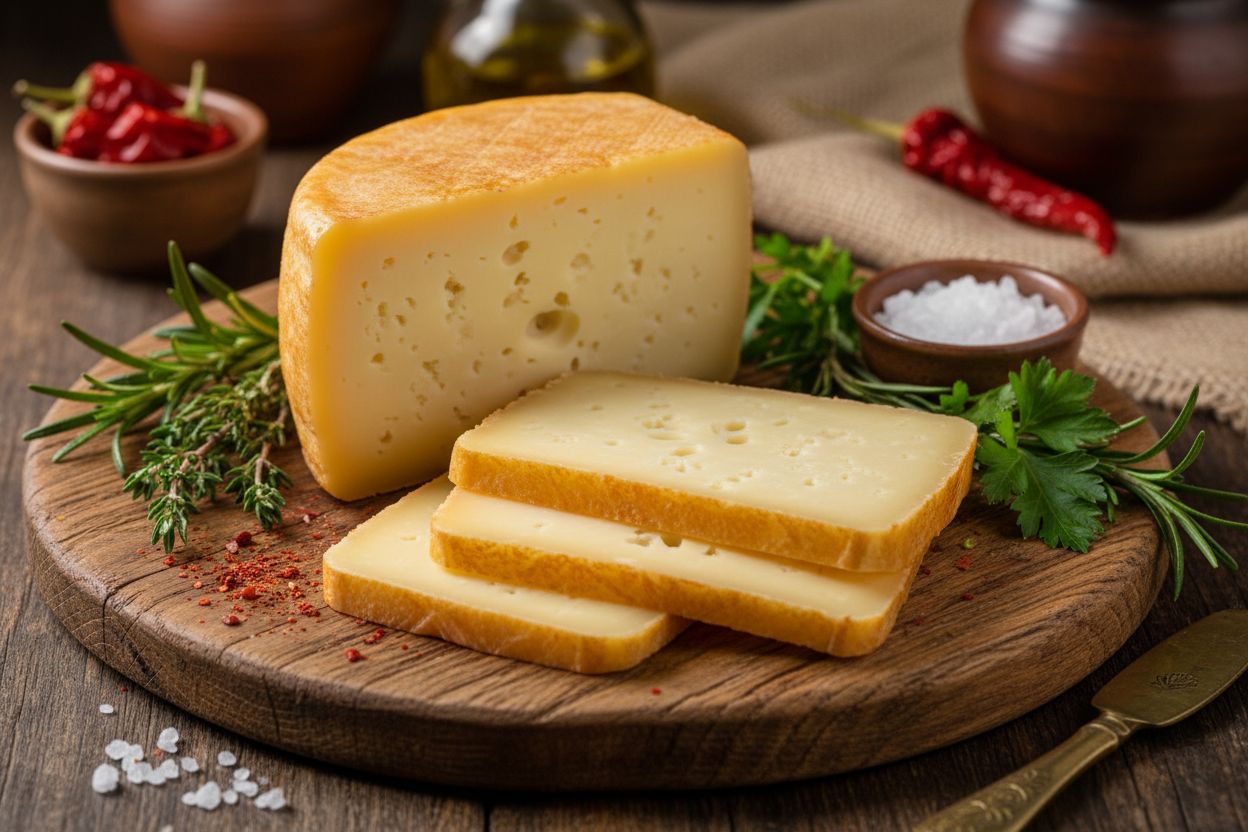



Kashkaval
What is Kashkaval?
Kashkaval is a semi-hard, straw-colored cheese from the Balkans and surrounding regions, cherished for its supple body and pleasantly tangy, buttery finish. Traditionally crafted from sheep or cow milk, it belongs to the family of stretched-curd cheeses, with a process that encourages curd development, curd mellowing, and hot stretching before shaping, brining, and aging. Whether you plan to slice it for a table cheese, grate it over baked dishes, or melt it into pastries, this well-structured recipe walks you through a home-friendly method that captures the style and character of Kashkaval.
Ingredients
- 4 L high-quality milk (sheep or cow)
- 1/8 tsp calcium-chloride (use if using pasteurized milk)
- 1/8 tsp mild to medium mesophilic/thermophilic blend starter-culture
- 1/16–1/8 tsp lipase (optional, for a more piquant profile)
- 1/4 tsp single-strength rennet, diluted in 60 ml non-chlorinated water
- Non-iodized salt to taste (for salting curd and for brine)
- Plenty of hot and cold water for curd stretching and cooling
Before You Start
Use very fresh, clean milk, sanitize equipment, and set up ample workspace. Prepare a saturated brine in advance by dissolving salt into cold water until no more crystals dissolve. Chill some clean water for a cooling bath. Kashkaval relies on deliberate acidification from the starter-culture, a clean set from rennet, a mellowing period, and a smooth stretch in hot water. Precision and patience make all the difference.
Step-by-Step Process
1) Warm and Acidify the Milk
- Gently warm the milk to about 32°C, stirring slowly to prevent scorching and to distribute heat evenly.
- If using pasteurized milk, whisk in the calcium-chloride thoroughly.
- Sprinkle the starter-culture over the surface of the warm milk, let it rehydrate for a minute, then stir to incorporate.
- If desired, add the lipase now and mix well.
- Allow the inoculated milk to ripen for about 30 minutes, maintaining the temperature near 32°C.
2) Coagulate with Rennet
- Dilute the measured rennet in cool, non-chlorinated water.
- Stir the rennet solution into the milk using gentle up-and-down motions for 30 seconds, then stop and let the vat rest undisturbed.
- Allow the curd to set until it yields a clean break, typically in about 40–60 minutes.
3) Cut and Cook the Curd
- Using a long knife, cut the set milk curd into roughly 1–1.5 cm cubes. Let the curds rest for about 5 minutes to firm slightly.
- Begin the cook: slowly raise the curd temperature to 38–40°C over 20–30 minutes, stirring gently so the curds move freely without matting. This helps expel whey and firms the curds.
- Hold gently at 38–40°C for another 10–15 minutes, stirring intermittently, until the curds feel springy and reduce in size.
4) Drain and Mellow the Curd
- Let the curds settle, then ladle off most of the whey. Transfer the curds into a draining colander lined with cheesecloth.
- Lightly mix in a small pinch of salt to begin seasoning. Allow the curd mass to drain under its own weight for 15–20 minutes.
- Move the draining curd to a warm spot (around 30–32°C) and let it continue to acidify and firm. Turn the mass every so often to encourage even whey release and acid development. Expect this mellowing phase to last about 1–3 hours, depending on temperature and culture activity; the curd should become elastic under hot-stretch testing (see next stage).
5) Hot-Stretch Test and Kneading
- Heat a pot of clean water to roughly 75–80°C. Slice a small sample of the mellowed curd and dip it briefly into the hot water. If it stretches into a glossy ribbon, you are ready. If it tears quickly, allow the remaining curd to mellow another 20–30 minutes and test again.
- Once ready, cut the curd into thick strips. Place the strips in a bowl and pour over hot water (75–80°C). Using two wooden spoons or gloved hands, fold and pull the curd until it becomes smooth, shiny, and elastic.
- Lightly season with a pinch or two of salt during the stretch, folding it in evenly so the entire mass is seasoned without oversalting.
6) Shape and Press
- Shape the elastic curd into a compact round or block. Transfer it to a perforated mold lined with cheesecloth.
- Apply light to moderate pressure and press for about 2–4 hours, turning the cheese every 30–60 minutes to encourage even consolidation and smooth surfaces.
- After pressing, remove the cloth and check that the body is well knit and resilient.
7) Brine
- Immerse the cheese in saturated brine (made from water and plenty of salt). Brine at 10–12°C for about 12–24 hours, depending on size and your preferred level of salt.
- Turn the cheese in brine halfway through the brining period for even uptake.
8) Dry and Age
- Pat the surface dry and move the cheese to a cool, ventilated space (10–12°C, moderate humidity). Air-dry on a mat for 2–3 days, turning daily, until the rind feels dry to the touch.
- Age at 10–12°C and moderate humidity for at least 6–12 weeks. For a bolder, more complex profile, extend aging to 3–6 months, turning the cheese a few times per week. Lightly rub the rind with a brine cloth if surface molds appear, using clean water and a pinch of salt in the cloth.
Notes on Milk Choices and Culture
- Sheep milk delivers a richer body and aroma, while cow milk yields a gentler flavor and slightly paler paste. Both work well; freshness and cleanliness matter most.
- The chosen starter-culture sets the acidification pace. In warm kitchens, go lighter to avoid over-acidifying before the stretch; in cooler rooms, a touch more starter-culture can help maintain momentum.
- calcium-chloride helps restore calcium balance in pasteurized milk, improving curd firmness and yields.
- lipase is optional but can add a subtle, traditional piquancy that many expect from Kashkaval.
Flavor and Texture Targets
Well-made Kashkaval should slice cleanly without crumbling, melt smoothly, and present a balanced, gently piquant flavor. The stretch step is key to a fine, layered structure. The level of salt should accent the dairy sweetness rather than dominate it, and the aroma should be clean and inviting.
Serving and Enjoyment
- Table cheese: Slice thinly and pair with crusty bread, roasted peppers, and olives. The gentle piquancy plays well with fresh herbs and lightly sweet preserves.
- Cooking: Grate and bake over flatbreads, casseroles, or stuffed pastries. Kashkaval’s stretch and golden browning shine in the oven.
- Melting: Layer into grilled sandwiches, add to vegetable gratins, or fold into omelets for a creamy, savory accent.
- Wine and drinks: Try with crisp white wines, light reds, or malty lagers. Sparkling beverages also lift the buttery character.
Troubleshooting
- Curd too soft to cut: Confirm adequate ripening time and correct rennet dosing. Ensure your milk was at 32°C and that the starter-culture had a proper 30-minute head start.
- Tearing during stretch: The curd may be under-acidified. Give it another 20–30 minutes of mellowing and retest in hot water.
- Rubbery, overly firm body: You may have overheated during the cook or stretched in overly hot water for too long. Ease back on temperatures and shorten the stretch to protect moisture.
- Too much salt: Reduce brine time next round, or use a slightly less concentrated brine. During stretch, add only small pinches of salt and taste a small piece before adding more.
Make-Ahead and Storage
After brining and initial drying, aging for at least 6–12 weeks improves structure and taste. Once cut, wrap tightly and refrigerate; try to enjoy within 2–3 weeks for peak aroma and texture. Protect from drying by wrapping well and refreshing the wrap after each use.
Quick Recap
- Warm milk, add calcium-chloride (if needed), inoculate with starter-culture, and rest 30 minutes.
- Add diluted rennet, set 40–60 minutes.
- Cut curd; cook to 38–40°C over 20–30 minutes; hold another 10–15 minutes.
- Drain and mellow 1–3 hours.
- Hot-stretch with 75–80°C water, season with salt.
- Shape, press 2–4 hours.
- Brine 12–24 hours.
- Dry 2–3 days, age at least 6–12 weeks.
Final Chef’s Notes
Small variations in the pace of the starter-culture, temperature controls, and stretch timing will personalize your Kashkaval. Keep concise notes each batch—how warm the milk was, how firm the set under the rennet, how smoothly it stretched in hot water, and how your level of salt tasted after brining—so you can fine-tune the next wheel. With practice, you’ll dial in the exact character you love, whether mild and supple or robust and complex.