
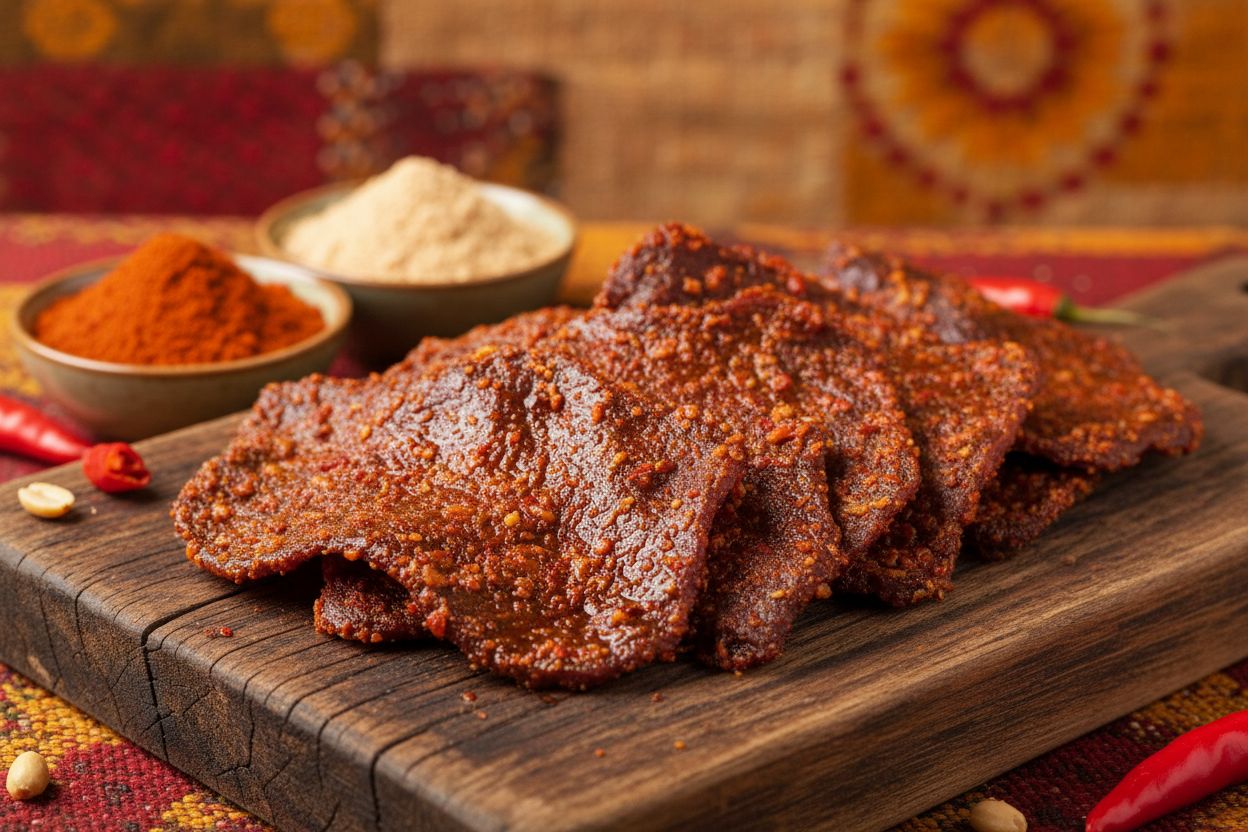



Kilishi
Background
Kilishi is a seasoned, dried, and roasted sliced meat specialty with deep roots in Hausa communities of Northern Nigeria. It is closely related to suya but is prepared by drying thin sheets of meat before a final roast, which concentrates flavor, creates a distinctive snap, and extends shelf life. Historically, traveling traders prized it for portability, and families prepared it as a celebratory snack that could be enjoyed days after it was made. Modern home cooks can recreate the hallmark spice crust—traditionally enriched with nut paste—by using a carefully balanced blend that includes groundnut powder and warm aromatics, then finishing with a quick roast for a savory, smoky result.
Ingredients
- 900 g thinly sliced beef
- 1 cup finely milled groundnut powder
- 2 tbsp chili powder
- 1 tbsp ginger powder
- 1 tsp garlic powder
- 1 tsp onion powder
- 1 tsp paprika
- 1/2 tsp cayenne pepper (adjust to heat preference)
- 1 tsp fine salt (plus a pinch to finish)
- 1 tsp sugar (optional, for balance)
- 1 tsp bouillon powder
- 1 tbsp vinegar (or to taste)
- 4–6 tbsp water, as needed for paste consistency
- 1 tbsp honey (optional, for glazing)
- 2 tbsp vegetable oil
Equipment
- Sharp knife and cutting board
- Two large bowls
- Whisk or spoon
- Tray or rack for drying
- Oven or grill for final roasting
- Parchment or lightly greased rack
- Airtight container for storage
Preparation Overview
Slice the beef as thin as possible, mix a spice paste anchored by groundnut powder, coat the slices, dry them until firm, and finish with a brief roast to bring out aroma, color, and a characteristic brittle-chewy texture. The balance of heat from chili powder and cayenne pepper, warmth from ginger powder, savoriness from bouillon powder, and a subtle tang from vinegar is key. A touch of honey rounds the edges, while a light film of vegetable oil helps crisping.
Step-by-Step Process
- Trim and slice: With a very sharp knife, trim visible fat from the beef. Slice it into broad, paper-thin sheets—aim for roughly 2–3 mm thick so the slices dry evenly. If needed, partially freeze the beef to make thin slicing easier.
- Make the dry blend: In a bowl, whisk together groundnut powder, chili powder, ginger powder, garlic powder, onion powder, paprika, cayenne pepper, salt, sugar, and bouillon powder until uniform.
- Build the paste: Add vinegar and a splash of water to the dry blend, stirring into a thick, spreadable paste. Add more water in small increments until it clings to the spoon but can be brushed thinly. Stir in 1 tbsp of vegetable oil. If using, whisk in the honey to subtly glaze and help browning.
- Coat the slices: Lay the beef sheets on a tray or rack. Using clean hands or a brush, apply a thin, even layer of paste on one side, pressing gently so the groundnut powder-based mixture adheres. Flip and repeat, using just enough paste to color every surface without thick clumps.
- Rest briefly: Let the coated beef stand for flavor absorption for about 20–30 minutes.
- Dry the slices: Air-dry in a well-ventilated, low-humidity spot until the surfaces feel leathery and the slices can support their shape, typically 2–6 hours depending on thickness and airflow. For an oven option, set the oven to its lowest setting and dry on a rack-lined tray until the slices are firm but still pliable, usually 60–90 minutes, adjusting as needed. Avoid direct high heat at this stage.
- Final roast: Increase oven heat to moderate-high or prepare a medium-hot grill. Roast the dried slices briefly to toast the spice crust and fully cook the beef. Work in batches and watch closely; this step is quick—about 2–3 minutes per side, or until edges darken slightly and the aroma is nutty and smoky. If the surface looks dull, brush a whisper of vegetable oil before roasting.
- Season-to-finish: While still warm, taste a small piece. Sprinkle a tiny pinch of salt if needed, or a bare drizzle of honey if you want a sweet heat contrast. Let cool completely on a rack so the crust sets.
Notes on Consistency and Flavor
- Paste feel: The paste should be thick but spreadable. If it’s too tight, add a teaspoon of water; if too loose, stir in a spoon of groundnut powder.
- Heat control: For a milder batch, reduce cayenne pepper. For a deeper red color without extra heat, lean on paprika.
- Tang and balance: Adjust brightness with a few extra drops of vinegar. Round bitterness with a pinch of sugar or a drizzle of honey.
- Aroma depth: A small extra pinch of garlic powder and onion powder enhances savory notes when the batch tastes flat.
Serving Suggestions
Enjoy the Kilishi at room temperature as a snack, or pair it with fresh sliced tomatoes and onions, flatbreads, or a chilled, nonalcoholic drink. For a light meal, crumble pieces over a simple salad, or serve alongside warm grains. The spice crust built on groundnut powder, a measured kick from chili powder and cayenne pepper, and the subtle tang of vinegar shines even more when contrasted with crisp, fresh sides. A tiny brushing of vegetable oil just before serving can refresh the sheen if the slices look matte.
Storage
Let the Kilishi cool fully so moisture does not condense. Pack in an airtight container, separating layers with parchment. Stored cool and dry, it keeps its best texture for several days. For longer keeping, refrigerate and re-crisp briefly in a warm oven for about 3–5 minutes before serving. Avoid excess exposure to humidity, and keep a dry sachet or paper towel in the container to absorb stray moisture.
Troubleshooting
- Slices are too tough: The beef may have been over-dried or roasted too long. Next time, shorten the dry-out by 10–15 minutes and monitor the final roast closely.
- Paste won’t stick: The surface of the beef might be wet. Pat dry first, then press the groundnut powder-based paste firmly, or add a tiny splash of water to loosen it. A touch of vegetable oil can also help adhesion.
- Flavor tastes flat: Increase a pinch of salt, add a touch more ginger powder, or brighten with a drop of vinegar. If heat is lacking, a small bump of cayenne pepper helps.
- Too spicy: Cut back on cayenne pepper next time and add a touch more sugar or a drizzle of honey for balance.
Why This Works
The thin slicing of beef allows quick drying, the fat-reduced nut element from groundnut powder forms a cohesive crust, and controlled roasting unlocks toasty aromas while preserving chew. Layered spices—led by chili powder, paprika, ginger powder, and a backbone of bouillon powder with salt—create depth, while a hint of vinegar and optional honey keep flavors lively. A veil of vegetable oil supports even browning and that signature snap.