
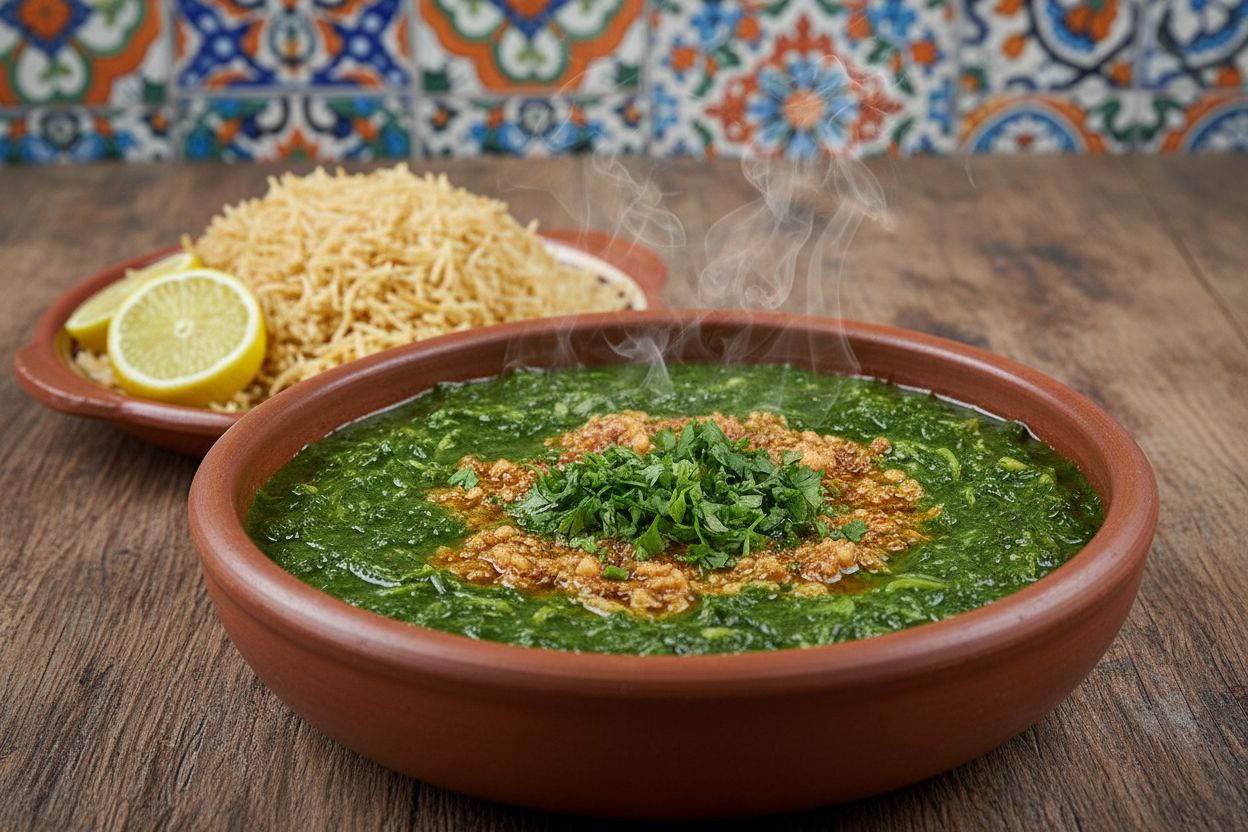



Molokhia
Background
molokhia is a beloved green stew with deep roots across North Africa and the Eastern Mediterranean, most famously associated with Egyptian home cooking and festive family tables. The leaves of molokhia are finely chopped and gently simmered into a silky, herb-forward soup that’s ladled alongside rice or scooped with bread. In Egyptian tradition, cooks perfume the pot with a sizzling tasha: a quick bloom of garlic and coriander in rich ghee and a touch of vegetable oil. That fragrant finishing step defines the dish’s signature aroma and taste. While variations exist, the core idea remains constant: keep the heat gentle so the molokhia stays bright and velvety, and let the tasha bring everything to life at the end. Today’s version is classic, comforting, and ideal for serving with rice (often adorned with a little vermicelli) or warm pita bread, with a final squeeze of lemon to wake up the flavors.
Ingredients
- molokhia, finely chopped (fresh or frozen)
- stock (enough to create a soup-like consistency)
- One medium onion, finely chopped
- 6–8 cloves garlic, minced
- 2 teaspoons ground coriander
- 2 tablespoons ghee
- 1 tablespoon vegetable oil
- salt, to taste
- black pepper, to taste
- Pinch of chili flakes (optional)
- Wedges of lemon, for serving
- Cooked rice with toasted vermicelli, or warm pita bread
Preparation Notes
If using frozen molokhia, keep it chilled until just before cooking to preserve color. Finely chop the onion so it melts into the base. Mince the garlic very finely for an even, aromatic tasha. Measure your ground coriander, and have the ghee and vegetable oil ready near the stove. Warm the stock separately so the stew comes together smoothly.
Cooking Process
1) Build the base
Set a pot over gentle heat and film the bottom with a splash of vegetable oil. Add the chopped onion with a pinch of salt, stirring until translucent and sweet. Pour in enough hot stock to create a brothy base—think of a light soup that will later be enriched by the greens.
2) Add the greens
Stir the molokhia into the hot stock, keeping the heat low. The key is to maintain a bare tremble in the pot; avoid a rolling boil to protect the delicate texture and color of the molokhia. Season with a little more salt and a whisper of black pepper. Let the mixture gently settle into a silky consistency.
3) Make the tasha
In a small pan, warm the ghee with a touch of vegetable oil. Add the minced garlic and ground coriander, stirring until fragrant and lightly golden at the edges. If you enjoy heat, add a pinch of chili flakes. This aromatic tasha will carry the signature flavor of the dish.
4) Finish the pot
Tip the tasha into the pot of molokhia and stir immediately so the flavors bloom throughout the stew. Taste and adjust with more salt and black pepper as needed. Keep the heat gentle; the molokhia should look glossy and pourable, not muddy or boiling.
5) Serve
Ladle the stew beside a mound of rice speckled with toasted vermicelli, or scoop it up with warm pita bread. Offer wedges of lemon so each person can brighten their bowl to taste.
How to Enjoy
Pair a warm bowl of molokhia with fluffy rice and crunchy toasted vermicelli for contrast, or keep it rustic with torn pita bread. A squeeze of lemon right before eating lifts the herbal notes, while a faint sprinkle of chili flakes can add pleasant warmth. Adjust at the table with a pinch more salt or a crack of black pepper depending on your preference.
Tips and FAQ
Why keep the heat low?
molokhia is sensitive to aggressive boiling. Gentle heat preserves its silky body and fresh green color while allowing the tasha of garlic, coriander, ghee, and vegetable oil to shine.
How do I get the right consistency?
Add more hot stock for a looser soup or simmer slightly to thicken, always keeping the pot just below a boil. Season gradually with salt and finish with black pepper to taste.
What if it tastes flat?
Often, a fresh tasha solves it: bloom a bit more garlic and coriander in ghee and a splash of vegetable oil, then stir it in. A final squeeze of lemon can also brighten the flavors. Don’t forget to check salt.
Serving temperature
Warm is ideal; it keeps the aroma of the garlic-coriander tasha vivid and the texture of the molokhia smooth. Keep it just hot enough to steam gently in the bowl.
Storage and Reheating
Cool the molokhia and store in an airtight container in the refrigerator. Rewarm gently with a splash of hot stock if it thickens. Taste and refresh with a little salt, a touch of black pepper, and a squeeze of lemon before serving. Keep accompaniments like rice, vermicelli, and pita bread separate so textures stay optimal.
Variations
For a richer aroma, you can toast the ground coriander briefly before adding the garlic. If you prefer a lighter finish, use a smaller amount of ghee and increase the vegetable oil slightly. To add gentle heat, bloom a bit more chili flakes in the tasha. Always adjust with salt, black pepper, and lemon to suit your taste.
Serving Ideas
- A classic plate: a ladle of molokhia with a mound of rice and toasted vermicelli, plus lemon on the side.
- Rustic style: serve in deep bowls and scoop with warm pita bread.
- Table condiments: tiny bowls of extra chili flakes, salt, and black pepper for customized finishing.
Chef’s Notes
Keep your tasha components—garlic, coriander, ghee, and vegetable oil—within arm’s reach so they bloom quickly without scorching. The moment the tasha turns aromatic, fold it into the molokhia so no flavors dissipate in the pan. A careful final adjustment of salt, black pepper, and a bright hint of lemon makes the whole bowl sing.