



Mont Lone Yay Baw
Background
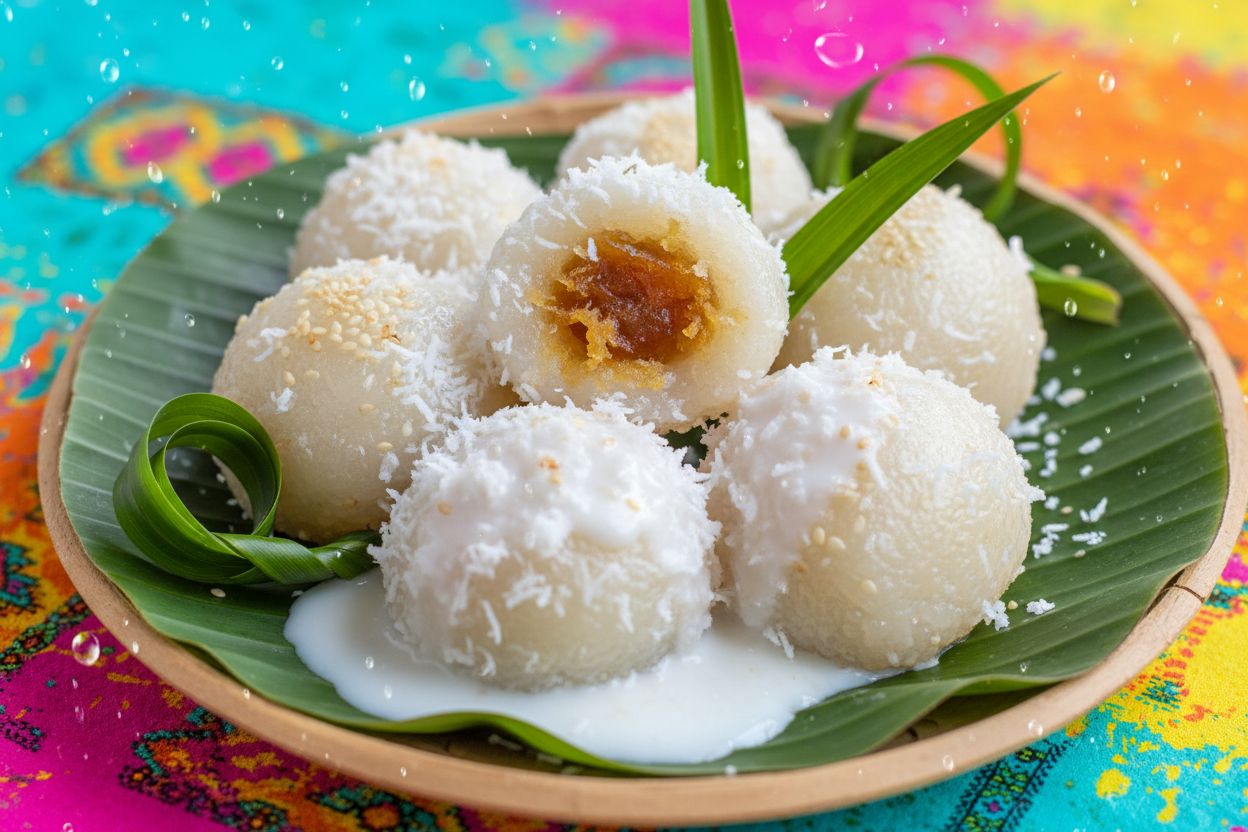
Mont Lone Yay Baw is a beloved Burmese festival sweet whose name poetically translates to “round snack that floats on water.” Traditionally prepared during Thingyan (the Burmese New Year), families and neighbors gather to roll dough, hide nuggets of sweetness inside, and boil the balls until they rise to the surface—an edible symbol of buoyancy, joy, and togetherness. The treat is soft and chewy on the outside, filled with a molten center, and finished with a fragrant, snowlike shower of coconut and a sprinkle of tiny seeds for texture. The method is simple and communal, making it ideal for cooking with friends and children.
Ingredients
- 2 cups glutinous rice flour
- 2 tablespoons (optional) rice flour
- About 3/4 cup warm water (plus more as needed)
- 1 small pinch salt
- 1/2 cup small nuggets of jaggery
- 1 cup freshly grated coconut
- 2 tablespoons toasted white sesame seeds
- 1 knotted (optional) pandan leaf
- 2 to 3 tablespoons (optional, for richer dough) coconut milk
Equipment
- Mixing bowl
- Small tray or plate
- Large pot for boiling
- Slotted spoon
- Clean kitchen towel
Before you start
Prepare a gentle boiling station and a rolling station. At the boiling station, heat a large pot of water to a steady simmer; if using, add the knotted pandan leaf for aroma. At the rolling station, keep the bowl of dough covered with a damp towel to prevent drying while you shape and fill.
Step-by-step instructions
1) Toast the finishing seeds and prepare the topping
- Place the white sesame seeds in a dry pan over medium heat and stir until fragrant and lightly golden, about 2–3 minutes. Transfer to a small bowl to cool.
- In a separate bowl, toss the grated coconut with a tiny pinch of salt. This light seasoning brightens the sweetness and creates the classic finish.
2) Make a smooth, supple dough
- In a mixing bowl, combine the glutinous rice flour and, if using, the rice flour with a pinch of salt.
- Pour in warm water a little at a time, mixing with your fingers until a soft, pliable dough forms. If you prefer a richer, more aromatic dough, replace part of the water with coconut milk. The dough should feel smooth and slightly tacky but not sticky.
- Knead briefly until uniform and elastic, then let the dough rest, covered, for about 5 minutes to relax and hydrate evenly.
3) Portion and fill
- Pinch off a small piece of dough and roll it into a ball roughly the size of a large marble. Flatten into a thick disc with your thumb.
- Place a tiny nugget of jaggery in the center. Fold the edges up to encase the jaggery, pinch closed, and roll gently between your palms to seal completely. If cracks appear, wet your fingers with a touch of water to smooth them out.
- Set the filled ball on a tray and keep covered with a damp towel while you continue shaping. Repeat with the remaining dough and jaggery.
4) Boil until they float
- Bring the pot of water to a gentle boil; the surface should be actively moving but not violently rolling. If using, ensure the pandan leaf is submerged for fragrance.
- Slip in the filled balls, leaving space so they do not clump. Stir once to prevent sticking to the bottom.
- Cook until the balls rise to the surface, then continue cooking for an additional 1 minute to ensure the center of jaggery is warm and the dough is tender, typically within 3–5 minutes total depending on size.
- Use a slotted spoon to lift them out, letting excess water drain.
5) Coat and serve
- While still warm, roll each ball in the bowl of grated coconut to coat generously, then sprinkle with toasted white sesame seeds.
- Serve immediately while warm and soft. The contrast of the tender exterior, molten center of jaggery, fragrant coconut, and crunchy white sesame seeds is the hallmark of the dish.
Timing guide
- Toasting seeds: 2–3 minutes
- Dough rest: 5 minutes
- Boiling per batch: about 3–5 minutes
Tips for success
- Hydration: Add warm water gradually. The dough should be supple; too dry leads to cracking, too wet makes sealing tricky. A spoonful of coconut milk can add fragrance and a silkier feel.
- Smooth sealing: Encase the jaggery fully or it may leak. If you see seams, dab your fingertips with water and polish the surface before boiling.
- Even sizing: Keep balls consistent so they cook evenly within 3–5 minutes. Smaller ones cook faster; adjust batches accordingly.
- Aroma booster: Simmer a knotted pandan leaf in the pot to perfume the kitchen and subtly scent the dough.
- Finishing texture: Toss the warm balls immediately in coconut so the coating adheres, then finish with white sesame seeds for crunch and nuttiness.
Serving and enjoyment
Serve Mont Lone Yay Baw warm, with extra bowls of fluffy coconut and toasted white sesame seeds at the table for generous sprinkling. The treat shines alongside tea or as a celebratory snack to share. Each bite should offer a soft, bouncy shell, a tender burst of heated jaggery, and the gentle perfume of a simmered pandan leaf if used.
Make-ahead, storage, and reheating
- Make-ahead: Shape and fill, then cover and refrigerate for up to a few hours. Let sit at room temperature briefly before boiling so they cook within 3–5 minutes as usual.
- Storage: Cooked balls are best fresh, but leftovers can be kept in an airtight container in the fridge for a day.
- Reheating: Steam gently until warmed through, typically 2–3 minutes, then re-roll in fresh coconut and sprinkle more white sesame seeds.
Simple variations
- Richer dough: Swap a portion of the warm water for coconut milk to add body and aroma.
- Extra fragrance: Increase the time your pandan leaf simmers in the pot by 3–4 minutes before adding the balls for a stronger scent.
- Seed accent: Fold a teaspoon of crushed white sesame seeds directly into the dough for a speckled look and subtle nuttiness.
Why this recipe works
A touch of rice flour supports structure without dulling the characteristic chew provided by glutinous rice flour. Resting the dough for 5 minutes allows the starches to hydrate fully, yielding a smooth, pliable texture that seals neatly around molten jaggery. Boiling until they float—and then for an extra 1 minute—ensures a tender bite and a warmed center, while the immediate coating of coconut and white sesame seeds gives signature aroma and contrast.