

Difficulty
Pro

Prep Time
120 min

Cost
Medium
Calories
620
Protein
45g
Sugar
9g
KEEP COOKING
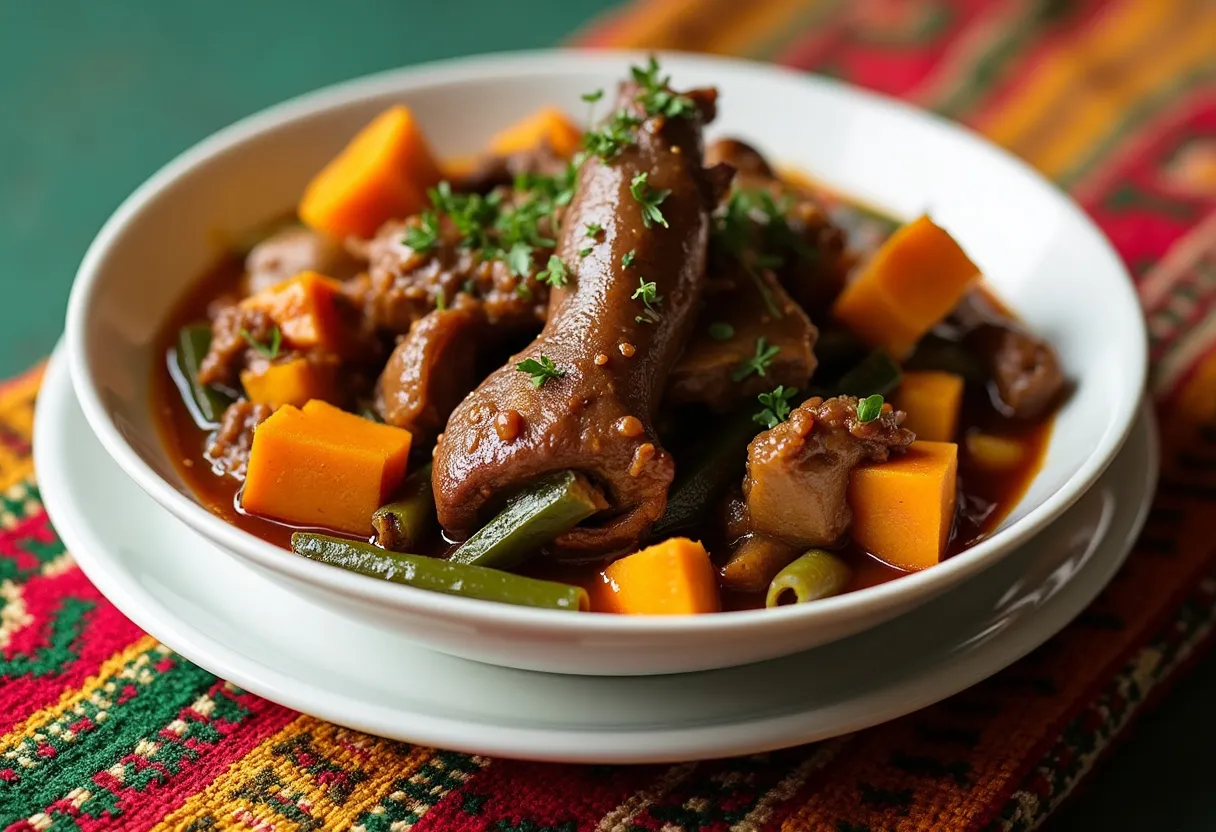
Ndoumbélane, a rich and hearty West African stew, hails from the Senegalese culinary tradition. This flavorful dish packs a punch with its combination of spices, meats, and vegetables, reflecting the vibrant culture of Senegal. It is often prepared for special occasions, gatherings, and festivals. The roots of Ndoumbélane can be traced back to the indigenous people of Senegal, with influences from French and Arabic cuisines brought by historical trade routes and colonization. This stew not only nourishes the body but also embodies the spirit of community and sharing that is central to Senegalese culture.
Begin by rinsing the goat meat under cold water. Trim any excess fat. Set the goat meat aside on a clean surface. Season the meat with salt and black pepper. Set aside to marinate for at least 30 minutes.
While the goat meat is marinating, prepare your vegetables. Chop the onions and garlic. Dice the tomatoes, and peel and cube the sweet potatoes. Cube the eggplant and slice the cabbage. Slice the okra and set everything aside in separate bowls.
Heat a large cooking pot over medium-high. Add the groundnut oil and the goat meat. Brown the meat on all sides. This should take about 10 minutes. Once browned, remove the meat from the pot and set it aside.
In the same pot, add the chopped onions and garlic. Sauté until the onions are translucent. Stir in the tomatoes, allowing them to break down and form a rich base. Add the cooked goat meat back into the pot.
Add the cubed sweet potatoes, eggplant, and sliced cabbage. Stir well. In a separate bowl, mix the peanut butter with a bit of water to create a smooth paste, then add it to the pot. Pour in the remaining water, and add the whole Scotch Bonnet pepper for heat, along with the bouillon cube, red palm oil, salt, and black pepper.
Bring the stew to a boil, then reduce the heat to low. Cover the pot and let it simmer for approximately 1.5 to 2 hours, or until the meat is tender and the vegetables are cooked through. During this time, check periodically and stir occasionally to ensure nothing sticks to the bottom of the pot. Adjust seasoning if necessary. Remove the Scotch Bonnet depending on your desired heat level.
Add the okra in the last 15 minutes of cooking to keep them crisp yet tender. Once everything is well-cooked, turn off the heat and let the stew rest. Skim off any excess oil if necessary.
Ndoumbélane is best enjoyed hot, served with a side of steamed rice or millet. This hearty stew is perfect for sharing with friends and family. To garnish, you may add fresh herbs such as parsley or coriander. Serve with slices of fresh lime on the side to enhance the flavors. The dish pairs wonderfully with Senegalese hibiscus juice, Bissap, or tamarind drink.
Don't forget to set your cooking timer for each step to ensure precise cooking times and enjoy this delicious journey into Senegalese cuisine!