



Nshima
Overview
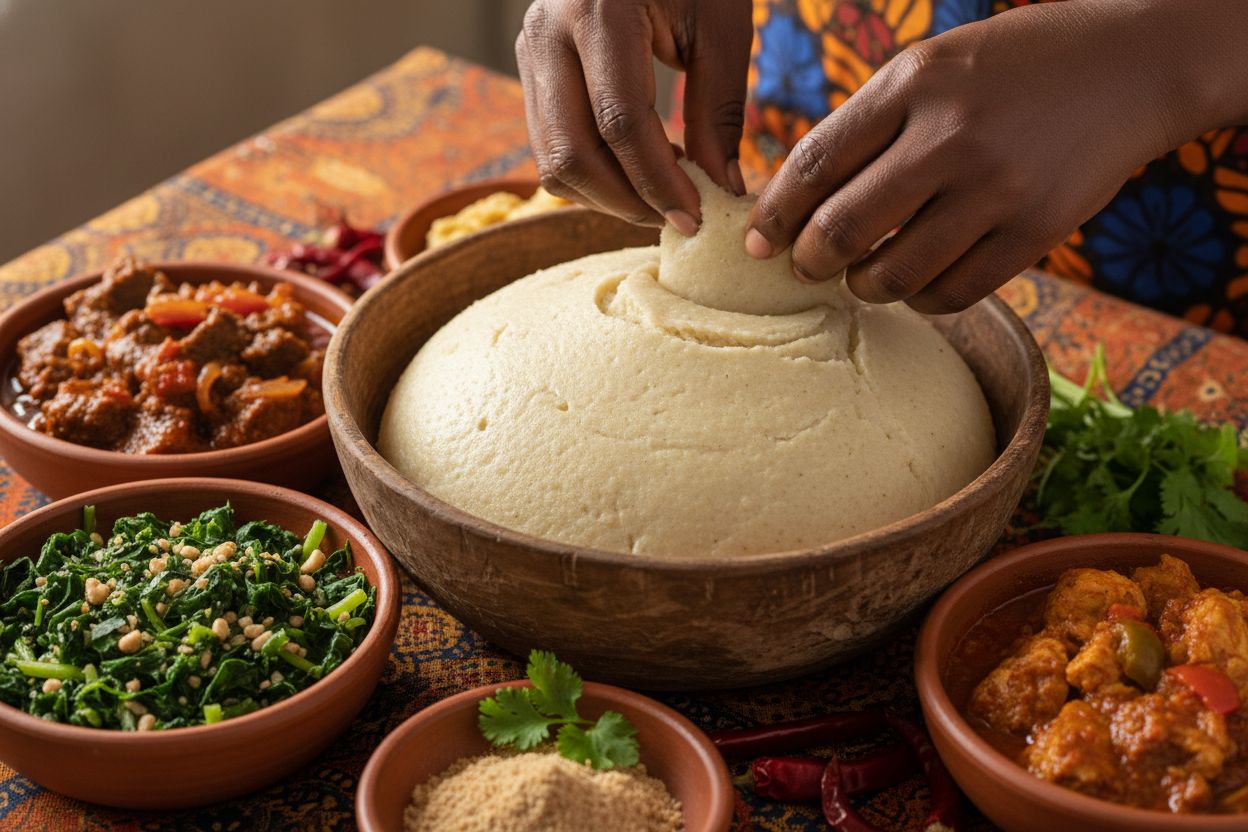
Nshima is a staple of Zambia and parts of Southern and Eastern Africa, a smooth, thick porridge shaped by hand and enjoyed with a savory relish. It is made from finely ground white corn known locally as mealie meal, here referred to as maize meal, cooked with plain water and a pinch of salt if desired. The result is a gently flavored, satisfying base that highlights whatever vegetables, pulses, or stews accompany it. Eaten communally, it is usually formed into small portions by hand and used to scoop up the relish, embodying nourishment, sharing, and hospitality.
Ingredients
- maize meal
- water
- salt (optional)
Equipment
- Heavy-bottomed pot
- Sturdy wooden spoon or paddle
- Whisk (helpful but optional)
- Large bowl for mixing a slurry
Preparation
Before heating, make a light slurry by combining a small amount of maize meal with cool water in a bowl, stirring until smooth with no dry pockets. This slurry reduces lumps when the pot comes to a simmer. Keep additional maize meal within reach for thickening and a little extra water nearby to adjust consistency. If you like, dissolve a pinch of salt into the pot for subtle seasoning.
Cooking Process
- Heat a generous measure of water in a heavy pot over medium heat until it is gently steaming and just beginning to ripple. Stir in the prepared slurry of maize meal and water, whisking to keep the mixture smooth as it thickens slightly.
- When the base looks uniform and begins to thicken, sprinkle in more maize meal in a steady rain while stirring vigorously with a wooden spoon. Add only as fast as you can incorporate it without forming lumps. If using, season lightly with salt.
- Continue stirring and turning the mixture, pressing it against the sides of the pot, then gathering it back to the center. As more maize meal is worked in, the nshima will shift from a runny porridge to a thick, cohesive mass that resists the spoon.
- Adjust consistency: if it becomes too stiff to stir, splash in a small amount of hot water around the edges and work it in thoroughly; if it is still loose, dust in a little more maize meal and beat briskly to absorb it fully.
- Once it is thick, smooth, and pulls cleanly from the sides of the pot, reduce the heat to low. Press the nshima into a mound, cover briefly to let the heat even out, then beat again to finish, ensuring a glossy, uniform texture.
- Taste and, if you prefer a slightly seasoned base, add a touch more salt and work it in. The nshima is ready when it holds its shape, feels springy under the spoon, and no raw taste of maize meal remains.
Texture Cues and Fixes
- Too soft: Work in a spoonful of maize meal, stirring vigorously until fully absorbed.
- Too stiff: Sprinkle in a small amount of hot water at the rim of the pot and fold it through until the mass loosens to your liking.
- Grainy or raw taste: Keep stirring on low heat until the mixture smooths out and the flavor of cooked maize meal develops.
How to Portion and Eat
Dampen clean hands with cool water to prevent sticking. Pinch off a portion, roll it lightly into a ball, and press a small indentation with your thumb. Use this as a scoop for your relish. Nshima is meant to be the anchor of the plate, so keep portions modest and return for more as needed.
Serving Ideas
- Pair with leafy greens, beans, or a simple tomato-onion relish.
- Serve alongside grilled or stewed meats or fish, letting the nshima balance strong flavors.
- Offer a fresh salad or pickles for brightness and contrast.
Storage and Reheating
For leftovers, cover while warm so it doesn’t dry out. To reheat, cut into slabs and warm gently in a pot with a splash of water, stirring and pressing until it softens and regains its smooth texture. You can also steam slices until heated through.
Background
Nshima belongs to a family of maize-based staples across Africa, reflecting the legacy of maize’s arrival and spread through trade and agriculture. In Zambia it is central to daily meals and celebrations alike, valued not only for nourishment but for the shared rituals of cooking and eating together. The technique balances three fundamentals—hydration, heat, and vigorous stirring—so that simple ingredients like maize meal, water, and optional salt transform into a versatile, comforting base.
Chef’s Notes
- Finer grinds of maize meal cook smoother; coarser grinds give more texture. Adjust additions of water accordingly.
- Use a pot with thick walls to hold steady heat and prevent scorching at the base.
- A dedicated wooden paddle helps beat and fold the nshima efficiently, giving it a glossy finish.