



Potica
Background
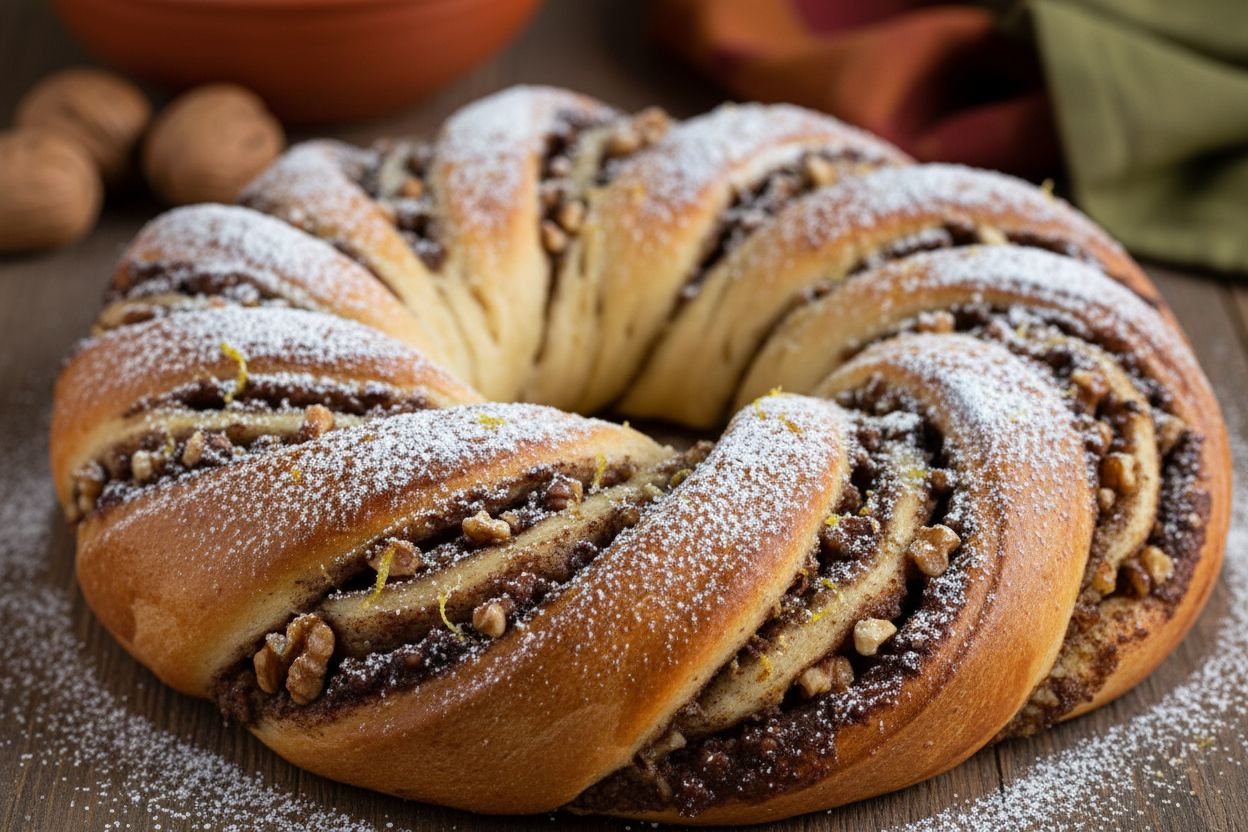
Potica is a festive, spiraled sweet bread from Slovenia, traditionally baked for holidays and family celebrations. The hallmark of the loaf is its tight coil of enriched dough encasing a fragrant filling, most famously made with finely ground walnuts. Baked in a fluted or ring mold, it emerges with a striking pattern of swirls that reveal meticulous rolling and careful shaping. Over centuries, home bakers have passed down shaping techniques and regional variations, but the spirit of the pastry remains the same: a celebratory centerpiece meant to be sliced thinly and shared.
Ingredients
Dough
- 4 cups all-purpose flour
- 2 1/4 teaspoons (1 packet) active dry yeast
- 1 cup warm whole milk
- 1/3 cup granulated sugar
- 6 tablespoons melted unsalted butter
- 2 large eggs
- 1 teaspoon fine salt
- 1 teaspoon vanilla extract
- 1 tablespoon finely grated lemon zest
Filling
- 3 cups finely ground walnuts
- 3/4 cup granulated sugar
- 1/3 cup warm honey
- 4 tablespoons melted unsalted butter
- 1/2 cup warm whole milk
- 2 teaspoons ground cinnamon
- 2 tablespoons dark rum (optional)
- 1/2 cup golden raisins (optional)
- 2 tablespoons bread crumbs (as needed for thickness)
For the pan and finish
- 1 tablespoon neutral oil (for greasing)
- powdered sugar, for dusting
Preparation
- Bloom the active dry yeast: In a bowl, combine the warm whole milk and a pinch of the measured granulated sugar, then sprinkle in the active dry yeast. Let it sit until foamy.
- Mix the dough base: In a large mixing bowl, whisk the remaining granulated sugar, the melted unsalted butter, the lightly beaten large eggs, the vanilla extract, and the lemon zest. Stir in the foamy active dry yeast mixture.
- Form the dough: Add the all-purpose flour and the fine salt to the bowl and mix until a shaggy mass forms. Knead until the dough is smooth, elastic, and slightly tacky, adding a sprinkle of additional all-purpose flour only if the dough is overly sticky.
- First rise: Place the dough in a lightly greased bowl (use a thin film of neutral oil), cover, and let it rise in a warm, draft-free spot until roughly doubled in volume.
- Prepare the filling: In a separate bowl, combine the ground walnuts, the granulated sugar, the ground cinnamon, the warm honey, the melted unsalted butter, and the warm whole milk. Stir in the dark rum for aroma if using. If the mixture seems loose, fold in the bread crumbs a little at a time until spreadable but not runny. Fold in the golden raisins if desired.
Rolling and shaping
- Prepare the pan: Grease a fluted ring mold or tube pan with neutral oil. For extra insurance against sticking, dust the inside lightly with bread crumbs and tap out the excess.
- Roll the dough: Turn the risen dough onto a lightly dusted surface using a touch of all-purpose flour. Roll into a large, thin rectangle with even thickness to encourage a tight spiral.
- Spread the filling: Using an offset spatula, spread the walnuts mixture evenly over the dough, leaving a small border on all sides. Ensure the layer is thin and uniform; if it feels too loose, sprinkle a veil of bread crumbs to absorb excess moisture.
- Add inclusions: Scatter the soaked or well-plumped golden raisins over the surface if using.
- Roll into a log: Starting from a long edge, roll the rectangle into a snug log, pressing gently to keep the coil tight without squashing the filling. Pinch the seam to seal.
- Pan the loaf: Transfer the log into the prepared pan, arranging it in a ring and tucking the ends together to close the circle. Place the seam side down so it stays sealed while baking.
- Second rise: Cover and let the shaped loaf rise again in a warm spot until puffy and just springy to the touch.
Baking
- Preheat the oven: Set the oven to a moderate temperature suited for enriched breads. Position a rack in the lower-middle area to prevent the top from over-browning.
- Bake the loaf: Place the pan on the rack and bake until the top is richly golden, the sides have pulled slightly from the pan, and the center feels set. If the crown darkens too quickly, tent loosely with foil to protect the surface while the interior finishes baking.
- Cool and unmold: Let the pan rest briefly, then run a thin knife along the edges, invert onto a rack, and lift off the pan. Allow the loaf to cool fully so the spiral sets and slicing yields clean swirls.
- Finish: Dust the top with a light shower of powdered sugar just before serving.
How to enjoy
Slice the loaf into thin, even pieces to showcase the spiral. Serve at room temperature with coffee or tea, or offer it as the centerpiece of a celebratory brunch board with fresh fruit and creamy spreads. The pastry is rich enough to stand alone, but it pairs beautifully with mild cheeses and gently sweet preserves. Because each slice is patterned, it also makes a lovely gift: wrap it in parchment and ribbon, and include a note about its heritage to invite conversation around the table.
Tips and variations
- Nuttiness: For a deeper flavor, lightly toast the walnuts before grinding and let them cool completely.
- Spice level: Adjust the warmth of the filling by increasing or decreasing the ground cinnamon.
- Scented dough: A touch more vanilla extract or fresh citrus from extra lemon zest can brighten the crumb.
- Moisture balance: If the filling feels too loose, incorporate a spoonful of bread crumbs until it holds a soft mound; if too thick, loosen with a splash of warm whole milk or a drizzle of honey.
- Enrichment: For a softer crumb, add an extra tablespoon of melted unsalted butter to the dough, balancing with a dusting more all-purpose flour only if needed.
Storage
Wrap leftovers tightly to keep the crumb tender. The loaf keeps well at room temperature for a short period; for longer storage, wrap slices and freeze. Refresh by warming briefly in a low oven to revive aroma and texture, then add a final whisper of powdered sugar before plating.