
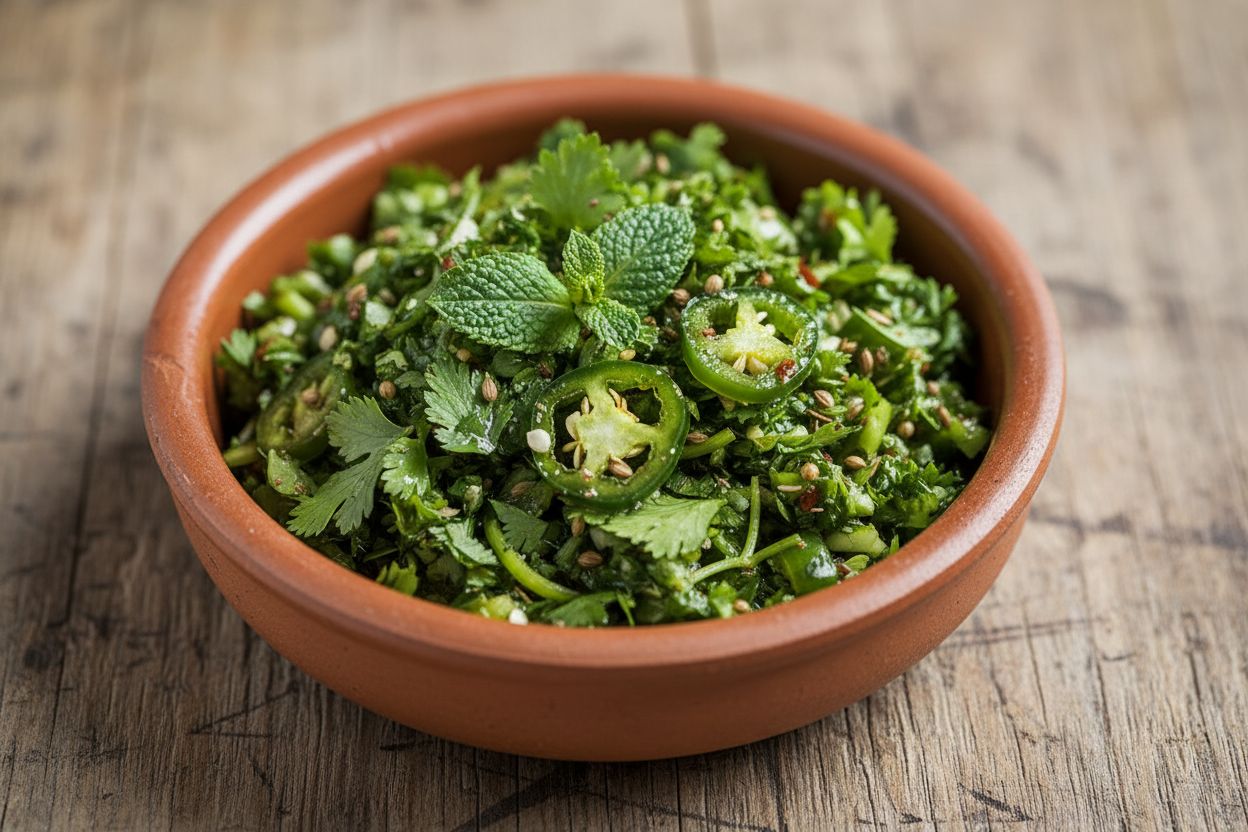



Sahawiq
Sahawiq is a vibrant Yemeni chile relish treasured across homes and markets for its bold aroma, heat, and herbal lift. Often served as a table condiment, it brightens grilled meats, rice platters, soups, eggs, and flatbreads with a small spoonful. Known regionally as zhug or zhoug, it traveled alongside traders and sailors of the Arabian Peninsula, finding a place in neighboring cuisines while retaining its Yemeni soul. What makes it beloved is its balance: fiery warmth, fragrant spice, and citrusy tang that wakes up even the simplest meal.
What is Sahawiq?
At heart, this is a raw, pounded or blended paste that marries green heat, layered spices, and fresh herbs into a versatile sauce. You can keep it coarse for rustic texture or process it fine for a smoother spoonable relish. It is not cooked; instead, the synergy of spice and acidity makes it shine as a finishing accent. A little goes a long way, and its character leans on the interplay of aromatics and carefully chosen seasonings.
Ingredients
Core
- cilantro
- jalapeno (or)
- serrano
- garlic
- salt
- cumin
- coriander
- cardamom
- black pepper
- lemon juice
- olive oil
Optional and Variations
- vinegar
- parsley
- mint
- tomato (for a red version)
Preparation
- Prep the herbs and chiles: Strip thick stems from the cilantro. For heat control, seed or partially seed the jalapeno and/or the serrano, keeping more seeds and membranes if you want extra kick.
- Make the aromatic base: In a mortar and pestle or processor, combine the garlic with a pinch of salt to help it break down. Pound or pulse to a coarse paste.
- Build the spice profile: Add cumin, coriander, cardamom, and a small crack of black pepper. Work them in so the mixture smells toasty and perfumed.
- Add the chiles: Introduce pieces of jalapeno and/or serrano, pounding or pulsing until they release their juices. Keep some texture if you prefer a rustic finish.
- Fold in herbs: Add the cilantro in batches, processing just enough to integrate. If using, add a handful of parsley or a few leaves of mint for added freshness.
- Balance with acidity and fat: Stir in lemon juice and a drizzle of olive oil. Taste and adjust with a splash of vinegar if you want sharper tang.
- Season to finish: Check for saltiness and aroma, adding a touch more salt, a pinch of cumin, or a dusting of black pepper as needed.
- Optional red version: For a warmer color and sweeter edge, blend in chopped tomato until the hue shifts and the texture loosens slightly.
How to Enjoy
- Swipe on flatbreads, tuck into sandwiches, or spoon over grilled meats and seafood.
- Stir into yogurt for a cooling, spicy dip; drizzle across roasted vegetables; or finish soups for brightness.
- Pair with eggs any style or fold into grain bowls for a punchy accent.
Tips and Notes
- Heat control: Choose more jalapeno for grassy brightness, more serrano for a sharper bite, or mix them to suit your palate.
- Herb character: The core green lift comes from abundant cilantro; a touch of parsley adds body, while a little mint introduces coolness.
- Spice harmony: Well-balanced cumin, coriander, and cardamom should smell warm and vivid without overpowering; finish with black pepper for gentle bite.
- Acid and fat: Use lemon juice for citrus zing and olive oil for roundness; add a touch of vinegar if you prefer sharper edges.
Serving and Storage
Serve at room temperature for fullest aroma. Keep any extra in a clean, airtight jar. If you like, cover the surface with a thin layer of olive oil to help preserve freshness, and refrigerate.
Troubleshooting
- Too hot: Add more cilantro and a splash more olive oil to soften intensity.
- Too flat: Brighten with an extra squeeze of lemon juice or a tiny dash of vinegar.
- Too bitter: Ensure seeds and membranes from the jalapeno or serrano are moderated; balance with a bit more lemon juice and olive oil.
- Lacking aroma: Refresh with a pinch of freshly ground cumin, coriander, or a breath of cardamom.
A Short Background
In Yemeni culinary tradition, Sahawiq sits alongside rice feasts and grilled specialties, offering color and brightness. Sailors and merchants carried it through port cities where spice blends and herb pastes mingle freely. Whether called zhug in diaspora communities or simply the house hot relish, its character remains rooted in hand-ground technique and the balance of fire, fragrance, and acidity.