
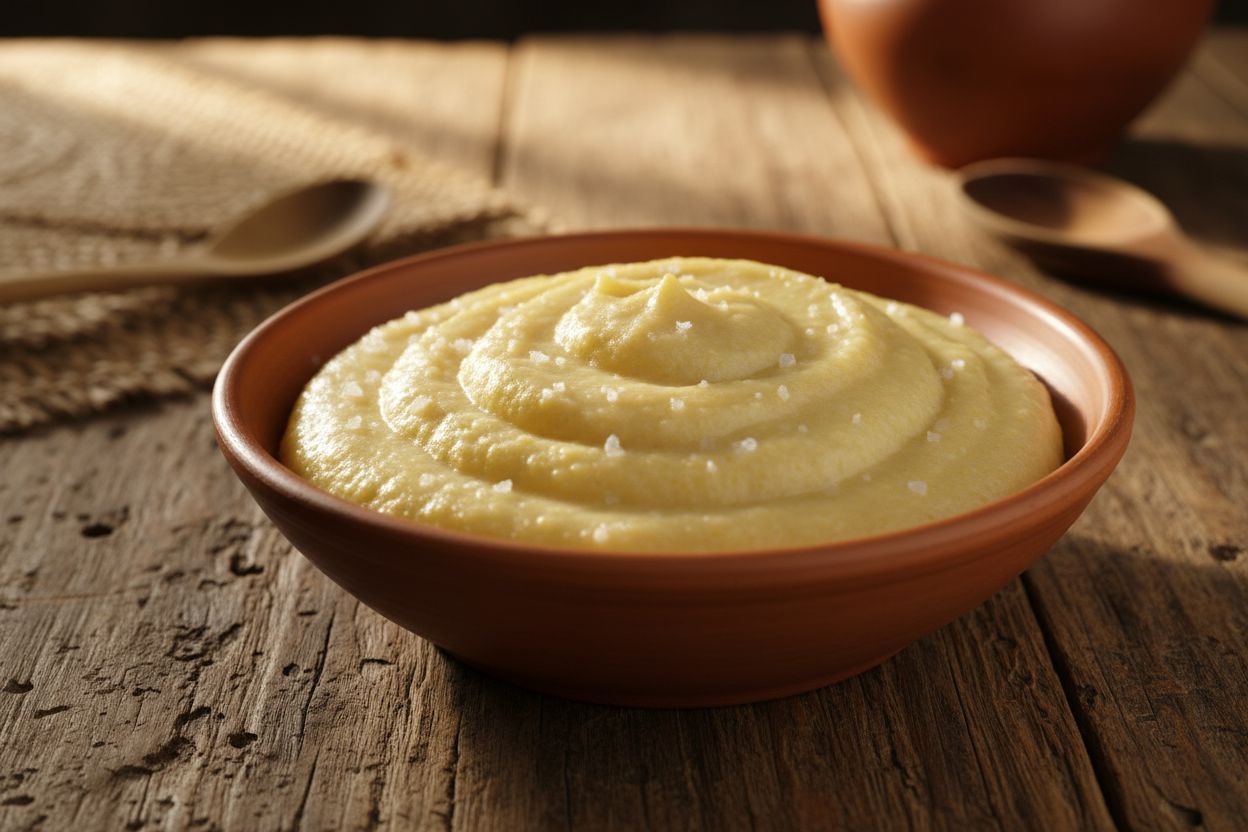



Sishwala
Background
Sishwala is a beloved staple from Eswatini, a hearty stiff porridge that anchors everyday meals and ceremonial tables alike. Traditionally cooked slowly over a fire and stirred with intention, it embodies thrift, comfort, and the communal rhythm of Southern African kitchens. It is typically served as the central starch with a savory relish or stew, but it also stands gracefully on its own thanks to its satisfying texture and mellow grain character. Today, home cooks prepare it on modern stovetops while honoring the time-tested technique of gradual thickening and steady stirring that ensures a smooth, cohesive porridge with just the right firmness for scooping and pairing.
Ingredients
- maize meal (coarse or medium grind): 2 cups (300–340 g)
- water: 6 cups (about 1.4 L), plus more as needed
- salt: 1/2 to 1 teaspoon, or to taste
Equipment
- Heavy-bottomed pot with lid (3–4 L capacity)
- Sturdy wooden spoon or paddle
- Whisk (optional but helpful for early lump prevention)
- Measuring cups
Preparation
- Measure the maize meal and set it aside in two portions: about one-third in a small bowl for the initial slurry and the remaining two-thirds in a larger bowl for later thickening.
- Bring the main pot to the stove and fill it with the measured water. Keep your spoon and whisk within reach so you can stir immediately once the pot heats up.
- Have your salt nearby so you can season at the right moment without stepping away from the pot.
Cooking Process
- Heat the base: Add the measured water to the pot and set over medium-high heat. Warm it until small bubbles begin to rise, then push to a gentle boil; this should take about 5 minutes depending on your stove and pot.
- Make a quick slurry: Sprinkle in roughly one-third of the maize meal in a slow, steady rain while whisking vigorously. This early addition helps prevent large lumps later and creates a smooth base.
- Stabilize and steam: Reduce heat to medium, cover the pot slightly ajar to avoid boil-overs, and let the mixture steam and hydrate for about 10 minutes, stirring once or twice to keep it smooth.
- Thicken gradually: Begin adding the remaining maize meal in small handfuls, stirring constantly. Let each addition hydrate before adding the next. The porridge will tighten and resist the spoon; steady stirring is key to preventing dry pockets.
- Season: When the porridge has thickened noticeably, add the salt and beat it vigorously into the mixture to distribute seasoning evenly. Taste and adjust the level of salt to your preference.
- Cook to final firmness: Lower the heat to medium-low, cover, and cook, stirring and folding from the bottom every couple of minutes until the porridge is glossy, cohesive, and pulls cleanly from the sides of the pot. This stage typically takes 12 to 15 minutes.
- Rest and set: Turn off the heat, cover the pot, and let Sishwala rest for about 5 minutes so the grains settle and the texture firms to an ideal scoopable consistency.
Serving and Enjoyment
Wet your serving spoon with a touch of cool water to prevent sticking, then scoop or shape into portions. Sishwala excels as the foundation for saucy accompaniments—think rich meat stews, braised greens, or tomato-onion relishes. Eat it with your dominant hand if you like, pinching off a bit of porridge and pressing a small well into it to capture the sauce. For a simple everyday plate, pair it with sautéed leafy greens and a spoonful of tangy dairy or a bright chutney. Its neutral, comforting profile lets bold flavors shine while keeping the meal satisfying and balanced.
Chef’s Notes and Tips
- Texture control: For a softer, spoonable Sishwala, whisk in a splash of extra water during the final minutes. For a firmer, moldable version, cook uncovered briefly to evaporate excess moisture while stirring to prevent scorching.
- Lump prevention: The initial slurry step plus steady stirring are your best friends. If a few small lumps persist, beat them firmly against the side of the pot with the back of your spoon.
- Heat management: Once thick, the porridge can sputter. Keep the heat moderate and stir with a long-handled spoon to avoid splashes.
- Flavor balancing: Start conservatively with salt, then adjust right before serving since flavors concentrate as moisture cooks out.
- Batch size: If doubling, use a wider pot to expose more surface area; this helps maintain even hydration and reduces the risk of scorching at the bottom.
Make-Ahead, Storage, and Reheating
Leftover Sishwala keeps well. Let it cool, then refrigerate in an airtight container for up to three days. To reheat, cut into slabs and warm in a covered pan with a few tablespoons of water, stirring and folding until soft and steamy. If reheating in a microwave, sprinkle on a little water, cover, and heat in short bursts, stirring between intervals until supple. Taste and adjust with a pinch more salt if needed after reheating.
Troubleshooting
- Too thick to stir: Work in small splashes of hot water, stirring vigorously after each addition until it moves again. Keep heat moderate so added liquid absorbs rather than pooling.
- Scorching at the bottom: Lower the heat immediately and transfer the porridge to a clean pot, leaving any scorched bits behind. Stir patiently to re-establish a smooth texture; add a spoon or two of hot water if needed.
- Underseasoned: Fold in a little extra salt near the end, tasting as you go.
- Gummy or pasty: This often means it needed a touch more time. Continue cooking over gentle heat for another 3 to 5 minutes, stirring frequently.
Serving Ideas
- Weeknight plate: Sishwala with a ladle of tomato-onion relish and quick-sautéed greens.
- Comfort bowl: Sishwala with a rich, peppery gravy and a side of lightly pickled vegetables for brightness.
- Breakfast: Slice chilled leftover Sishwala, pan-sear until crisp at the edges, and top with a savory spread or soft-cooked egg.