
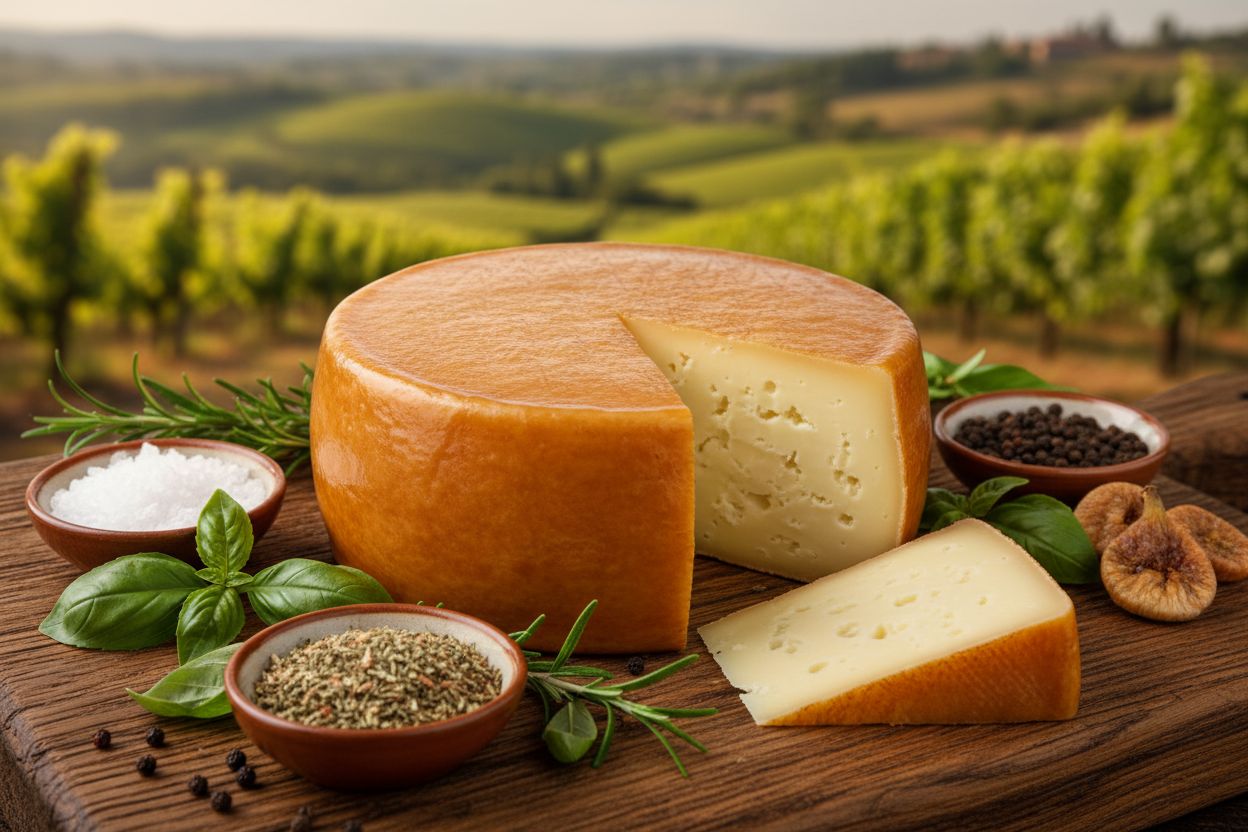



Formaggio di Monte Titano
Overview
Born on the limestone slopes of San Marino’s iconic peak, Formaggio di Monte Titano reflects centuries of hillside husbandry, cool breezes, and cellar craft. The wheel is typically compact, with a thin natural rind and a straw-cream paste that balances gentle mountain herb notes with a clean, nutty finish. Though every farmhouse had its own touch, the style descends from rustic wheels set in woven forms and matured in stone spaces that favored steady airflow and moderate humidity.
Ingredients
- milk (whole, preferably from grass-fed cows)
- Mesophilic culture
- rennet (liquid or tablet, pre-dissolved)
- Non-iodized salt (for brine or rubbing)
- Clean water (for dissolving and brine)
Equipment
- Nonreactive pot with thick base
- Dairy thermometer
- Long knife or curd cutter
- Ladle or skimmer
- Cheesecloth and basket or cylindrical mold
- Light press or improvised weight system
- Draining rack and aging mat
Preparation
Sanitize all tools and the work surface. Dissolve the measured rennet in a small cup of cool water and set aside. If planning a brine finish, mix a concentrated solution of salt in chilled water until a few crystals remain undissolved, then keep it cold.
Process
- Warm the milk slowly over gentle heat, stirring with long, calm motions so the vat warms evenly and remains sweet-smelling.
- Sprinkle the culture over the surface, allow it to moisten, then stir thoroughly to distribute. Let the vat rest so acidity can begin to develop and the aromas turn softly lactic.
- Add the diluted rennet, stir with an up‑and‑down motion for only a brief moment, then stop all movement so the surface can set. When the curd holds a clean break, proceed.
- Cut the curd into small, even cubes. Pause so the pieces firm slightly and begin to expel whey, then give a careful stir to prevent matting.
- Cook the curd gently, increasing heat in small increments while stirring. Continue until the grains are resilient to the touch, glossy on the edges, and settle compactly at the bottom.
- Allow the curd to sink, then remove whey until just above the curd mass. Transfer curd to the lined mold, pack lightly, and apply modest pressure. Turn periodically, increasing pressure stepwise to knit a smooth surface.
- Choose your finish: immerse the young wheel in a cool brine made from water and salt, or rub the rind with dry salt at intervals to season evenly.
- Dry the wheel in a draft-free spot until the exterior is matte and touch-dry. Move to a cool, steady environment with gentle airflow; turn regularly to encourage even shape and rind development.
Maturation Notes
This style aims for a supple, sliceable paste rather than a crumbly core. Maintain a clean natural rind; if it looks thirsty, lightly wipe with a thin brine of water and a pinch of salt. As it rests, aromas shift from fresh dairy to hay, nuts, and meadow herbs. A balanced wheel springs back slightly when pressed at the rim and slices without sticking to the knife.
How to Enjoy
Serve wedges at cool room temperature alongside rustic bread, late-season pears, roasted nuts, and a drizzle of mountain honey. It melts smoothly for polenta, vegetable gratins, or a simple toastie, and shaves beautifully over buttered pasta or tender greens. Pair with a bright Sammarinese white, a light red with gentle tannin, or a crisp lager to highlight the cheese’s clean, herbal finish.
Tips for Success
- Gentle heat and calm stirring protect curd structure and yield a fine, elastic paste.
- Even turning in the mold prevents a lopsided wheel and fosters a consistent rind.
- Season progressively: a brief brine or measured surface rubs with salt build flavor without harshness.
- Keep notes on vat temperature, curd feel, and rind appearance; small adjustments across batches refine your house style.