
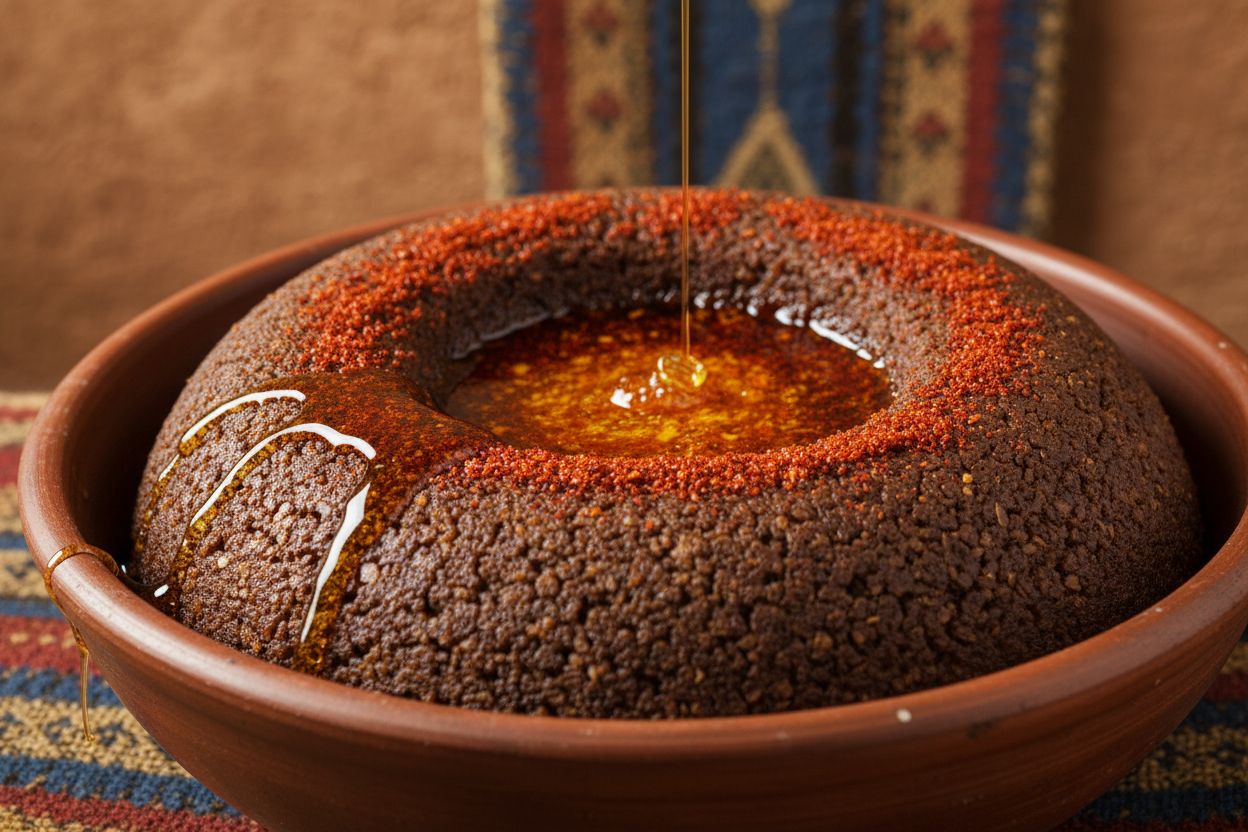



Genfo
Genfo is a traditional Ethiopian porridge shaped into a ring with a fragrant, spiced butter sauce pooled in the center. It is most commonly prepared with finely milled barley flour, simmered with water and seasoned with a pinch of salt, then finished with a generous well of melted niter kibbeh mixed with fiery, aromatic berbere. For a sweet variation, families may drizzle a little honey over the warm mound. Genfo is served for breakfast, to celebrate milestones, and as a comforting, strengthening food—often eaten communally by pinching pieces from the edge and dipping them into the flavor-packed center.
At a glance
- Prep: 5 minutes
- Cook: 12–15 minutes
- Rest: 3 minutes
Ingredients
- 2 cups barley flour
- 4 cups water, plus a splash more if needed
- 1 teaspoon salt, or to taste
- 4 tablespoons niter kibbeh, melted, for serving
- 1–2 tablespoons berbere, to stir into the melted niter kibbeh
- 1–2 tablespoons honey (optional, for a sweet finish)
What is Genfo?
At its heart, Genfo is a simple, nourishing porridge. The base is just barley flour cooked with hot water and seasoned with salt. What makes it special is its iconic presentation: a smooth, round mound with a hollow in the center filled with melted niter kibbeh infused with berbere. Diners pinch off pieces from the outer ring and dip them into the rich, spicy butter. For a contrasting version, a drizzle of honey adds floral sweetness.
Preparation
- Bring the base to temperature: In a medium pot, combine 4 cups water and the salt. Heat until hot and just at a steady simmer.
- Rain in the flour: While whisking vigorously, slowly sprinkle in the barley flour. Add it gradually so it hydrates evenly and stays smooth.
- Stir to thicken: Reduce the heat to low and continue stirring, scraping the bottom and sides, until the porridge is glossy, thick, and smooth. If it seems too stiff, splash in a little more water to reach a scoopable consistency.
- Season and smooth: Taste and adjust with a bit more salt if needed. Keep stirring until the texture is supple.
- Shape the Genfo: Lightly moisten a spoon with water and scoop the hot Genfo into a wide bowl. Smooth the surface, then press a shallow well in the center.
- Make the spiced butter: In a small bowl, stir the melted niter kibbeh with the berbere until evenly combined. Pour this into the well. For a sweet variation, drizzle with honey instead of the spicy butter—or serve both on the side.
- Rest briefly: Let the Genfo sit for 3 minutes so it sets up for easy scooping.
How to enjoy
To eat, gather around the bowl and pinch small portions from the outer ring, dipping each bite into the pool of niter kibbeh and berbere. Prefer sweetness? Spoon a little honey over your portion. A sip of tea alongside balances the warmth and spice.
Tips and variations
- Smooth texture: Sprinkle the barley flour in gradually and whisk constantly as it hits the hot water.
- Adjust consistency: If the porridge gets too thick, stir in a splash of hot water until it loosens.
- Flavor control: Start with a modest amount of berbere, then add more to the melted niter kibbeh to suit your spice tolerance.
- Sweet finish: Drizzle honey over individual servings for a dessert-like twist.
- Seasoning: Don’t forget to taste and balance with a final pinch of salt if needed.
Storage and reheating
Cover and refrigerate leftovers. Reheat gently in a small pot, stirring in splashes of hot water until the texture returns to creamy. Finish with fresh melted niter kibbeh and a pinch of berbere. If you like it sweet, add a little honey right before serving.
Frequently asked questions
Why is my Genfo lumpy?
Lumps form when too much barley flour hits hot water at once. Sprinkle it in slowly while whisking, then switch to a sturdy spoon as it thickens.
How spicy should the center be?
The heat level is up to you. Start with less berbere in the melted niter kibbeh, taste, and add more until it’s just right.
Can I make a sweet-only version?
Yes—skip the berbere and niter kibbeh and finish with a generous drizzle of honey. Add a tiny pinch of salt to keep flavors balanced.