
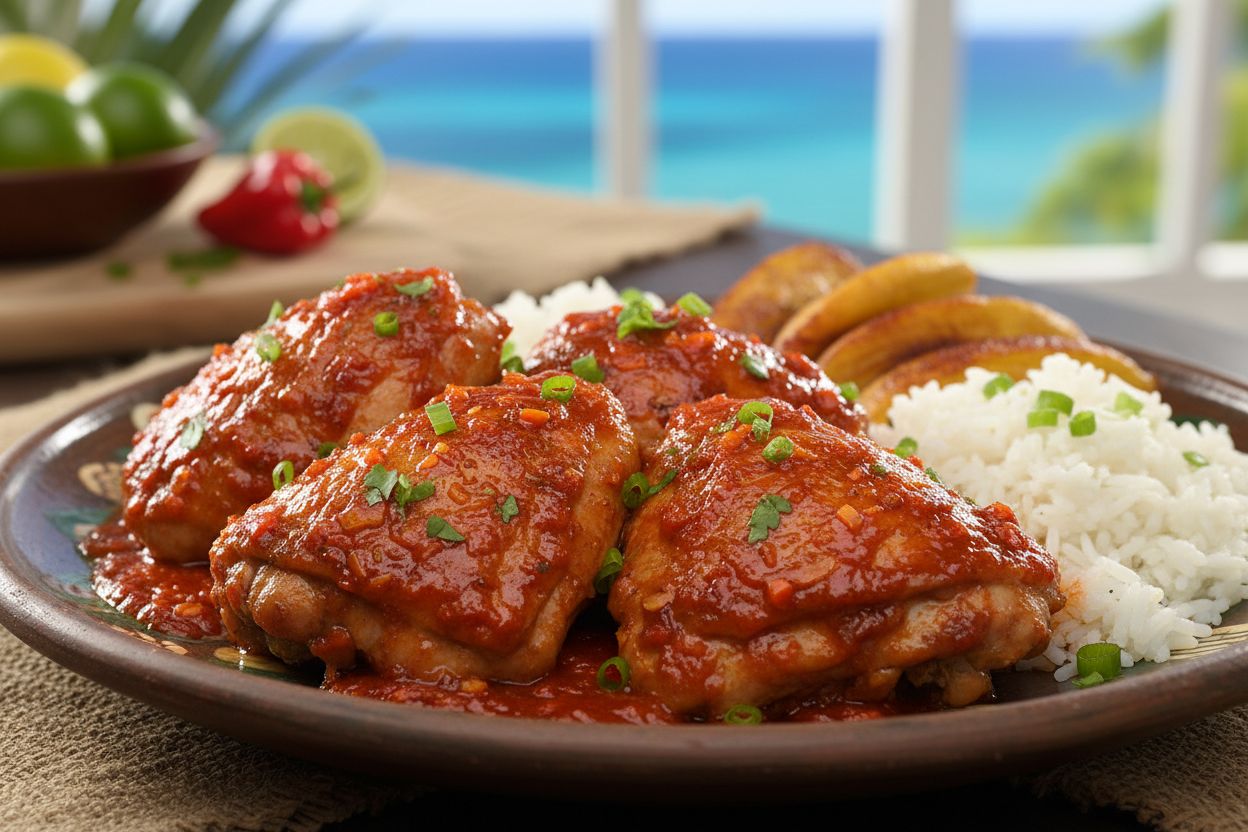



Grenadian Pepper Sauce Chicken
A vibrant, island-inspired dish built on the bold, sunlit heat of Caribbean pepper sauce, bringing crackling skin and juicy meat to the table with an irresistible tang and fire.
Background
Grenada’s culinary identity is shaped by a confluence of Indigenous, African, European, and South Asian influences, woven together over centuries of trade and migration. The nation’s famed pepper sauce is a brilliant expression of that story—fragrant, fiery, and bright, used as a tabletop condiment and as a foundation for marinades that transform everyday meals into festive centerpieces. By blending this sauce into a marinade for poultry and roasting at high heat, you get a dish that captures island character in a way that’s both weeknight-friendly and worthy of a celebratory spread.
Ingredients
- 8 bone-in, skin-on chicken thighs
- 6–8 scotch bonnet peppers, stems removed (seeds optional for extra heat)
- 1 medium onion, roughly chopped
- 6 cloves garlic, peeled
- 6 sprigs fresh thyme, leaves stripped
- 2-inch knob fresh ginger, peeled and sliced
- 1 lime, zest and juice
- 1/2 cup white vinegar
- 2 tablespoons yellow mustard
- 1 teaspoon ground turmeric
- 1 teaspoon ground allspice
- 1 teaspoon black pepper
- 1 1/2 teaspoons kosher salt, plus more to taste
- 1 tablespoon brown sugar
- 2 tablespoons vegetable oil
- Up to 1/4 cup water, as needed for blending
Preparation
- Handle heat safely: Wear gloves when working with the scotch bonnet peppers, and avoid touching your eyes or face.
- Blend the pepper sauce base: In a blender, combine the scotch bonnet peppers, onion, garlic, fresh thyme, fresh ginger, zest and juice of the lime, the white vinegar, yellow mustard, ground turmeric, ground allspice, black pepper, kosher salt, and brown sugar. Add a splash of water to help the blades catch, then blend until silky and pourable, adding a little more water as needed.
- Marinate: Pat the chicken thighs dry. Toss with the vegetable oil, then coat thoroughly with about half of the blended sauce. Cover and refrigerate for at least 2 hours and up to 12 hours.
- Reserve sauce: Transfer the remaining sauce to a clean jar and refrigerate for basting and serving, keeping it separate from the marinating chicken thighs.
Cooking
- Preheat the oven to 425°F and set a rack in the center. Line a sheet pan with foil and place a wire rack on top for better airflow.
- Arrange the marinated chicken thighs skin-side up on the rack, letting excess marinade drip away. Roast for 20 minutes.
- Baste the chicken thighs with some of the reserved sauce, then continue roasting until the skin is well rendered and the juices run clear, about 10–15 minutes more depending on size.
- Optional finish: For deeper char, switch to broil and cook the chicken thighs until edges caramelize, about 2–3 minutes.
- Rest: Transfer the chicken thighs to a board and rest for 5–10 minutes so the juices redistribute.
How to Serve
Spoon a little fresh sauce over the rested chicken thighs and finish with a bright squeeze of lime. Serve with rice and peas, coconut rice, roasted vegetables, crisp slaw, fried plantains, or warm roti. The fruity fire of the scotch bonnet peppers pairs beautifully with cooling sides and fresh herbs.
Tips and FAQs
- Heat control: For a gentler burn, remove some seeds and membranes from the scotch bonnet peppers, or balance with a pinch more brown sugar.
- Consistency: If the blender struggles, add a spoonful of water to loosen the sauce until smooth.
- Seasoning: Taste and fine-tune with a touch more kosher salt or freshly ground black pepper before marinating.
- Grill option: Cook the marinated chicken thighs over medium heat, turning occasionally, for about 30–35 minutes total; baste with reserved sauce during the final 5 minutes.
- Food safety: Do not reuse sauce that contacted raw chicken thighs unless you boil it vigorously for at least 3 minutes.
- Make-ahead: The blended sauce (kept separate from raw chicken thighs) stores in the refrigerator for up to 1 week.
A Short Note on Roots and Tradition
This recipe channels the spirit of Grenada’s pepper sauce—sunny, layered, and lively—using it as both marinade and finishing glaze. The high-heat roast renders fat, crisps the skin, and concentrates flavor, yielding a plate that balances aromatic brightness, gentle sweetness, and a confident, lingering heat. Set out extra sauce at the table and let everyone dial in the fire to taste.