
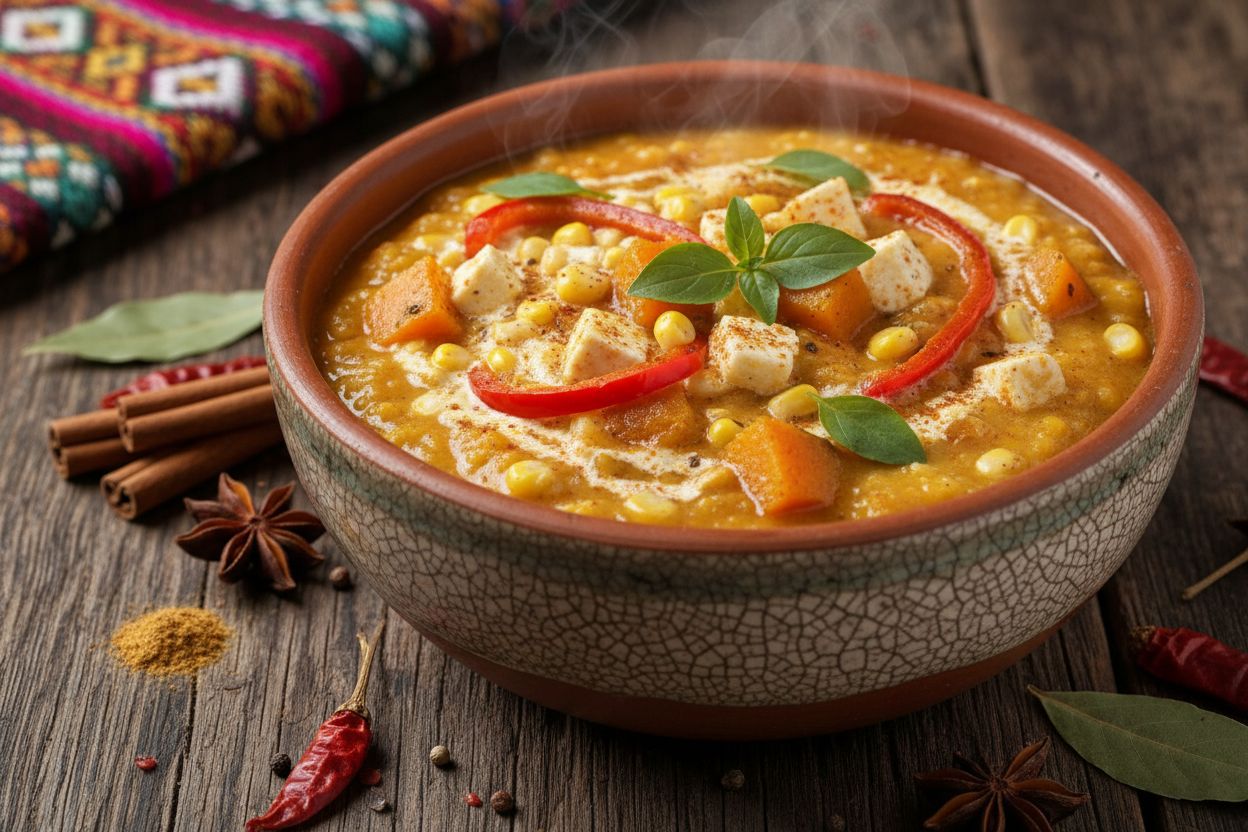



Humita en olla
A creamy, comforting staple of the Southern Andes, humita en olla is a spoonable corn stew rooted in pre-Hispanic traditions and shaped by colonial-era kitchens. Unlike its leaf-wrapped cousin, this pot version is simmered to a rustic, porridge-like consistency built on freshly grated corn, gentle sautéed aromatics, and bright herbs. In many northern Argentine homes it arrives at the table bubbling from the pot, enriched with a splash of milk, perfumed with basil, and sometimes finished with soft, melty cubes of queso fresco.
Ingredients
- 6–8 ears fresh corn (about 6 cups kernels), grated or pulsed
- 1 large onion, finely diced
- 1 red bell pepper, finely diced
- 2 tablespoons butter or 2 tablespoons lard or 2 tablespoons vegetable oil
- 1½ cups milk
- 1 cup diced queso fresco
- 8 leaves basil, chopped
- 1 teaspoon paprika
- ½ teaspoon cumin
- 1 teaspoon salt, plus more to taste
- ½ teaspoon freshly ground black pepper
- 1 teaspoon sugar (optional, to balance)
- Optional: 1 cup grated pumpkin for extra body
- Optional garnish: sliced green onion and extra torn basil
Preparation
- Prep the corn: remove kernels, then grate on the coarse side or pulse in a processor to a thick, chunky puree that still shows bits of kernel.
- Finely dice the onion and the red bell pepper. Chop the basil. Dice or crumble the queso fresco and keep chilled.
Cooking process
- Set a heavy pot over medium heat and warm the butter (or lard or vegetable oil) until it melts and shimmers. Add the onion and red bell pepper; cook, stirring, until tender and translucent, about 5–7 minutes.
- Sprinkle in the paprika and cumin; toast to bloom their aromas for 30 seconds.
- Add the pulped corn and pour in the milk. Bring to a gentle simmer. Cook, stirring often and scraping the bottom and sides, until the mixture thickens and the grains are tender, about 15–20 minutes. If using pumpkin, stir it in midway through this simmer.
- Season with the salt, a good grind of black pepper, and the sugar if you like a touch of sweetness to balance the natural savoriness.
- Fold in the chopped basil and the queso fresco. Let it simmer softly for another 1–2 minutes to warm the cubes without fully melting them. Remove from the heat and let the humita rest for 5 minutes so it sets to a creamy, spoonable texture.
How to serve and enjoy
Ladle into warm bowls. Garnish with sliced green onion and a few torn leaves of basil. For extra richness, dot the surface with a small knob of butter so it melts over the top. Serve alongside crusty bread or a simple salad; the stew’s sweetness from the corn and the gentle heat of paprika pair beautifully with something crisp and fresh.
Variations and tips
- Fat choice: For a richer base use all butter or lard; for a lighter profile choose vegetable oil.
- Texture control: If it thickens too much while resting, stir in a splash of warm milk before serving; if too loose, simmer a bit longer, checking every 2–3 minutes.
- Herbal brightness: Stir extra basil off the heat to keep the flavor fresh and green.
- Cheesy finish: Top with a few more cubes of queso fresco just before ladling into bowls.
Background
Humita en olla traces its lineage to indigenous Andean cookery that prized the harvest of corn, grinding or grating it fresh, then cooking it with local herbs and vegetables. Across northwestern Argentina the pot-cooked style became a cool-season favorite: a stovetop counterpart to the leaf-wrapped humita en chala. The modern kitchen version keeps the soul of the dish—fresh corn sweetness, aromatic sofrito of onion and red bell pepper, the perfume of basil, gentle spice from paprika and cumin, and the soft richness of milk and tender queso fresco—all simmered together in one comforting pot.
Storage and reheating
Refrigerate leftovers in a sealed container and reheat gently over low heat with a splash of milk and a pat of butter to restore silkiness. Taste and adjust with a pinch of salt and a crack of black pepper before serving.