NkolʼAbong
Background and History
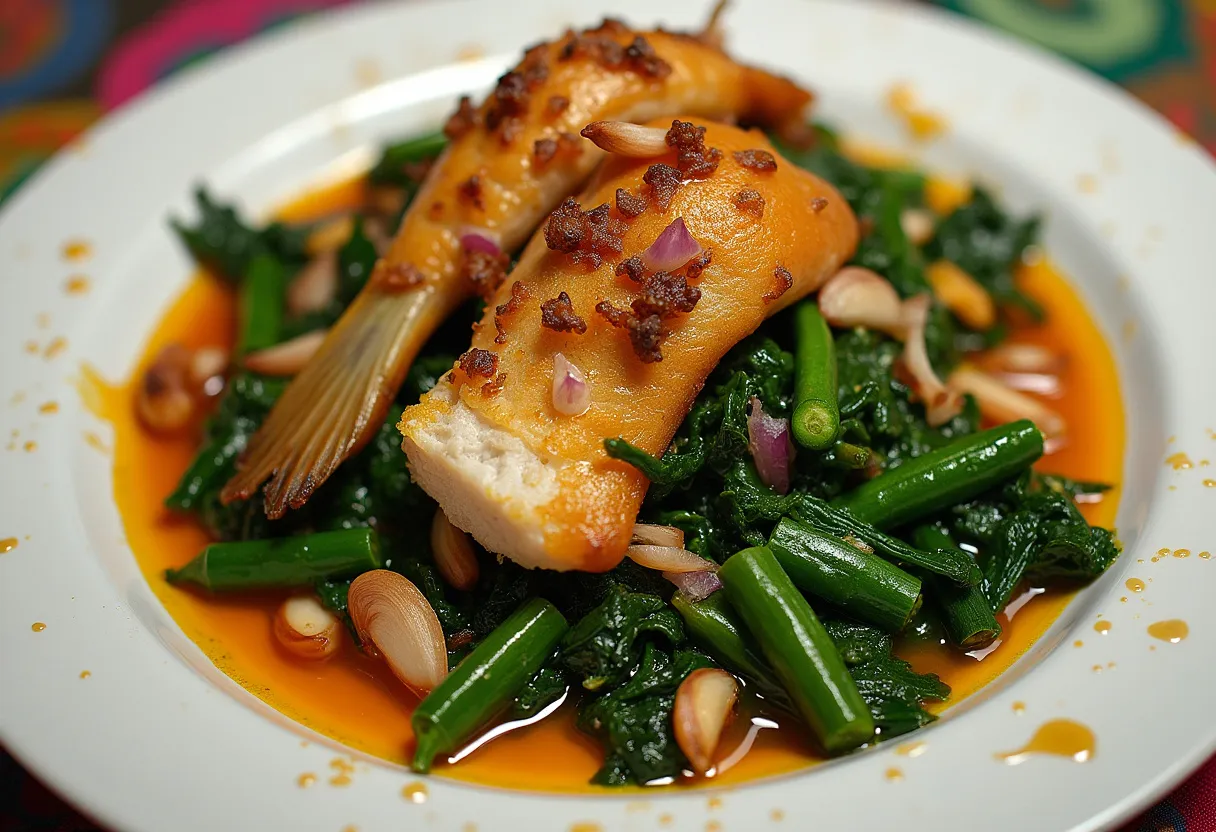
NkolʼAbong is a traditional dish from the Central African region, particularly popular among the Beti people of Cameroon. This flavorful stew is a staple in many households and is known for its rich, earthy flavors and its ability to bring family and friends together for hearty meals. Rooted in centuries-old culinary traditions, NkolʼAbong showcases the region’s diverse natural ingredients and the art of slow cooking. The name 'NkolʼAbong' itself is derived from the local dialect, reflecting the dish's deeply embedded place in Cameroon's cultural and culinary heritage.
This dish traditionally includes ingredients readily available in the local markets, with wild greens, okra, fish, and a variety of spices being central to its preparation. Each ingredient is carefully selected to create a harmonious blend of flavors that are both comforting and nourishing. Served typically with plantain or cassava, NkolʼAbong is more than just a meal; it is a celebration of African culinary prowess.
Ingredients
To create this authentic dish, gather the following ingredients:
- Wild Greens - 500g
- Okra - 200g, chopped
- Fish (preferably smoked) - 300g, deboned and flaked
- Palm Oil - 100ml
- Onions - 2 large, finely chopped
- Garlic - 4 cloves, minced
- Ginger - 1 tablespoon, grated
- Pepper - 2 tablespoons, to taste
- Salt - to taste
- Bouillon Cube - 1, optional
- Crayfish - 2 tablespoons, ground
Each of these ingredients plays a crucial role in building the complex flavors of NkolʼAbong. Ensure the freshness of the wild greens and okra to capture the dish’s authentic taste.
Preparation
Before starting the cooking process, it's essential to prepare all ingredients properly.
Step 1: Preparing the Greens and Okra
- Thoroughly wash the wild greens under running water to remove any dirt or impurities. Once clean, chop the greens finely and set aside.
- Rinse the okra and chop it into small pieces. The chopped okra will act as a natural thickener for the stew.
Step 2: Preparing the Fish
- Using a sharp knife, debone the smoked fish carefully and flake it into smaller pieces.
- Set the prepared fish aside. Smoked fish is preferable for its added depth of flavor, but fresh fish can also be used.
Cooking Process
Step 1: Sautéing Aromatics
- In a large pot, heat palm oil over medium heat. Once heated, add the onions and sauté until they become translucent.
- Stir in the garlic and ginger, cooking for another 2 minutes until fragrant.
Step 2: Building the Stew
- Add the chopped okra and sauté for 5 minutes, allowing it to soften slightly.
- Incorporate the wild greens gradually, stirring until all the greens have wilted down.
- Introduce the flaked fish along with crayfish, pepper, and salt to taste.
- Add a cup of water and bring the mixture to a simmer. Reduce the heat to low and allow it to cook gently, stirring occasionally for an hour. For a time reminder, consider setting a cooking timer.
Final Adjustments
- Adjust seasoning with more salt or pepper, if needed.
- If using, crumble the bouillon cube into the stew for added depth of flavor.
Enjoying Your NkolʼAbong
NkolʼAbong is best enjoyed warm, served with a side of either steamed plantains or boiled cassava. The stew pairs well with these starchy accompaniments, which help balance its rich and bold flavors. Sharing this meal with family or friends is a common practice, reflecting the communal nature of eating in many African cultures.