
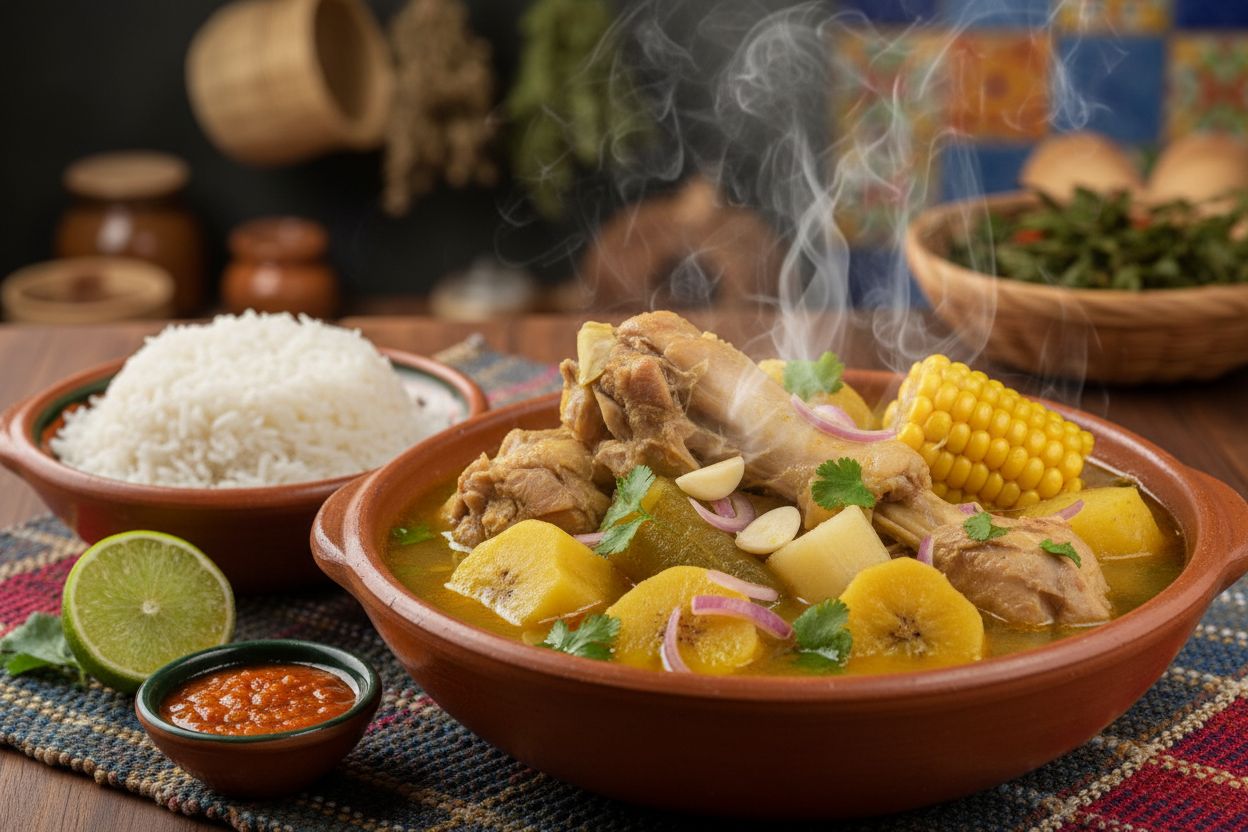



Sancocho Panameño
Background
Sancocho Panameño is a beloved national stew that brings families to the table with a fragrant, clear broth, generous root vegetables, and bone-in pieces of chicken. Its heritage runs through countryside fondas and city kitchens alike, where cooks lean on fresh herbs—especially culantro—to deliver a clean, comforting aroma distinct from other Latin American sancochos. In Panama, this bowl shows up for celebrations and for simple weeknights, commonly paired with a mound of rice and a squeeze of lime, with optional heat from aji chombo. The hallmark of the Panamanian style is the use of starchy yam (ñame) and often yuca and rounds of corn, all simmered with the perfume of oregano, onion, and garlic until the broth is silky and the chicken tender.
Ingredients
- 3 lb bone-in chicken, cut into serving pieces
- 1.5 lb peeled and cubed yam (ñame)
- 1 lb peeled and cubed yuca
- 2 ears corn, cut into thick rounds
- 1 medium green plantain, peeled and sliced into thick coins
- 1 large onion, diced
- 4 cloves garlic, minced
- 1 small bunch culantro, leaves and tender stems roughly chopped
- 1 tsp dried oregano
- 2–2½ tsp salt, to taste
- 1/2 tsp freshly ground black pepper, or to taste
- 10 cups water
- To serve: cooked rice, wedges of lime, minced aji chombo (optional)
Yields
Serves 6 generously; active prep is straightforward, and total simmering generally runs about 90 minutes depending on cut size and your preferred tenderness.
Preparation
- Prep the produce. Peel and cube the yam and yuca into large chunks that won’t disintegrate. Slice the green plantain into thick coins. Dice the onion, mince the garlic, and roughly chop the culantro.
- Build the base. In a large pot, combine the chicken, onion, garlic, oregano, 2 tsp salt, a pinch of black pepper, and the water. Bring to a gentle boil, then lower to a steady simmer. Skim any foam so the broth stays clear. Let the flavors marry for about 20 minutes.
- Add hearty starches. Stir in the yam and yuca. Maintain a gentle simmer so the chunks stay intact while softening. Cook for another 20 minutes, or until the edges look slightly creamy but the centers are still holding.
- Layer remaining vegetables. Add the corn rounds and the green plantain. Continue simmering until the chicken is fully tender and the broth lightly thickened by the starches, about 20 minutes more.
- Finish with herbs and taste. Stir in most of the culantro, reserving a little for garnish. Adjust with additional salt and a touch more black pepper if desired. Turn off the heat and let the pot rest for 5 minutes so the flavors settle.
How to Serve and Enjoy
Ladle the stew into warm bowls, making sure each serving includes a piece of chicken, a few chunks of yam and yuca, and a slice of corn and green plantain. Garnish with the reserved culantro. Serve alongside fluffy rice for mixing into the broth, and brighten with a squeeze of lime. If you love heat, add a little aji chombo to taste.
Tips and Variations
- Texture first: Keep the simmer gentle so the yam and yuca soften without breaking down too quickly.
- Herbal backbone: If you can’t find culantro, use cilantro as a stand-in, but the classic perfume comes from true culantro.
- Season thoughtfully: Add a little salt early and adjust at the end; ground black pepper is best added toward the finish.
- Broth balance: If the stew gets thicker than you like, splash in hot water to loosen. If it’s thin, simmer a few extra moments (watching your timer) until it lightly coats a spoon.
- Heat level: For a fiery edge, stir in minced aji chombo at the table rather than in the pot so everyone can customize.
- Serving ideas: Pair bowls with warm rice and extra lime, or serve with crusty bread to soak up the broth.
Storage
Refrigerate leftovers in an airtight container; the flavors deepen by the next day. Reheat gently, adding a splash of hot water if the starches have thickened the broth. Taste and adjust with a pinch of salt and a whisper of black pepper before serving. It also freezes well for quick weeknight bowls of comforting chicken sancocho.