
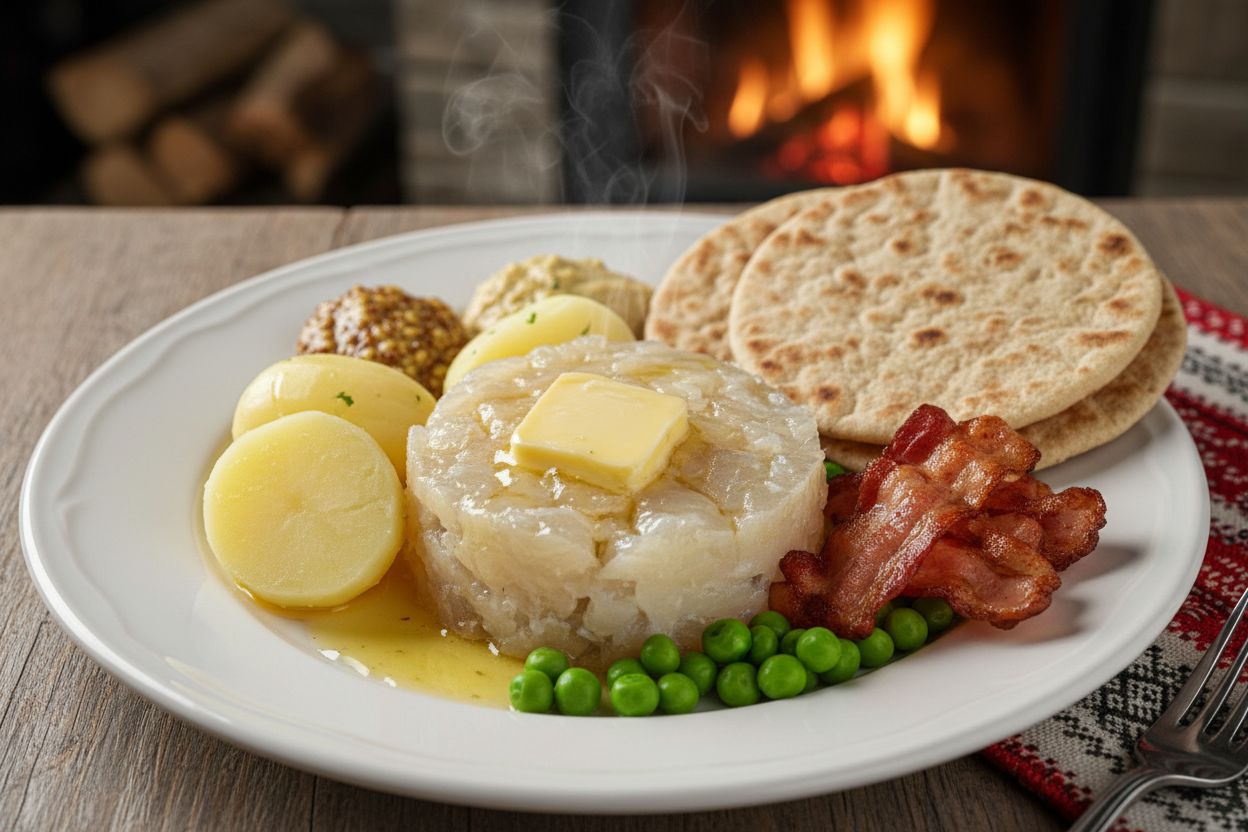



Svalbard–Jan Mayen Lutefisk
Background
This Arctic classic reflects a preservation tradition shaped by long polar nights, dry winds, and sparse resources. On remote islands, cooks prized methods that transformed lean, air-dried fish into a supple feast for winter gatherings. A carefully managed alkaline bath plumps the fillets, and gentle heat preserves their delicate, quivering texture. Today, the dish remains a ceremonial centerpiece—humble in ingredients yet elevated by technique, hospitality, and a sense of place in the far North.
Ingredients
- dried cod
- lye (food-grade)
- water (cold, clean)
- salt
- pepper (white or black)
- potatoes
- butter
- bacon
- peas
- mustard
- flatbread
Preparation
- Rehydration: Rinse the dried cod and cover with cold water in a nonreactive container. Keep the container cool and change the water as needed until the fillets are supple.
- Alkaline soak: Submerge the fish in a dilute solution made with food-grade lye, following manufacturer guidance and local regulations. When the texture has turned silky and translucent, drain and rinse thoroughly.
- Neutralizing soak: Return the fish to fresh water, replacing the water periodically until the aroma is clean and mild.
- Final seasoning: Pat dry, then sprinkle lightly with salt and a touch of pepper.
Cooking
- Bake: Set a hot oven. Place the seasoned fish in a covered, ovenproof dish lined with foil. Dot with butter, seal, and bake gently until it flakes under a fork; monitor with a cooking timer rather than chasing exact minutes, as thickness varies.
- Sides: While it bakes, crisp bacon in a pan. Cook the potatoes until tender and warm the peas. Melt a little extra butter for serving.
Serving and Enjoyment
Serve the fish with the hot potatoes, sweet peas, a spoon of melted butter, and shards of crisp bacon. Offer mild mustard at the table and a side of soft flatbread to soak up juices.
For best texture, plate immediately from the oven, and let diners season to taste with a pinch more salt and a crack of pepper. If you want added structure, briefly rest the fish on a warm plate while you ready the sides; use a cooking timer so it doesn’t sit too long.
Notes
- Quality and safety: Only use food-grade lye for the alkaline stage and handle it carefully. Rinse very well and rely on fresh water during the neutralizing stage.
- Texture control: Baking covered keeps moisture in; uncover near the end for a firmer surface. The fish should tremble yet hold together.
- Flavor accents: A dab of mustard complements the richness of butter and the smoke of bacon.