

Difficulty
Standard

Prep Time
45 min

Cost
High
Calories
450
Protein
35g
Sugar
5g
KEEP COOKING
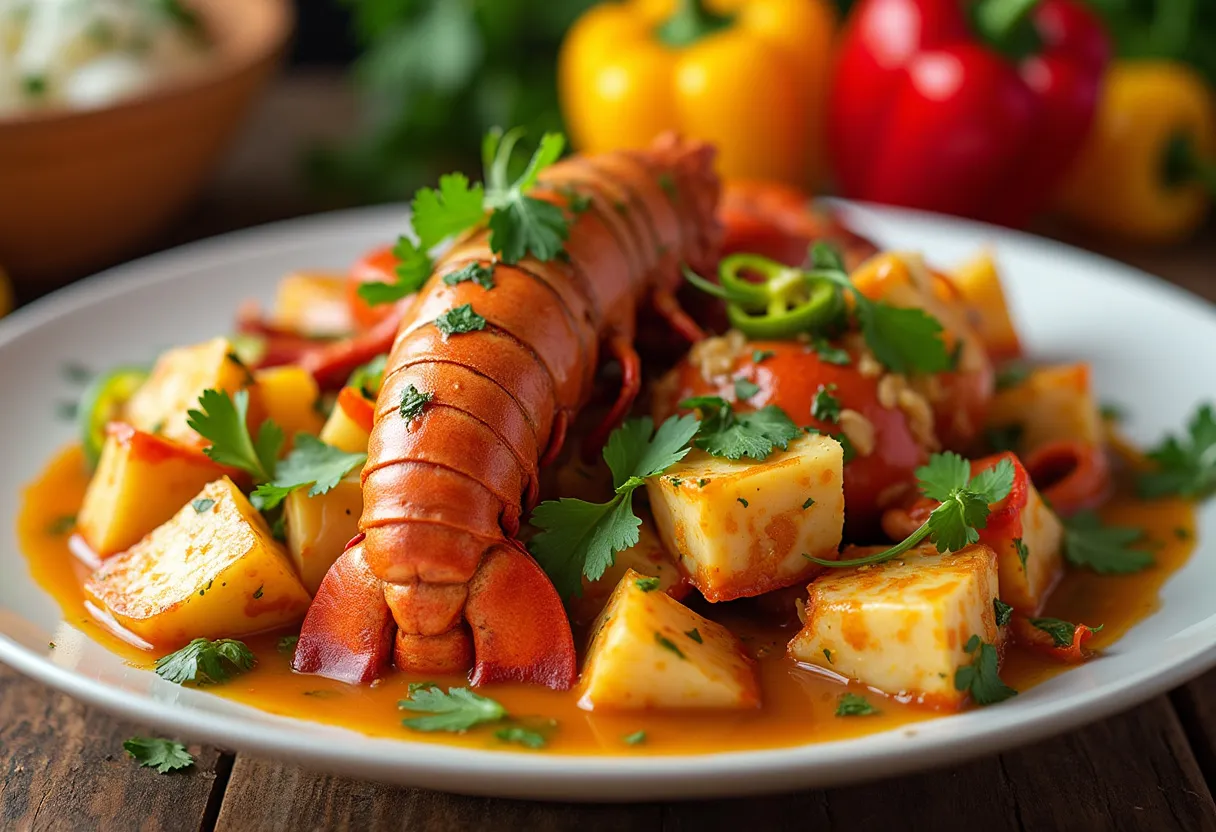
Lobster Rastafari is a delightful dish that merges the rich flavors of the sea with the vibrant spices of the Caribbean. Celebrated for its bold flavors and cultural significance, this dish is a tribute to the Rastafarian movement. Originating from Jamaica, Lobster Rastafari balances the sweet tenderness of lobster meat with lively, seasoned vegetables.
The culinary style of Rastafari is embedded in the "Ital" tradition, focusing on natural, pure, and organic foods. Lobster Rastafari encapsulates the celebration of maritime bounty infused with earthy, wholesome flavors.
Begin by cleaning the lobster. Remove the lobster meat from the shell, ensuring you keep the meat intact. Cut the meat into manageable pieces, approximately two inches long. Set aside in a bowl.
Marinate freshly cut pieces of lobster with lime juice, a pinch of salt, and black pepper. Allow it to sit for at least 20 minutes, enabling flavors to blend.
In a large skillet, heat olive oil over medium heat. Add onion, garlic, and ginger, sautéing until they become aromatic.
Introduce bell pepper, scotch bonnet pepper, and thyme into the skillet. Stir well, cooking for about 3-4 minutes until the peppers are slightly tender.
Gently add the marinated pieces of lobster to the skillet. Stir to combine with the vegetables and herbs, cooking until the lobster turns opaque and is just cooked through, about 5-7 minutes. Be cautious not to overcook to maintain its tenderness.
Pour coconut milk into the skillet and sprinkle with pimento seeds. Let the mixture gently simmer for another 5 minutes, allowing the coconut milk to thicken slightly, creating a rich sauce.
With your Lobster Rastafari ready, garnish with fresh cilantro and serve hot over steamed rice, or alongside a fresh salad for a complete meal. To enhance your dining experience, accompany the dish with traditional Jamaican sides like plantain or fried dumplings.
Enjoy the flavors and the cultural richness of Lobster Rastafari with every bite, celebrating a fusion of culinary traditions that honor both the Rastafarian ethos and Caribbean heritage.