
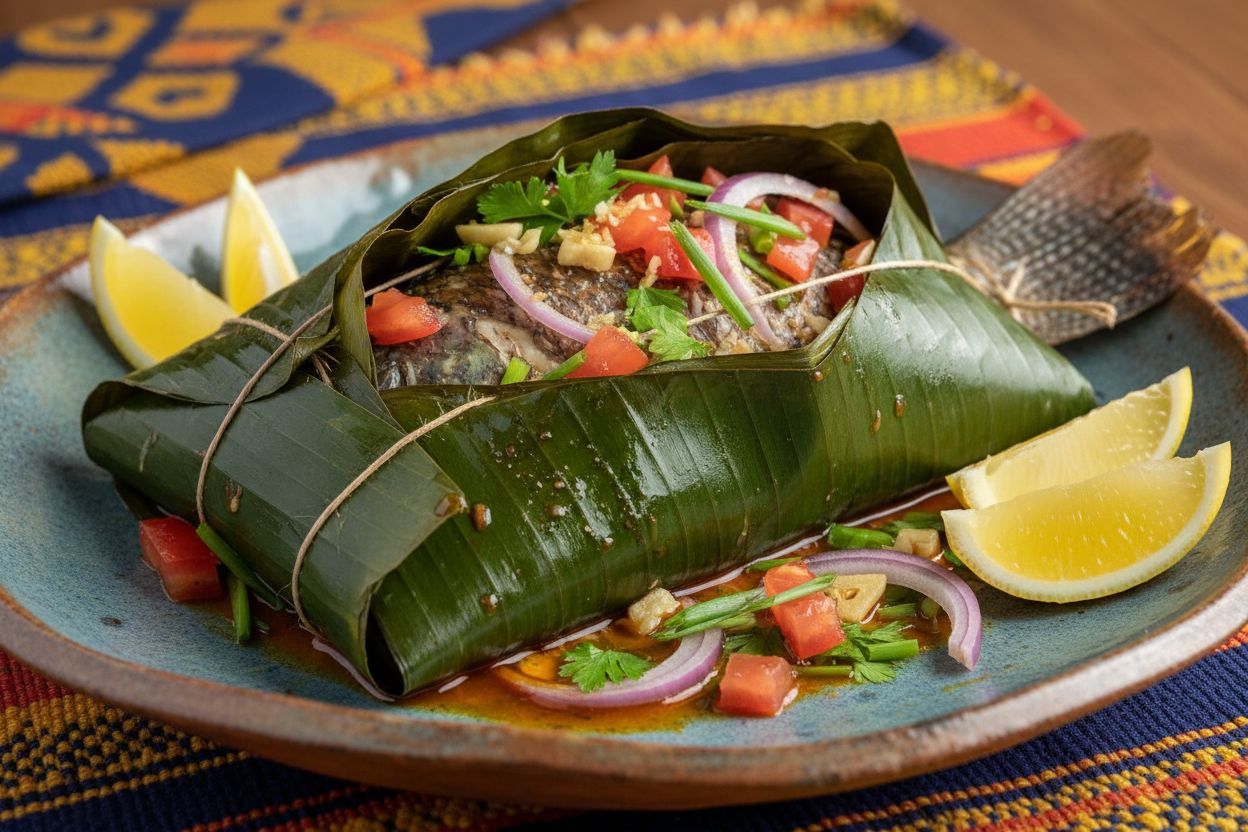



Maboké de Poisson
Background
Maboké de Poisson is a proud Central African technique and dish in which a river or coastal catch is nestled in supple leaves, sealed into tidy parcels, and gently cooked so its juices mingle with a fragrant spice blend. The method is community-minded and portable, ideal for market days, riverside gatherings, and family celebrations. Leaf-wrapped cookery concentrates aroma, protects the delicate flesh from drying out, and creates its own sauce as the parcel steams and roasts. Today, cooks adapt the tradition to charcoal braziers, stovetop steamers, or ovens, all while preserving the hallmark features: a vibrant herb-and-chile paste, a sealed packet that traps moisture, and a table-side opening that releases a cloud of perfume and signals that a feast is ready.
Ingredients
- tilapia (whole, cleaned and scaled, about 1–1.2 kg)
- banana leaves (several large sheets, plus kitchen twine or strips of leaf for tying)
- tomatoes (ripe, sliced and some for the paste)
- onion (sliced and some for the paste)
- garlic
- ginger
- hot pepper (such as Scotch bonnet)
- palm oil
- lemon
- salt
- black pepper
- bouillon cube (optional)
- parsley
- scallions
Preparation
- Soften the wrappers: Pass the banana leaves briefly over a low flame or pour just-boiled water over them to make them pliable. Wipe dry and cut into large rectangles; reserve extra strips of banana leaves for ties if you do not have twine.
- Make the paste: In a mortar or blender, process the listed aromatics and herbs with the palm oil and the juice of the lemon until you have a coarse, spoonable paste.
- Prepare the protein: Pat the tilapia dry. Score the thickest parts on both sides. Rub inside and out with a generous amount of the paste. Let it stand for at least 20 minutes so the flavors penetrate.
- Build the packet: Stack two pieces of banana leaves perpendicular to each other. Scatter a small bed of sliced tomatoes and a few rings of onion in the center. Set the seasoned fish on top, spoon over more paste, then sprinkle with chopped parsley and scallions. Fold the leaves up and over to seal tightly, then tie securely.
Cooking
Steamer or Stovetop Method
Set a rack or steamer basket in a wide pot with a few centimeters of simmering water. Arrange the parcels in a single layer. Cover tightly and cook for 30 to 35 minutes, adding a splash of hot water if needed to maintain gentle steam. The packet will puff slightly and release an intoxicating aroma when done.
Charcoal Grill Method
Place the parcels over medium coals, not directly on intense flames. Cover if your grill has a lid and cook for 25 to 30 minutes, turning once halfway. Aim for steady, moderate heat so the leaves slowly char at the edges while the interior steams.
Oven Method
Heat the oven to about 200°C. Set the parcels on a tray and bake for 25 to 35 minutes. If you like a whisper of char, finish the last few minutes near the top heating element.
How to Serve and Enjoy
Carry the parcels to the table and open them carefully to catch the fragrant juices. Spoon the cooking liquid over the flesh and offer a final squeeze from the remaining lemon. The dish shines with simple sides that soak up the sauce and with crisp, fresh vegetables or relishes for contrast. For gatherings, keep extra parcels warm in a covered pot while you prepare to serve the first round.
Pro Tips
- Taste the paste before rubbing it on the fish; adjust seasoning and heat to your liking.
- If your leaves have tears, double-wrap with more banana leaves to seal in moisture.
- Let the parcels rest off the heat for 5 minutes before opening so juices redistribute.